
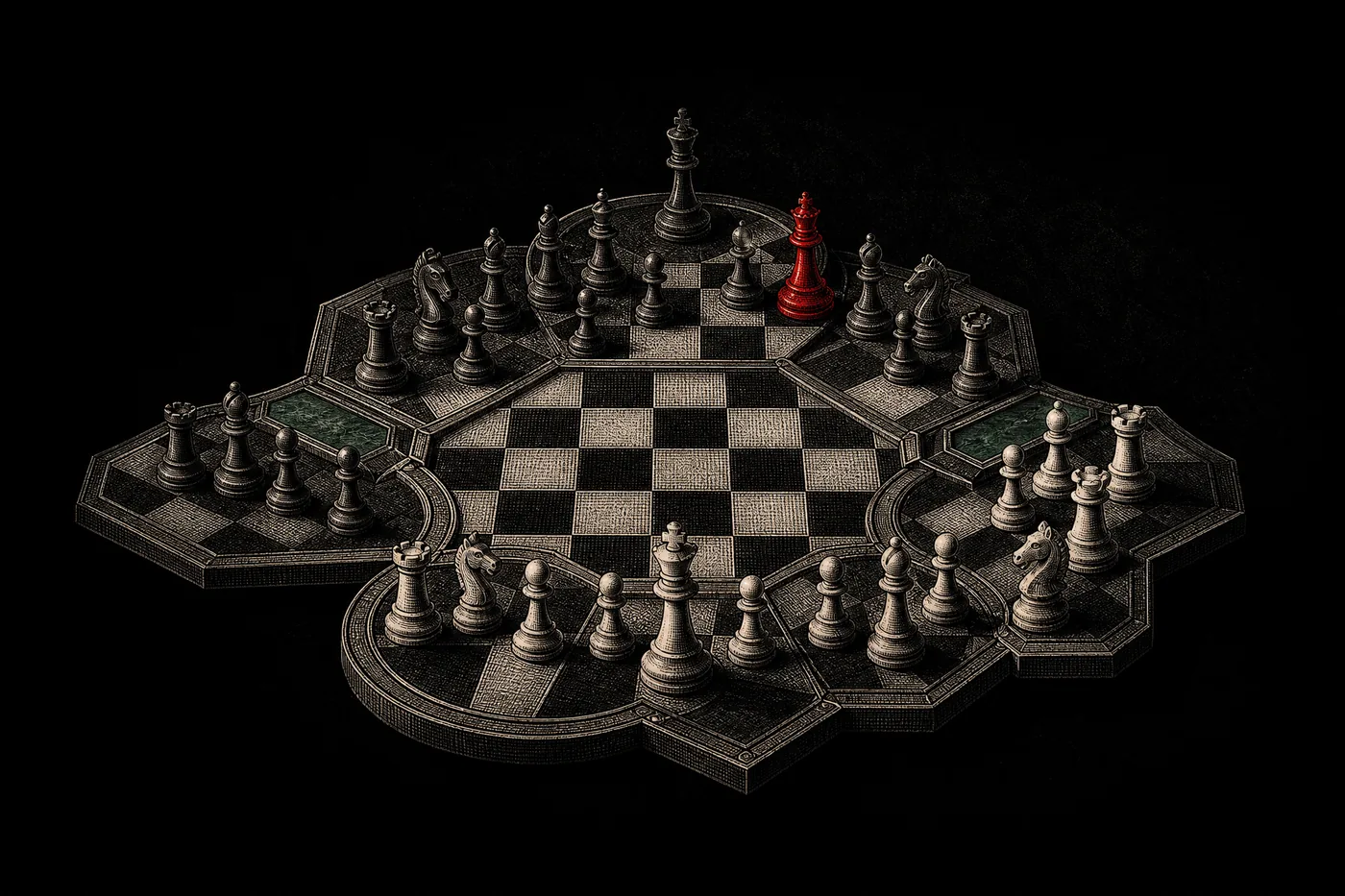
Chess is perfect. So naturally, people couldn’t stop tinkering with it. Chess variants are all the delightful “what if?” versions of the game — what if captured pieces switched sides? What if you wanted to lose all your material? What if there was a duck? Same beloved pieces, same 64 squares, but one rule twisted just enough to make everything feel brand new.
If you’ve ever felt like standard chess was getting a little samey, this is your playground. Some variants are barely-changed (great for a fresh challenge), some are gloriously chaotic, and a few will melt your brain in the best way. This is your map to all of them — grouped by what they change, with a full guide behind every link.
New to variants? Start here
- Easiest to pick up: King of the Hill and Three-Check — normal chess with one new way to win.
- Most fun chaos: Crazyhouse, Atomic, and Duck Chess.
- Biggest brain-bender: Fog of War and Blindfold.
Variants that change the goal
These play like normal chess move-for-move — the pieces do everything you already know. What’s different is how you win. That makes them the friendliest place to start: if you can play chess, you can play these tonight.
- King of the Hill — get your king safely to one of the four center squares and you win instantly. Suddenly the king is a hero, not a hostage.
- Three-Check — check the enemy king three times, in total, across the whole game, and you win. Every check counts, so aggression pays.
- Racing Kings — no checks allowed at all; both kings simply race to reach the 8th rank first. A pure sprint.
- Antichess — the topsy-turvy one: captures are forced, and the goal is to lose all your pieces (or get stalemated). Everything you know is backwards.
- Horde chess — one side commands a swarm of 36 pawns against a normal army. Wildly lopsided and wildly fun.
Variants that change the rules
Here the pieces themselves start behaving differently — capturing, appearing, and blocking in ways standard chess never allows. Expect your instincts to get pleasantly scrambled.
- Atomic chess — every capture sets off an explosion, wiping out a 3×3 zone of nearby pieces. You can win by blowing up the enemy king.
- Crazyhouse — capture an enemy piece and it joins your army; you can drop it back onto the board as your move. Nothing ever truly dies.
- Duck Chess — every turn you also move a rubber duck onto an empty square, blocking it for both players. There’s no check — you win by capturing the king.
- Fog of War — you can only see the squares your own pieces reach; the rest of the board is hidden. Hunt the enemy king through the mist.
Variants that change the setup or format
Same rules, different arrangement — of the pieces, the players, or the board itself. These shake up your preparation more than your instincts.
- Chess960 (Fischer Random) — the back-rank pieces are shuffled into one of 960 legal starting positions, so memorized opening theory goes out the window and you have to think from move one.
- Bughouse — a frantic 2-vs-2 team game: you pass the pieces you capture to your partner on the next board over, who drops them into their own game. Loud, fast, and chaotic.
- 4-Player chess — four armies, four colors, one board, all at once. Free-for-all or teams — either way it’s a party.
A skill-based challenge
Not every variant changes a rule. Some just change you.
- Blindfold chess — completely standard rules, played with no sight of the board. Every move is announced in notation and the whole position lives in your head. It’s less a variant than a superpower you can train — and one of the best ways to sharpen your everyday chess.
Which variant should you try first?
- If you want chess but fresher: King of the Hill or Three-Check. Instantly familiar, instantly different.
- If you want maximum fun and chaos: Crazyhouse, Atomic, or Duck Chess.
- If you want to genuinely improve your regular game: Chess960 forces real thinking, and Blindfold builds visualization like nothing else.
- If you want to feel like a spy: Fog of War. Trust nothing.
Most of these are free to play right now on Lichess and Chess.com — the two sites support different lineups, but between them you’ll find nearly everything here. A few (like Bughouse and 4-Player) are at their best with friends around a physical board or a shared screen.
Getting the basics first
Every variant is built on top of the standard game, so if any rule reference above left you squinting, it’s worth having the fundamentals solid. Start with the full rules of chess, brush up on what check and checkmate mean (several variants deliberately throw those out), and get comfortable with chess notation.
New to the game entirely? Begin at Learn Chess, then come back here and pick your favorite twist.
Researched and fact-checked by the Chess Lab Academy Editorial Team · Variant rules cross-checked against Lichess variant documentation, Chess.com, and Wikipedia · Last verified 2026-07-13 · How we verify content.
