
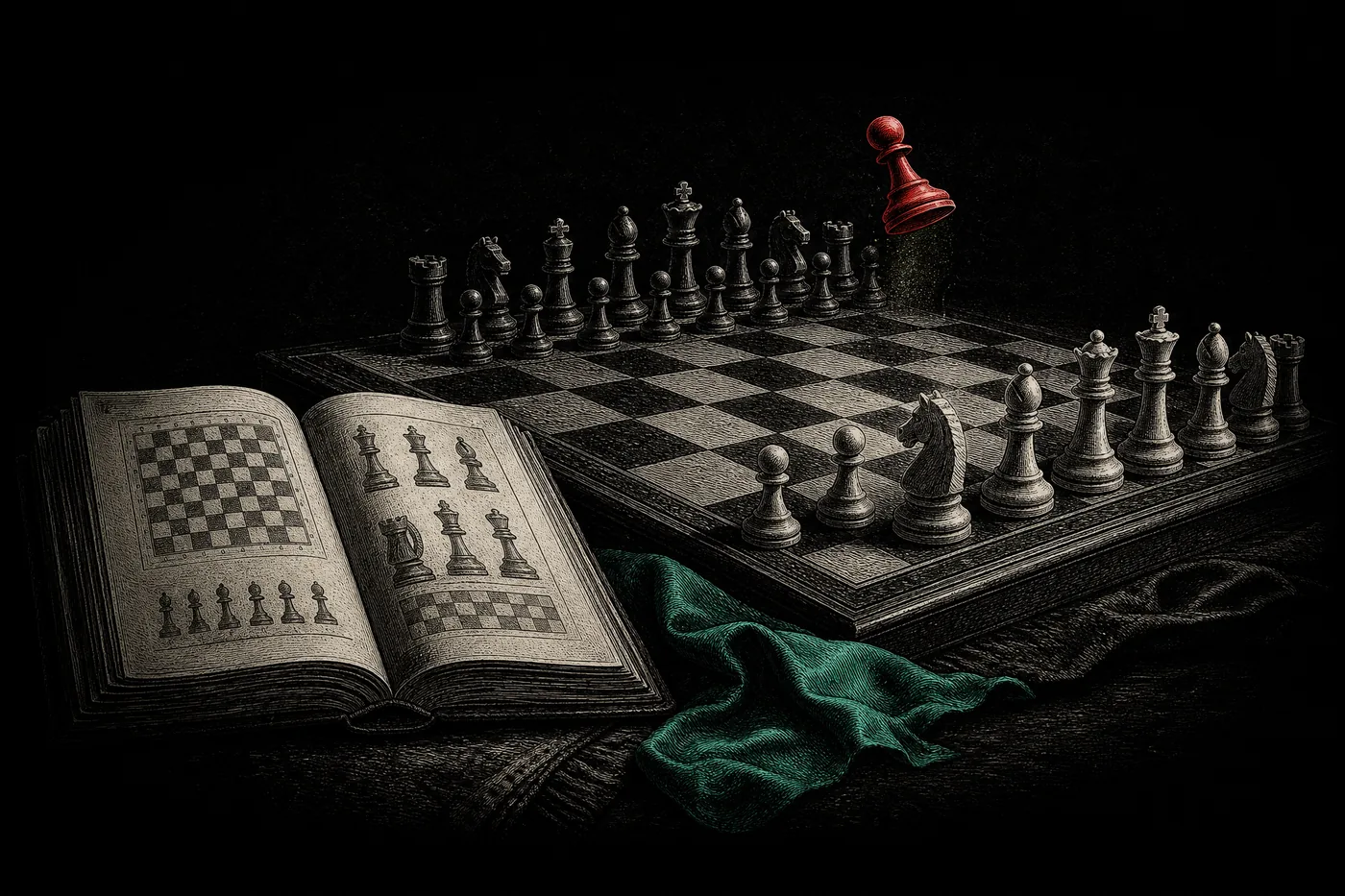
Check is chess’s emergency siren: it means your king is under direct attack by an enemy piece, and you’re forced to deal with it immediately. You can’t ignore it, you can’t make any other move — your only job that turn is to get your king out of danger. Everything else waits.
Check isn’t the end of the game (that’s checkmate). It’s more like a warning shot. But it’s a warning you’re legally required to answer, so let’s make sure you always know how.
The 10-second version
- Check = your king is being attacked by at least one enemy piece.
- You must respond on your very next move — no exceptions.
- Three escapes: (1) move the king to safety, (2) block the attack, or (3) capture the attacker.
- If you can’t do any of those three, it’s checkmate and the game’s over.
What does “check” actually mean?
Picture your king minding its own business, and suddenly an enemy piece is staring right at it — lined up to capture it next turn. That’s check. The attacking piece is threatening to grab the king, and chess has one ironclad rule baked into its DNA: the king can never actually be captured. So the moment your king is threatened, the game basically pauses and says, “Nope, fix this now.”
That’s why check feels so urgent. In every other situation you’ve got a buffet of moves to choose from. In check, the menu shrinks to one item: save the king.
In the position above, Black’s queen has slid down the open e-file and is glaring straight at White’s king on e1. White is in check. Notice White can’t just develop a knight on the queenside or grab a pawn — every legal move now has to address that queen. (Here White’s only escapes are to throw a blocker onto e2 — the knight, bishop, or even the queen.)
How do you get out of check? (The 3 escapes)
Here’s the good news: there are exactly three ways to wriggle out of check, and that’s it. Memorize these and you’ll never freeze up.
- Move the king. Walk it to any neighboring square that isn’t also under attack. You can’t dodge one attack by stepping into another — that’s not allowed.
- Block the check. Slide one of your own pieces between the attacker and your king, like throwing a bodyguard in the path. (This only works against attacks along a line — queens, rooks, and bishops. You can’t block a knight or a pawn, because they don’t shoot down a line.)
- Capture the attacker. Take the piece that’s giving check. No attacker, no check. Simple.
Look at this stripped-down one. Black’s queen on e5 checks the white king straight down the e-file. There’s nothing to block with and nothing to capture the queen, so White’s only escape is to move the king — sliding it to d1, f1, d2, or f2, any square the queen doesn’t cover. This is the most basic escape, and often the only one. Contrast it with the first diagram, where the attack came down a line and blocking was possible — something you can never do against a knight or pawn check, since they don’t shoot down a line.
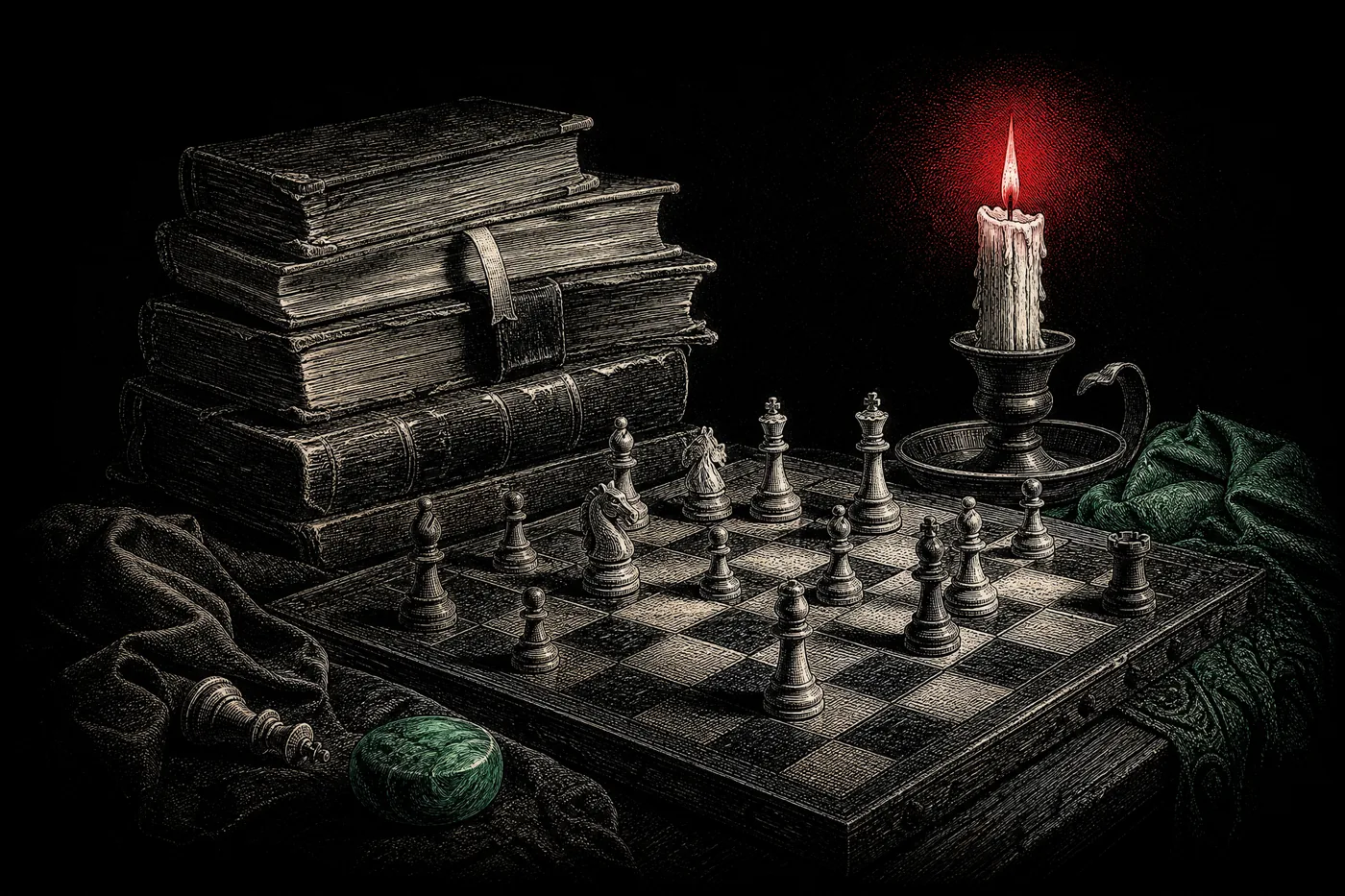
Can you ignore check or play a different move?
No. Absolutely not. This trips up brand-new players all the time, so let’s be blunt: if you’re in check, every move you make must get you out of check. You can’t castle, you can’t grab a juicy free pawn on the other side of the board, you can’t develop a piece “real quick.” Illegal, all of it.
If you’re playing on a chess app or website, it simply won’t let you make any move that leaves your king in check — the software enforces it. Over a real board, your opponent will (politely or not) point out that you’re still in check and make you take it back. The king’s safety always comes first.
Why does check matter so much?
Check is the engine that drives the whole game. Chess is won by trapping the enemy king — and check is the pressure that gets you there. Strong players use checks to:
- Force the action. A check removes your opponent’s freedom. They can’t counterattack or build their own plan; they have to respond to you. That’s a free tempo (a “free move,” basically) if you use it well.
- Set up bigger threats. Sometimes a check isn’t about the king at all — it’s a setup. You check, the king or a blocker is forced to a specific square, and now your next move wins a piece. This is the heartbeat of countless tactics like forks and skewers.
- March toward checkmate. Checkmate is just a check the opponent can’t escape. Learning to give check cleanly is step one toward learning to finish games.
Understanding check is also the foundation of king safety — the single most underrated skill for beginners. If you know what threatens a king, you know how to protect your own.
Check vs checkmate: what’s the difference?
Easy to mix these up, so here’s the clean line between them:
- Check = the king is attacked, but there’s at least one legal way to escape. The game continues.
- Checkmate = the king is attacked and there’s no legal escape at all. The game’s over — and whoever delivered it wins.
Think of check as “you’re in trouble” and checkmate as “you’re out of options.” Every checkmate begins as a check; it just happens to be one with no exit. We dig into the finisher over at what is checkmate.
And don’t confuse either of those with stalemate, which is when a player has no legal moves but is not in check — that one’s a draw, and it’s a totally different beast.
Do you have to say “check” out loud?
Fun one: in casual games, lots of people announce “check!” and it’s a friendly heads-up. But in official tournament chess under the FIDE rules, you are not required to say it. The position speaks for itself, and your opponent is responsible for noticing. So if someone delivers a silent check, that’s completely legal — stay alert.
A quick bit of history
The word “check” comes from the Persian shah, meaning “king” — players would call out “shah!” to warn that the king was under attack, much like you might yell a friend’s name to warn them. “Checkmate” comes from shah mat, often translated as “the king is helpless” or “the king is defeated.” So the very vocabulary of chess is a thousand-year-old echo of players shouting warnings about kings. Pretty cool for two little words you’ll say a hundred times.
Common mistakes to dodge
- Trying to escape into another attack. Moving your king out of one check and onto a square controlled by a different enemy piece is illegal. Scan the destination square first.
- Forgetting you can capture or block. Beginners panic and run the king when capturing the attacker (or blocking) would’ve been far stronger — and might even win material.
- Blocking a knight check. You can’t. Knights jump, so there’s no line to interpose on. Against a knight check your only options are move the king or capture the knight.
- Leaving your king in check by accident. If a move you make exposes your own king to check (say, you move a piece that was shielding it), that move is illegal. Always check what your own pieces are guarding.
Key takeaways
- Check = your king is under attack. You must respond on your next move.
- There are exactly three escapes: move the king, block the attack, or capture the attacker.
- You can’t ignore check or play any move that leaves your king attacked.
- Check ≠ checkmate. Check has an escape; checkmate doesn’t.
- Check ≠ stalemate. Stalemate means no legal moves and not in check — a draw.
Keep climbing
Now that you know what check is, the natural next step is the move that ends games: checkmate. Then learn the sneaky draw that traps players who get greedy.
Next up: What is checkmate? · Also worth knowing: what is stalemate and why king safety wins games.
Written and fact-checked by the Chess Lab Academy Editorial Team (AI-assisted, human-edited) · Rules verified against the FIDE Laws of Chess and every position checked with Stockfish 17 · Last verified 2026-06-25 · Sources · How we verify content.
