
Want to stop hanging pieces and start winning them? Fork puzzles are the single best drill for beginners, because the fork — one move that attacks two enemy pieces at once — is the tactic you’ll see most often in real games. The set below is live and pulled from real games, so every puzzle is a position someone actually reached. Solve a handful and knight forks, pawn forks, and royal forks start jumping out at you.
How to use this page
- Solve first, read second. Try the trainer, then come back for the “how to spot it” cues.
- Say the target out loud: “this move hits these two pieces.”
- Wrong answer? Don’t rush on — figure out why the right move works.
Your move — solve the position
Real positions from real games. Solve one, and the next appears.
Take that instinct to a live board — 3D chess with character skins & rewards.
What is a fork, exactly?
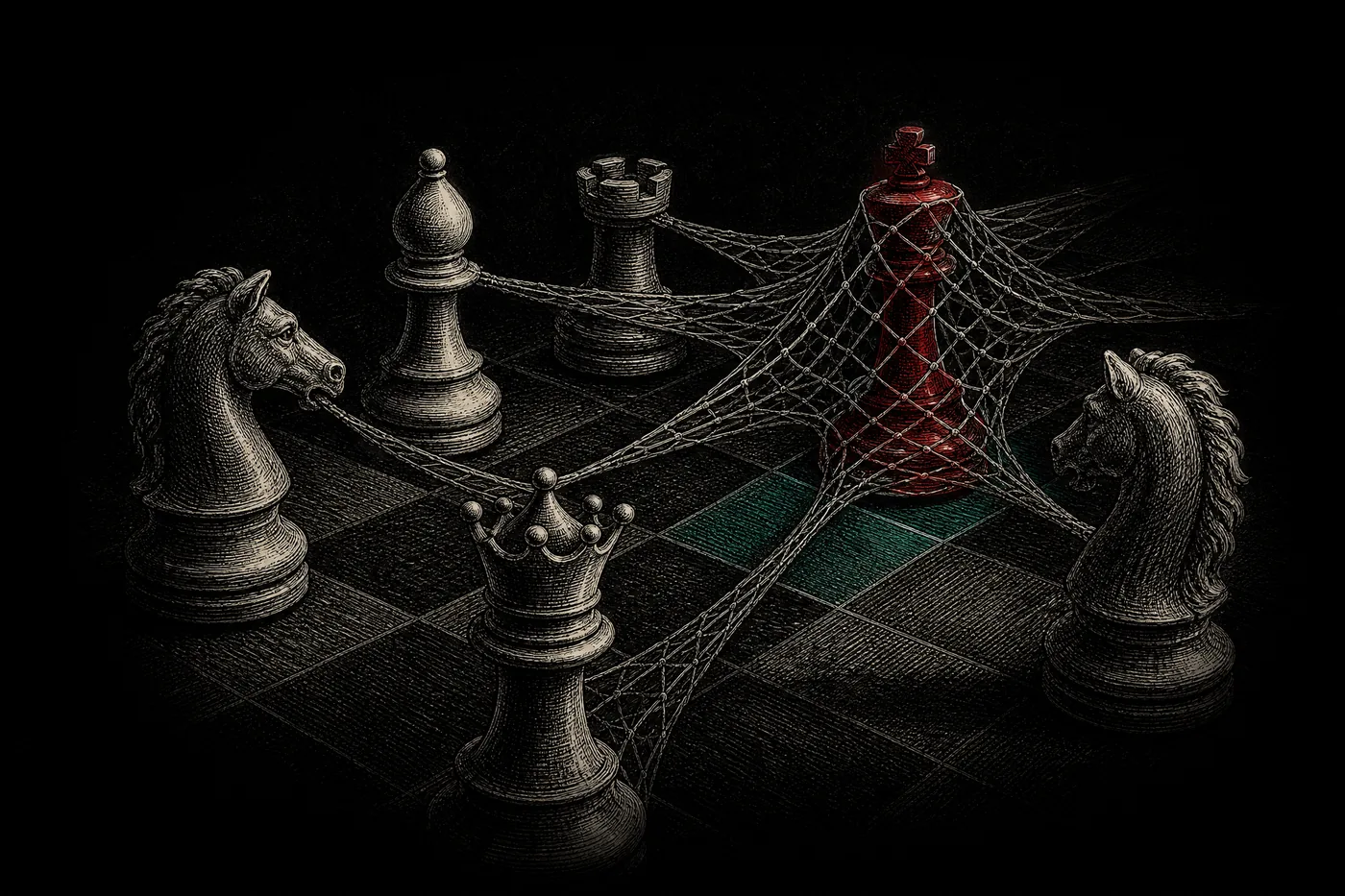
A fork is a single move where one of your pieces attacks two (or more) enemy pieces at the same time. Your opponent only gets one move to respond, so they save one target — and you grab the other for free. The knight is the most feared forker (it hits in eight directions and can’t be blocked), but pawns, bishops, rooks, and queens all fork too. The nastiest forks come with check, because the king must move first, leaving the other piece defenseless. If you want the full breakdown of knight forks, the royal fork, and the family fork, our complete guide to the fork in chess has you covered.
How to spot a fork (the cues that matter)
When you open a puzzle, don’t stare at the whole board — hunt for these patterns:
- Scan every knight jump. Before anything else, look at where your knight can land next. If a single hop attacks two enemy pieces — especially the king plus something juicy — you’ve found it.
- Look for undefended pieces in pairs. Two loose enemy pieces are fork bait. Ask which of your pieces can hit both at once.
- Prioritize forks that check. A fork including a check is nearly always the answer, because the check is forcing — the opponent can’t ignore it to save the other piece.
- Check the king–queen geometry. Whenever the enemy king and queen sit a knight’s-move apart, a royal fork is often one leap away.
- Don’t forget pawns. A humble pawn push that attacks two pieces on its two diagonals is easy to miss and impossible to ignore.
Common mistakes to dodge
- Forking a defended piece. If your fork wins a piece that’s guarded, the opponent just recaptures. Make sure at least one target is truly loose.
- Grabbing the smaller piece. When you fork two pieces, take the more valuable one (or the one that isn’t defended). Slow down and compare.
- Missing the check. Players calculate the material fork and overlook the version with check — which is usually stronger and cleaner.
- Only looking at your knight. Forks come from every piece. Ask “can any of my pieces hit two things?” not just the horse.
Keep training
- Go deeper on the theory: what a fork is and how to defend one.
- Try the fork’s close cousins: pin puzzles and skewer puzzles.
- Level up to the broader idea behind forks: double attack puzzles.
- Back to the full puzzle library.
Fork puzzle FAQ
Are fork puzzles good for beginners? They’re the best place to start. The fork is the most common winning tactic below club level, and training it directly translates to more won pieces in your games.
What’s a royal fork? A knight fork that hits the enemy king and queen at once. The king must move out of check, then your knight takes the queen — a full point of material for a three-point horse.
How many should I do a day? Even 5–10 focused fork puzzles a day builds pattern recognition fast. Consistency beats marathon sessions.
Where do these puzzles come from? They’re real positions from the Lichess open puzzle database (CC0), each engine-verified at the source.
Curated and written by the Chess Lab Academy Editorial Team (AI-assisted, human-edited) · Puzzles from the Lichess open database (CC0) · Last verified 2026-07-13 · How we verify content.
