
Garry Kasparov is the name a lot of people reach for when they argue about “the greatest chess player of all time.” He was World Champion from 1985 to 2000 — the youngest undisputed champion ever when he won the crown at just 22 — and he stayed the world’s dominant force for two full decades. His peak rating of 2851, set in 1999, was the highest in history until Magnus Carlsen finally edged past it in 2013. Oh, and he’s also the guy who took on IBM’s supercomputer Deep Blue in one of the most famous man-versus-machine showdowns ever staged.
Quick facts
- Full name: Garry Kimovich Kasparov · Born: 13 April 1963, Baku (then Soviet Union)
- Title: Grandmaster (earned in 1980)
- Peak rating: 2851 (1999) — the record for over a decade
- World titles: Undisputed World Champion 1985–1993, Classical World Champion 1993–2000
- Ranked world No. 1 for a record 255 months
- Style: ferocious, dynamic, attacking — with legendary opening preparation
Who is Garry Kasparov?
Born in Baku in 1963, Kasparov was a prodigy inside the famous Soviet chess machine, working under the wing of former World Champion Mikhail Botvinnik. He became a grandmaster in 1980 and rocketed up the rankings, and in 1985 he dethroned Anatoly Karpov to become the 13th World Chess Champion — and, at 22, the youngest undisputed champion the game had ever seen.
What followed was one of the great rivalries in sports history. Kasparov and Karpov played five World Championship matches between 1984 and 1990, trading blows over an astonishing 144 games. Kasparov came out on top and held the title for 15 years. In 1993 he broke away from FIDE (chess’s governing body) to defend his crown under a rival organization, splitting the championship in two — a schism that took over a decade to heal.
He finally lost the classical title in 2000 to his former pupil Vladimir Kramnik, and in 2005 he retired from professional chess to focus on writing and Russian pro-democracy politics. Even in retirement, he remains one of the most recognizable figures the game has ever produced.
What is Kasparov’s playing style?
If Carlsen is the ultimate grinder, Kasparov was the ultimate attacker. He played with terrifying energy — seizing the initiative early, piling up pressure, and calculating sharp complications faster and deeper than his opponents could handle. He was famous for arriving at the board with home preparation so deep that rivals were sometimes already lost by move 20, having wandered into analysis Kasparov had cooked up months earlier.
We break down his dynamic, initiative-hungry approach with examples in Kasparov’s playing style.
What openings does Garry Kasparov play?
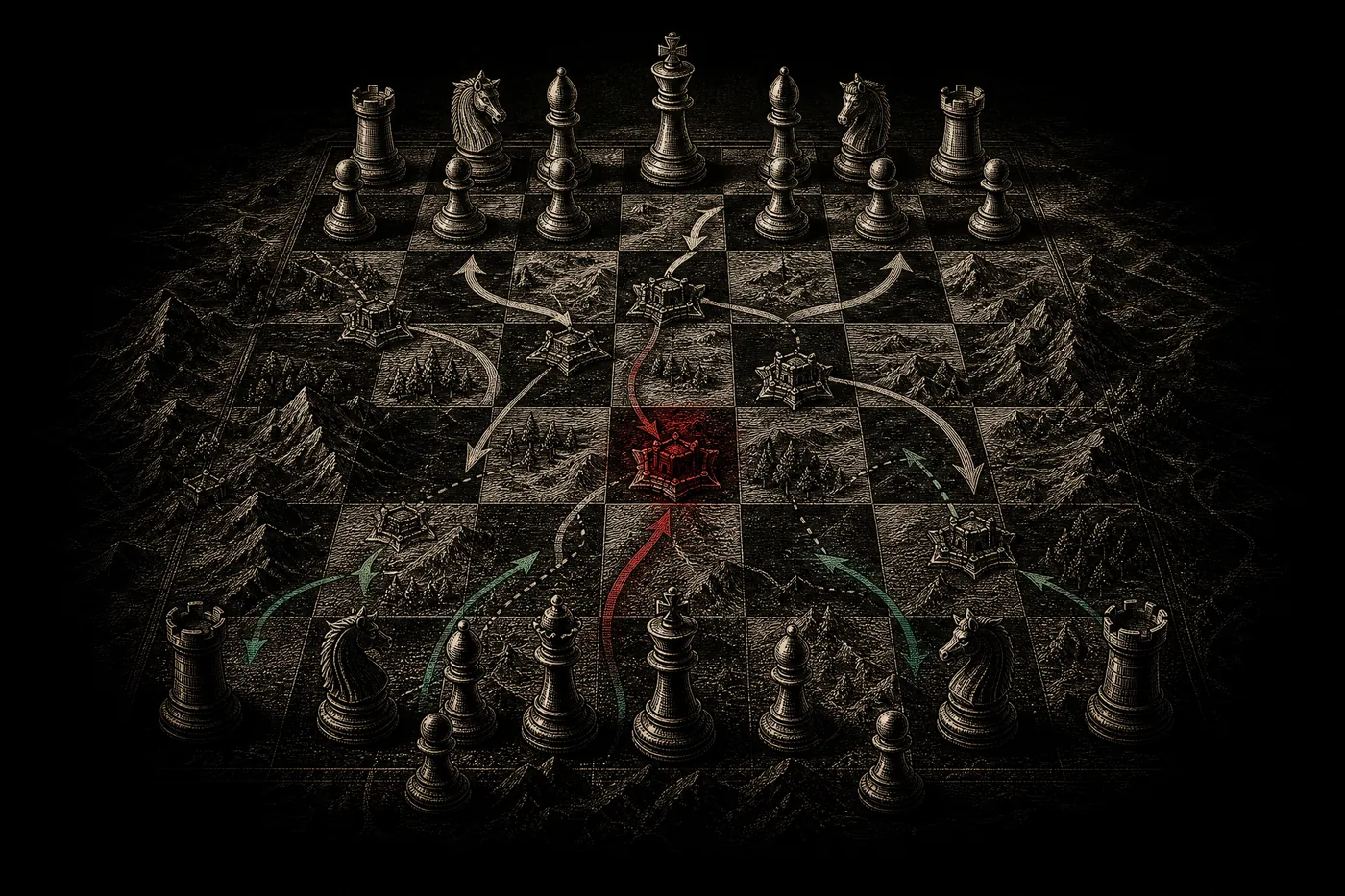
Kasparov built his empire on sharp, fighting openings. As Black he was the world’s leading expert on the Sicilian Najdorf, and against 1.d4 he wielded the aggressive King’s Indian Defense and the counter-punching Grünfeld. As White he was an uncompromising 1.e4 player who famously revived the old Scotch Game at the elite level and produced masterpieces in the Ruy Lopez.
See his full repertoire in Kasparov’s openings.
Career highlights
- 1980: earns the grandmaster title.
- 1985: defeats Anatoly Karpov to become the youngest undisputed World Champion at age 22 — a record that stood until Gukesh Dommaraju (18) broke it in 2024.
- 1986, 1987, 1990: successfully defends the title against Karpov in three more matches.
- 1990: crosses 2800 on the FIDE rating list — the first player to do so.
- 1993: breaks with FIDE and plays for the title under the rival PCA.
- 1996 & 1997: faces IBM’s Deep Blue — winning the first match, then losing the historic 1997 rematch.
- 1999: reaches his peak rating of 2851, a record that stood until 2013.
- 2000: loses the classical title to Vladimir Kramnik.
- 2005: retires from professional chess after one last tournament victory.
The best games
Kasparov’s games are attacking clinics — deep sacrifices, king hunts, and preparation that reshaped opening theory. His win over Veselin Topalov at Wijk aan Zee in 1999, often nicknamed “Kasparov’s Immortal,” is regularly voted one of the greatest games ever played. We’ve collected the highlights in Garry Kasparov’s best games.
Fun facts
- His birth surname was Weinstein; he later adopted a Russified form of his mother’s surname, becoming Kasparov.
- He held the world No. 1 ranking for a record 255 months — over 21 years across his career.
- He won a record 11 Chess Oscars (the award for the year’s best player as voted by critics and journalists).
- After chess he became a prominent pro-democracy activist and author, writing the acclaimed My Great Predecessors series on the history of the World Champions.
FAQ
Is Garry Kasparov the greatest chess player ever? He’s firmly in the conversation. He held the No. 1 ranking for a record 255 months, was World Champion for 15 years, and set a rating record (2851) that stood for over a decade. Whether he or Carlsen is “the greatest” is one of chess’s favorite arguments.
What was Kasparov’s highest rating? 2851, achieved in 1999. It was the highest FIDE rating ever recorded until Magnus Carlsen surpassed it in 2013.
Did Garry Kasparov lose to a computer? Yes. He beat IBM’s Deep Blue in their 1996 match, but lost the 1997 rematch 3½–2½ — the first time a reigning World Champion lost a match to a computer under standard tournament conditions.
Why did Kasparov stop being World Champion? He lost the classical title to Vladimir Kramnik in 2000, then retired from professional chess in 2005 to focus on writing and politics.
What openings did Kasparov play? Sharp, fighting lines: the Najdorf Sicilian as Black, the King’s Indian and Grünfeld against 1.d4, and 1.e4 openings including a famous revival of the Scotch Game as White.
Keep exploring
Dig deeper into the legend: his best games · his playing style · his opening repertoire · his rating history · fun facts & records · or browse all chess players.
Written and fact-checked by the Chess Lab Academy Editorial Team · Facts verified against Wikipedia, his FIDE profile, and Chess.com, as of July 2026 · Last verified 2026-07-10 · How we verify content.
