

The King’s Indian Defense — the KID to its friends — is what you get after 1.d4 Nf6 2.c4 g6, usually followed by 3.Nc3 Bg7 4.e4 d6. It’s the ultimate “go ahead, make my day” opening. Black invites White to build a giant pawn center, fianchettoes the bishop on g7, castles up snug, and then comes roaring back with a pawn break — most often the thematic …e5. It’s sharp, double-edged, and one of the most exciting ways to play for a win with the black pieces.
The 30-second version
- Moves: 1.d4 Nf6 2.c4 g6 (then …Bg7, …d6, …0-0) · ECO: E60–E99 · You play it as: Black.
- The idea: a hypermodern setup — let White grab the center, then strike it with …e5 (or …c5) and storm the kingside.
- Main White systems: Classical (Mar del Plata), Sämisch (5.f3), Four Pawns Attack (5.f4), Fianchetto (g3), Averbakh (5.Be2 + Bg5).
- Best for: combative players who want to win with Black and don’t mind learning some theory.
Step through the line
Move by move — press Next to advance, Back to rewind.
The King's Indian Defense — Black hands White a big center, then plans to blow it up.
What’s the big idea behind the King’s Indian Defense?
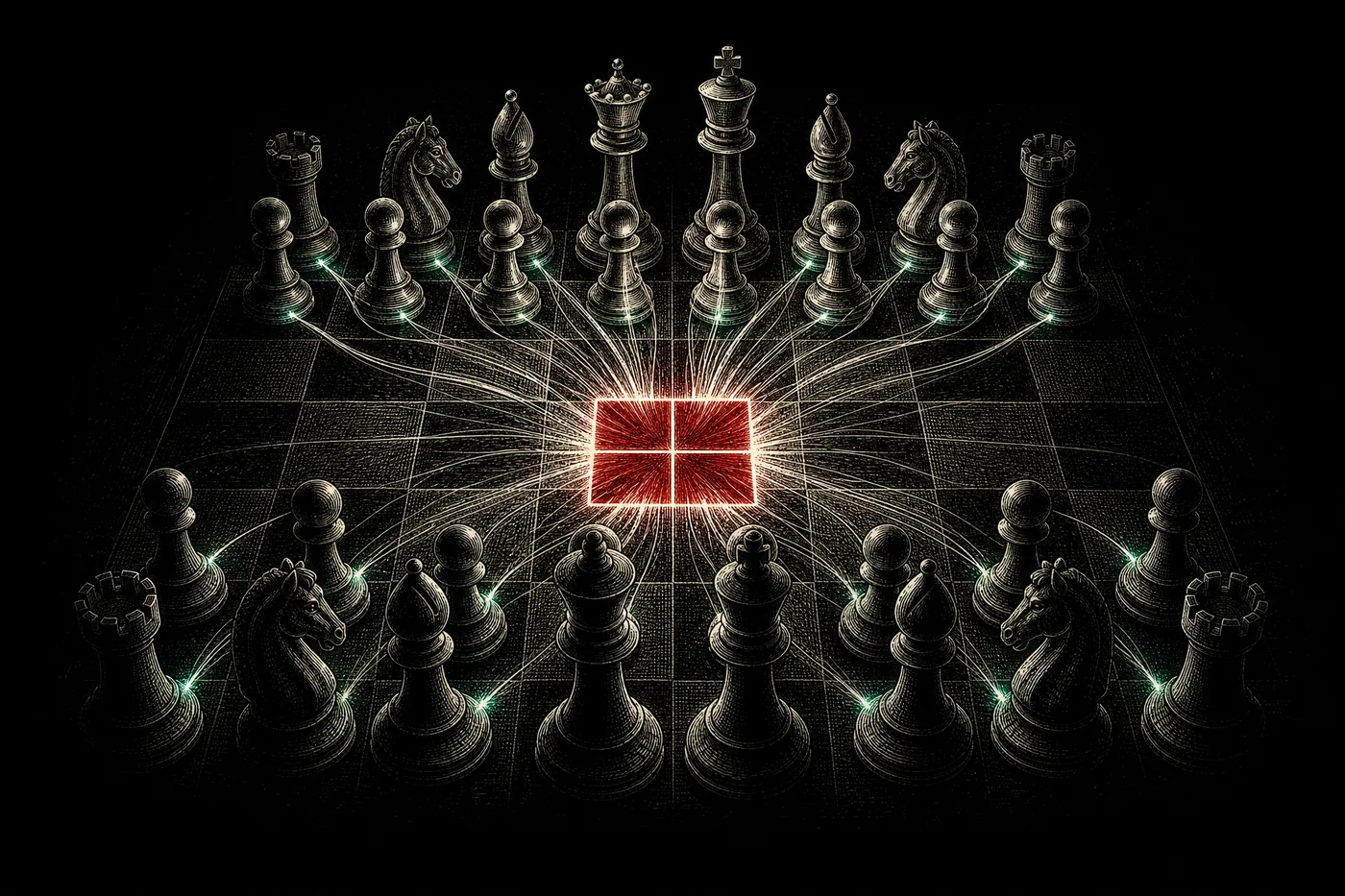
The KID is the poster child for hypermodern chess. The old “classical” rule says occupy the center with pawns. The hypermodern reply says: let your opponent build that center — then attack it from the wings with pieces and timely pawn breaks, and watch it become a liability.
So in the King’s Indian, Black deliberately plays small-looking moves first:
- …Nf6 and …g6 — develop the knight and prepare the fianchetto.
- …Bg7 — the bishop goes to its long diagonal, aiming straight through the center at White’s queenside.
- …d6 and …0-0 — restrain White’s e5 push and tuck the king away.
Then comes the punch. Black plays …e5 (or sometimes …c5, transposing toward Benoni-style play) to challenge White’s broad center. From the resulting locked structure, a classic race breaks out: Black attacks on the kingside (the …f5–f4–g5 pawn storm), while White attacks on the queenside. Whoever’s attack lands first usually wins. It’s chess as a knife fight.
What are the main systems?
Unlike openings where Black picks the branch, in the King’s Indian it’s White who chooses the battlefield. Each setup gives the game a totally different character. Here’s the headline menu — the full tour is in our variations guide.
The Classical System (5.Nf3 + 6.Be2)
White develops naturally and castles. After 5.Nf3 0-0 6.Be2 e5 7.0-0, Black gets the famous Mar del Plata structure — White locks the center with d5 and storms the queenside, Black throws everything at the white king with …f5–f4–g5. This is the soul of the King’s Indian.
The Sämisch (5.f3)
White props up e4 with the f-pawn, building a rock-solid wall and planning to castle queenside and attack. Heavy, strategic, and a real test.
The Four Pawns Attack (5.f4)
The most aggressive try — White grabs four central pawns (c4, d4, e4, f4). It looks crushing but it’s loose; Black hits back fast with …c5 or …e5.
The Fianchetto (g3)
White mirrors Black with a kingside fianchetto, going for a calmer, more positional game. Considered one of the most reliable anti-KID systems.
The Averbakh (5.Be2 + 6.Bg5)
White pins nothing yet but discourages …e5 by eyeing the d8-square; Black usually switches plans to …c5.
What are the plans for both sides?
For Black:
- Complete the setup: …Nf6, …g6, …Bg7, …d6, …0-0.
- Break with …e5 (or …c5) to challenge the center.
- After the center locks, launch the kingside storm: …Ne7 (or …Nh5), …f5, …f4, …g5, …g4 straight at White’s king.
For White:
- Build and hold the big center, then close it with d5.
- Expand on the queenside with c5, b4, a4, and the minority/space push.
- Race to break through on the queenside before Black’s kingside attack crashes through.
Strengths and weaknesses
Why you’ll love it:
- It plays for a win. Few defenses give Black such dynamic, attacking chances against 1.d4.
- One setup, many openings. The …Nf6/…g6/…Bg7/…d6 formation works against almost anything White does.
- Famous attacks. The kingside pawn storm produces some of the most beautiful games in chess.
The catch:
- It’s theory-heavy. The Mar del Plata and Bayonet lines run deep.
- White scores well in some systems (the Fianchetto and Bayonet are tough nuts), so it’s a fighting choice, not a free lunch.
- Double-edged means risky — if your attack is slower than White’s, you can get steamrolled on the queenside.
Who plays the King’s Indian Defense?
Some of the most exciting attackers in history. Bobby Fischer made it a feared weapon. Garry Kasparov wielded the KID at the very top for years and produced legendary wins with it. In the modern era, Teimour Radjabov built a whole elite career around it, and Hikaru Nakamura has long used it as a fighting answer to 1.d4. When the boldest players in the world reach for an opening, you know it bites.
A fun bit of history
For a long time the King’s Indian was considered slightly suspect — “you can’t just give White the center!” Then the hypermodern revolution of the 1920s, and later the post-war Soviet school, showed how powerful the counterattack really is. By the 1950s the Mar del Plata battles (named after the Argentine tournament where the line was hammered out) had turned the KID into a main-line heavyweight. It’s been a top-level fighting weapon ever since — the opening you pick when a draw is the last thing you want.
Is the King’s Indian Defense right for you?
If you’re an attacking player who hates passive positions and wants to play for the full point with Black, the KID is tailor-made for you. If you prefer quiet, low-risk chess, its double-edged race might give you a heart attack — a solid choice like the Nimzo-Indian could suit you better. For the honest, level-by-level verdict, see is the King’s Indian Defense good?
Explore the King’s Indian Defense
- King’s Indian Defense: the main lines move by move
- King’s Indian Defense variations (Classical, Sämisch, Four Pawns & more)
- King’s Indian Defense traps
- The King’s Indian Defense for beginners
- Best King’s Indian Defense master games
- How to beat the King’s Indian Defense (as White)
- Is the King’s Indian Defense good?
Back to the full openings hub.
FAQ
Is the King’s Indian Defense good for White or Black? It’s a Black defense against 1.d4. Black chooses it with the …Nf6, …g6, …Bg7, …d6 setup. White then picks which system to meet it with (Classical, Sämisch, Four Pawns, Fianchetto, or Averbakh).
Why does Black let White take the whole center? Because it’s a trap of sorts. The KID is hypermodern: Black plans to attack that big center with …e5 (or …c5) and pieces. A center that can’t be defended becomes a weakness, not a strength.
Is the King’s Indian Defense aggressive? Very. The signature plan is a kingside pawn storm (…f5–f4–g5–g4) aimed straight at White’s king. It’s one of the most aggressive ways to meet 1.d4.
Is the King’s Indian hard to learn? The setup is easy — the same handful of moves works against almost everything. The deep theory in the sharpest lines (Mar del Plata, Bayonet) is where it gets demanding. Start with our beginner’s guide.
King’s Indian vs Grünfeld — what’s the difference? Both start with …Nf6 and …g6, but the Grünfeld hits the center immediately with …d5, while the King’s Indian plays the restrained …d6 and strikes later with …e5. The KID is more of a slow-burn kingside attack.
Keep climbing
New to openings in general? Ground yourself in the opening principles first — the King’s Indian is a master class in breaking those rules on purpose, which only makes sense once you know them.
Written and fact-checked by the Chess Lab Academy Editorial Team (AI-assisted, human-edited) · Lines checked against mainstream opening theory and verified with Stockfish 17 · ECO E60–E99 · Last verified 2026-06-25 · Sources · How we verify content.
