
Chess strategy for beginners isn’t about memorizing 30-move plans like a chess robot. It’s a handful of simple habits: control the center, develop your pieces quickly, castle your king to safety, and stop giving away material for free. Nail those four and you’ll already beat most casual players. Everything else is detail.
Let’s unpack each one so it actually sticks — with examples, the why behind every rule, and the traps that quietly lose games.
The 30-second strategy starter kit
- Center first: push a center pawn (e4 or d4) on move one.
- Develop fast: knights and bishops out before move 10. Don’t move the same piece twice for no reason.
- King safety: castle early, usually within the first 8–10 moves.
- Don’t hang pieces: before every move, ask “is this square attacked?”
- Have a tiny plan: even “I’ll attack that weak pawn” beats moving randomly.
What even is chess strategy?
Quick definition, because the word gets thrown around a lot. Strategy is your long-term game plan — the big-picture stuff like where your pieces belong, which part of the board you want to dominate, and what your overall goal is. It’s the slow, thoughtful layer.
That’s different from tactics, which are the short, sharp sequences — a fork here, a pin there — that win material in a move or two. Think of it this way: strategy is deciding to march your army toward the enemy’s weak side; tactics are the punches you throw once you get there. (We compare them head-to-head in strategy vs tactics.)
For now, just know that good strategy creates the conditions for tactics to appear. Get your pieces to good squares and the winning shots tend to show up on their own.
Why should beginners control the center?
If you remember one strategic idea forever, make it this one: the center is the high ground.
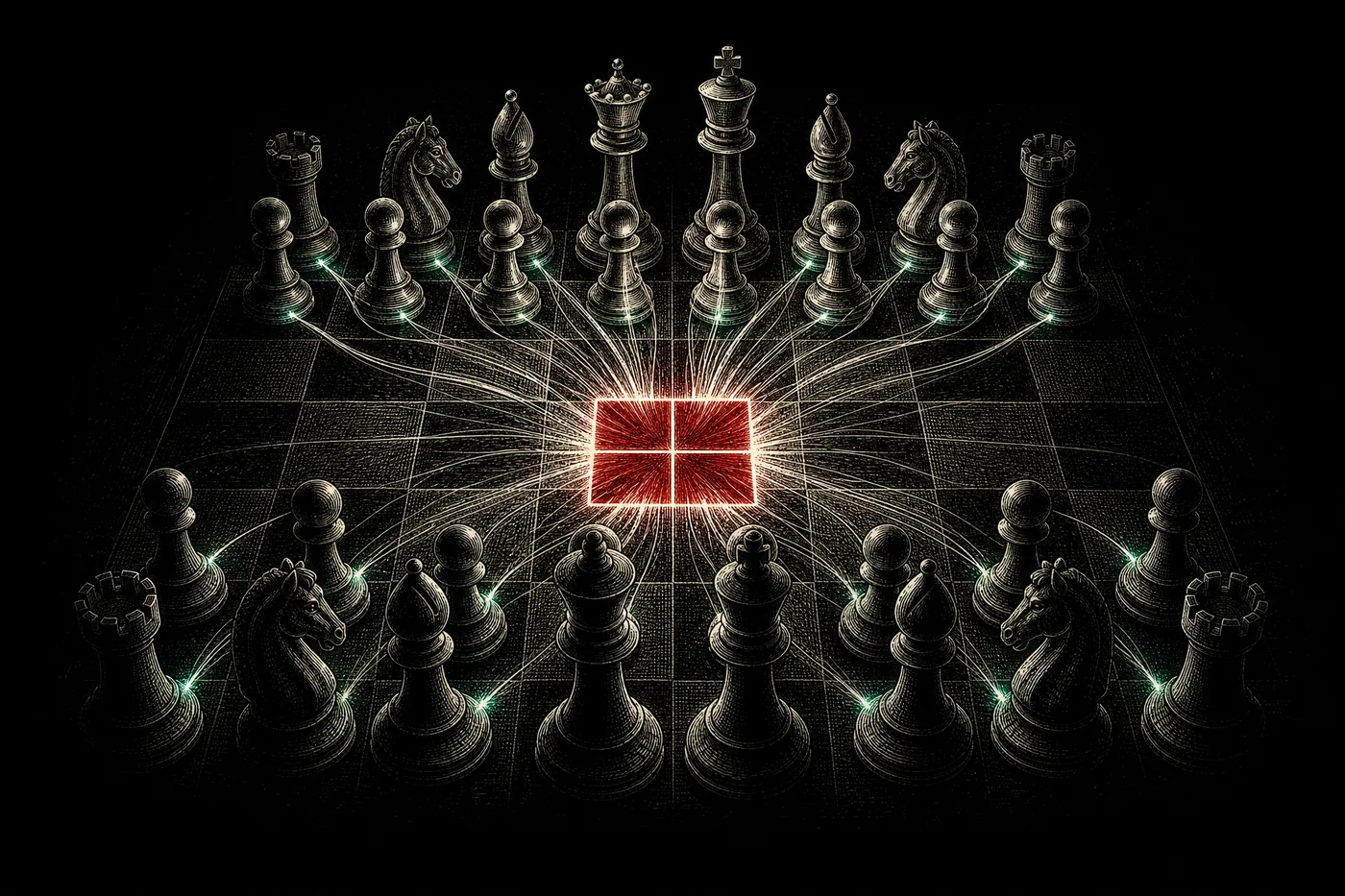
The four central squares — e4, d4, e5, d5 — are prime real estate. A knight parked in the middle reaches up to eight squares; shoved in the corner, it reaches two. From the center your pieces touch both wings, so you can swing an attack left or right at a moment’s notice. Control the middle and your whole army breathes; cede it and you’re cramped, reacting to whatever your opponent does.
That’s why 1. e4 and 1. d4 are the most popular first moves on Earth — they instantly stake a claim in the middle and free up your bishop and queen to come out. We go deep on this in controlling the center.
How do I develop my pieces the right way?
“Development” just means getting your pieces off their starting squares and into the game. Picture it like a basketball team: at the start, your players are all sitting on the bench. Development is subbing them in. A bishop stuck on its home square is a benched all-star doing nothing.
The beginner-friendly order:
- Pawns — push one or two center pawns to open lines (but don’t get pawn-greedy).
- Knights — out toward the center, usually to f3/c3 (or f6/c6 for Black).
- Bishops — to active diagonals where they actually see something.
- Castle — tuck the king away and connect your rooks.
- Queen and rooks — bring the heavy artillery once the board’s developed.
One golden rule with teeth: don’t move the same piece twice in the opening unless you have to. Every wasted tempo is a piece your opponent develops while you’re still fiddling. Full breakdown in developing your pieces.
Why is king safety such a big deal?
Because the whole game is, technically, a hunt for the enemy king — and yours is a target the second the board cracks open.
Your king starts in the center, the most violent neighborhood on the board. Leaving it there is like leaving your front door open in a thunderstorm. Castling fixes this in one move: it whisks the king into the corner behind a wall of pawns and wakes up a rook at the same time. Two-for-one.
The rule of thumb: castle within your first 8–10 moves unless something urgent stops you. We cover the full case in why king safety wins games.
How do I know which pieces are worth more?
Strategy leans hard on a mental price tag for each piece. Memorize these rough values — they’re the currency of every trade:
| Piece | Value (points) |
|---|---|
| Pawn | 1 |
| Knight | 3 |
| Bishop | 3 |
| Rook | 5 |
| Queen | 9 |
| King | priceless (it’s the whole game) |
These aren’t gospel — a well-placed knight can outshine a sleepy rook — but they’re a fantastic compass. The instant rule they give you: don’t trade a big piece for a small one without a great reason. Swapping your queen (9) for a bishop (3) is usually a disaster. Winning a rook (5) for a knight (3) is “winning the exchange” and it’s good.
This is also why “don’t hang your pieces” matters so much. A hanging piece is one sitting on a square the opponent can capture for free. Before every single move, run a one-second check: is the square I’m moving to attacked? Did my move leave anything else undefended? That habit alone will win you more games than any opening you memorize.
How do I actually make a plan?
Beginners freeze up here, imagining they need a genius 12-move scheme. You don’t. A plan can be tiny:
- “My opponent’s king is stuck in the center — I’ll open lines and attack it.”
- “That pawn on d5 is weak and undefended — I’ll pile up on it.”
- “I’ve got more space on the kingside — I’ll build an attack there.”
The trick is to read the position and ask, what’s the most obvious weakness or opportunity here? Then aim a couple of pieces at it. A simple plan executed beats a brilliant plan you never had.
A fun bit of history
The idea that the center matters wasn’t always obvious. For centuries players just attacked wildly. Then in the late 1800s a quiet, methodical player named Wilhelm Steinitz — the first official World Chess Champion — argued that you should build up small, lasting advantages (center control, better pieces, king safety) instead of swinging for a knockout every move. People thought he was boring. He also crushed nearly everyone for two decades. Turns out “boring” strategy wins, and most of modern chess thinking traces back to his ideas.
Common mistakes to dodge
- Bringing the queen out too early. It feels powerful, but enemy pieces just chase her around, gaining time (development) while you run. Patience.
- Grabbing pawns while undeveloped. That free pawn on the rim often costs you three moves and your king’s safety. Rarely worth it.
- Pushing wing pawns in the opening. Those h- and a-pawn pushes feel aggressive but usually just weaken your king and waste moves.
- Forgetting to castle. The classic killer. Get busy attacking, leave the king home, and the position blows up in your face.
- Moving without checking for threats. Half of all beginner losses are simply pieces given away for free. Slow down one second per move.
Key takeaways
- Chess strategy for beginners = center control, fast development, king safety, and not hanging pieces.
- Strategy is the long-term plan; tactics are the short combinations that cash it in.
- Memorize piece values (P1, N3, B3, R5, Q9) so you never trade badly.
- Castle early, develop knights and bishops before move 10, and don’t move one piece twice for nothing.
- A small, clear plan beats no plan. Always.
Frequently asked questions
What’s the single most important chess strategy for beginners? Don’t hang your pieces. More beginner games are lost to free giveaways than to anything else. A quick “is this square attacked?” check before every move is the highest-value habit in chess.
What are the best first moves in chess? 1. e4 and 1. d4 are the gold standard — both grab the center and open lines for your pieces. As Black, mirror with …e5 or …d5, or play …c5. Any of these is a great, principled start.
What’s the difference between strategy and tactics? Strategy is your long-term plan (where pieces belong, which side to attack). Tactics are short forcing sequences — forks, pins, skewers — that win material now. Strategy sets the stage; tactics deliver the punch.
How many moves should I spend developing? Roughly the first 8–12. Get your knights and bishops out, castle, and connect your rooks before launching anything. If your pieces are still home by move 12, you’re behind.
Do I need to memorize openings as a beginner? No. Understanding the principles — center, development, king safety — beats memorizing move orders you don’t understand. Learn the ideas first; specific openings come later. See opening principles.
Is it bad to trade pieces? Trading is fine when it’s even (knight for bishop) or when you’re ahead in material and want to simplify. It’s bad when you give up more value than you get. Use the point values as your guide.
Keep climbing
You’ve got the map. The natural next step is to drill the single most important idea on it — owning the middle of the board.
Next up: Controlling the center · Also great: developing your pieces, king safety, and the head-to-head on strategy vs tactics. Back to the hub: Learn chess.
Written and fact-checked by the Chess Lab Academy Editorial Team (AI-assisted, human-edited) · Positions verified with Stockfish 17 and rules checked against the FIDE Laws of Chess · Last verified 2026-06-25 · Sources · How we verify content.
