
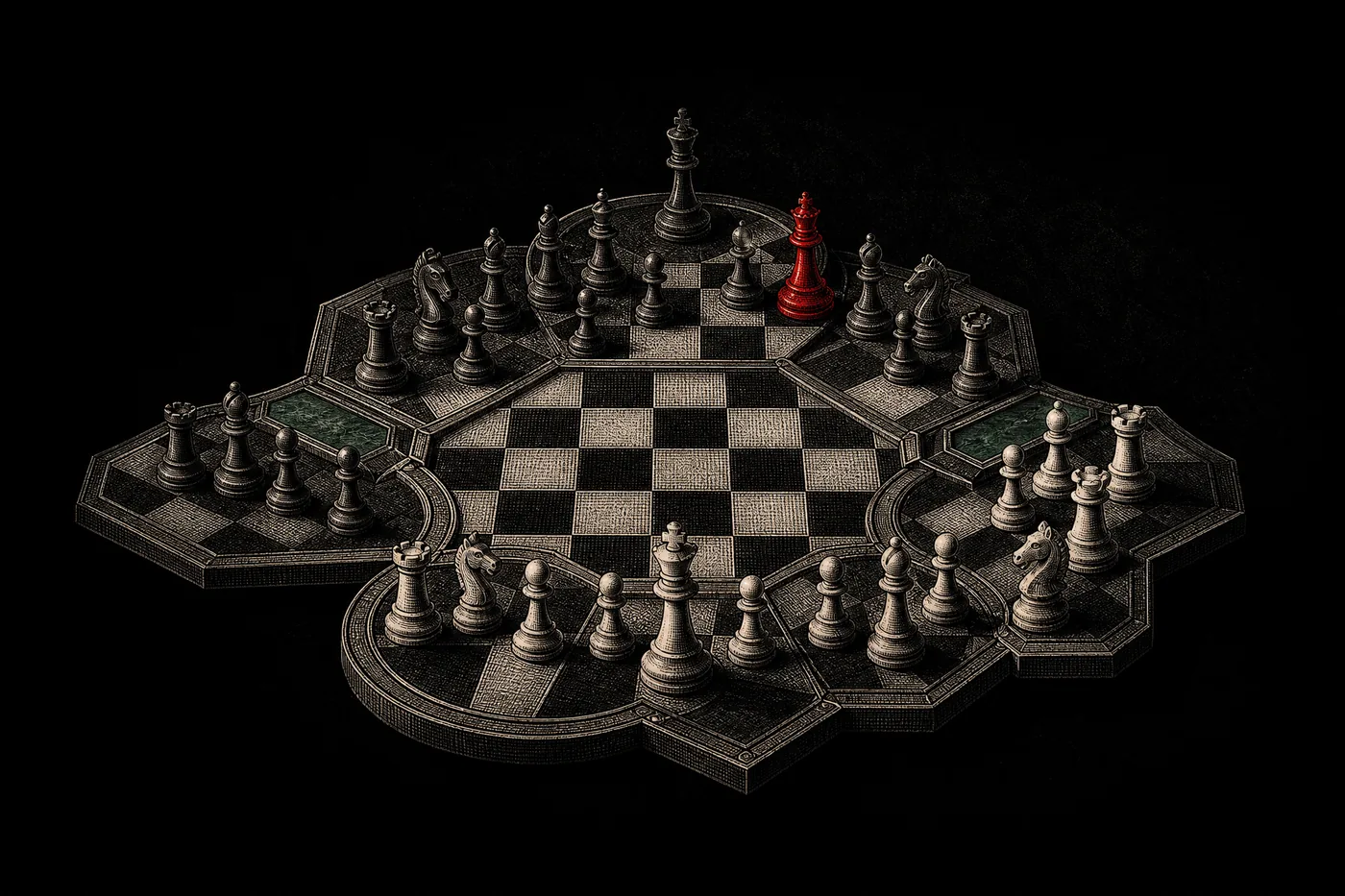
Antichess flips the entire point of chess upside down: you’re trying to lose all your pieces. The first player left with nothing on the board — or with no legal move to make — is the winner. It sounds like nonsense until you play a game, and then it becomes wildly addictive, because there’s one rule that changes everything: if you can capture, you must.
Also called Losing Chess, Giveaway Chess, or Suicide Chess, it’s one of the oldest and most-studied chess variants around. Here’s exactly how the topsy-turvy world works.
Antichess in 10 seconds
- Players: 2
- The twist: Captures are compulsory, and your goal is to lose all your pieces (or get stalemated).
- How you win: Be the first to have no pieces left — or no legal move.
- Where to play: Lichess (native variant); on chess-variant servers.
The rules of antichess
Pieces move exactly the way they do in standard chess — knights hop, bishops slide diagonally, pawns push and capture forward. What changes is why you move them and when you’re forced to.
Capturing is forced
This is the engine of the whole game. If you have a legal capture available, you must play a capture. Lichess states it plainly: “Capturing is forced. If you can take a piece, you must.” The one bit of freedom you get: if several captures are on offer, you choose which one to make. No capture available? Then you play any normal move you like.
That single rule turns antichess into a game of luring. You dangle a piece where the opponent has no choice but to grab it — dragging their pieces out of position and setting up a chain reaction where they’re forced to keep gobbling up everything you feed them.
The goal is to lose everything
You win by getting rid of all your pieces, or by being stalemated — having no legal move on your turn. Either way, running out is winning. There’s no such thing as “staying alive” here.
The king is just an ordinary piece
Strip away everything you know about the king. In antichess it has no royal powers whatsoever. Wikipedia describes it as “effectively replaced by a mann” — a plain piece that moves one square in any direction. Which means:
- There is no check and no checkmate. The concepts simply don’t exist.
- The king can be captured like any other piece — and often must be, since captures are forced.
- There is no castling. With no king safety to worry about, there’s nothing to castle for.
Pawns still promote — even to a king
When a pawn reaches the far rank, it promotes. And in antichess you get an extra option that’s illegal in normal chess: on Lichess, you can promote a pawn to a king. As Lichess notes, “pawns may be promoted to kings.” Since kings are just ordinary pieces here, a freshly-minted king can be a genuinely useful (or useful-to-sacrifice) little unit.
Who moves first is a big deal
Fun fact for the rabbit-hole crowd: antichess is solved. With perfect play, White forces a win — computer analysis in 2016 confirmed that 1.e3 wins for White. Don’t panic, though: actually navigating those forced lines by hand is fiendishly hard, so real games between humans are still a proper fight.
How to win at antichess
Winning-by-losing rewires your instincts completely. A few tips:
- Force feeding is everything. Look for moves that leave the opponent only one legal reply — a forced capture that pulls their pieces exactly where you want them.
- Count the capture chains. Before you offer a piece, trace what happens next: they must take, then maybe you must take back, and so on. A well-set chain can strip half your army in a few moves.
- Beware of giving your opponent a choice. If multiple captures are available to them, they pick — and they’ll pick the one that’s worst for you. Aim for positions where their reply is completely forced.
- Long-range pieces are liabilities. A queen or bishop that can reach across the board is easy to force into unwanted captures. Sometimes the goal is to get your powerful pieces taken as fast as possible.
- Watch the stalemate finish. Because being unable to move also wins, keep an eye out for positions where you can hand yourself a stalemate — no legal move on your turn is a victory, not a draw. (It’s the opposite of normal stalemate logic!)
Where to play antichess
Lichess has antichess as a built-in variant — you can play it rated or casual, at any time control, versus humans or the bot. It’s one of the site’s staple variants. Chess.com doesn’t offer antichess in its main variant menu, so Lichess (and dedicated chess-variant servers) are where the action is. It also plays perfectly fine over the board if both players agree to enforce the forced-capture rule honestly.
Antichess FAQ
Is antichess harder than normal chess? It’s a totally different skill. The forced-capture rule means much of the game is calculation — reading forced sequences several moves deep. Many players find it easier to pick up but surprisingly deep to master.
Can beginners play antichess? Yes, and it’s a great brain-bender for beginners because it breaks the “protect your king, keep your pieces” habits and makes you think about forcing moves. If you know how the pieces move, you’re ready.
Why is it called Suicide Chess? Because you’re actively trying to get your own army wiped out. “Losing Chess,” “Giveaway,” and “Suicide” all describe the same idea — the winner is the one who ends up with nothing.
Can you really promote a pawn to a king? On Lichess, yes — that’s a legal antichess promotion. Since the king has no special status in this variant, it’s just another piece you might want (or want to throw away).
Try another rule-bender
Antichess is the variant where losing is winning. If backwards logic is your thing, check out Atomic chess, where captures literally explode, the topsy-turvy Horde chess, or the whole variants hub.
Written and fact-checked by the Chess Lab Academy Editorial Team (AI-assisted, human-edited) · Rules verified against the Lichess antichess variant rules and Wikipedia · Last verified 2026-07-13 · Sources · How we verify content.
