
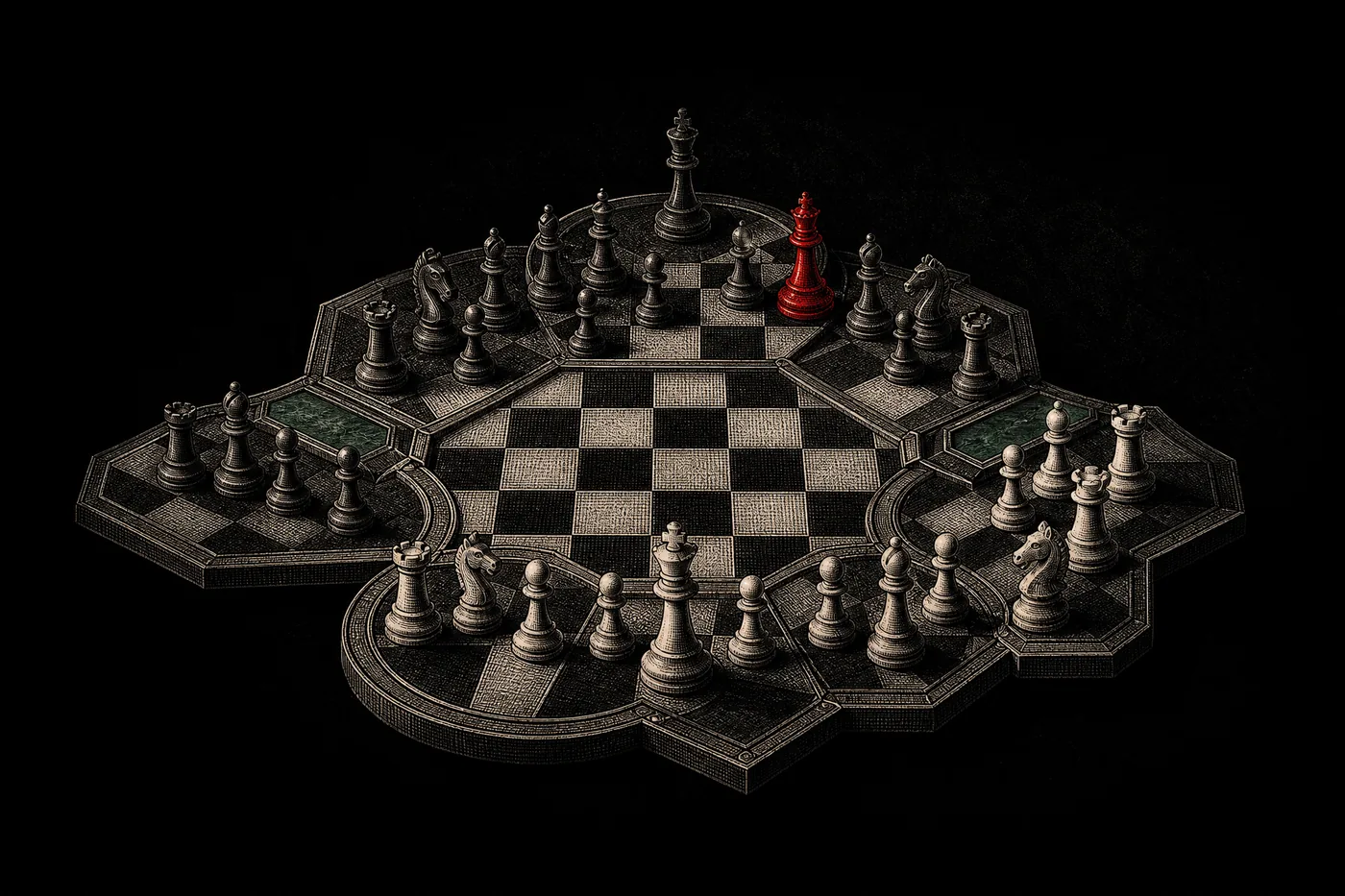
Crazyhouse is chess where nothing ever really dies. Every enemy piece you capture switches to your color and lands in your “pocket” — and on any turn, instead of moving a piece on the board, you can drop one of those pocketed pieces onto an empty square as your own. Material is never gone; it just changes teams. It’s the single-board, two-player version of Bughouse, and it’s gloriously chaotic.
The result is a game where attacks come out of nowhere, sacrifices are often good, and a “winning” position can flip in two moves. If you like tactics and hate boring endgames, this is your variant.
Crazyhouse at a glance
- Players: 2, one board (unlike its 4-player cousin, Bughouse)
- How it differs: captured pieces change color and go to your pocket; you can drop them back onto the board on your turn
- Where it’s played: Lichess (a fully supported variant); available on some other servers
- Origin: a two-player, single-board adaptation of Bughouse
The rules: how Crazyhouse works
Every normal chess rule still applies — piece movement, check, checkmate, castling, en passant, promotion. Crazyhouse just adds one enormous new mechanic on top: the pocket.
Capturing and dropping
- When you capture an enemy piece, it flips to your color and goes into your pocket (also called your reserve or bank). A black bishop you capture becomes a white bishop in your hand.
- On any turn, instead of moving a piece on the board, you may drop one pocketed piece onto any empty square. That drop counts as your whole move for the turn.
- There’s no limit to how many pieces you can hold, and no rule forcing you to drop — you can sit on a piece until the perfect moment.
The drop restrictions
The important fine print — get these right and you’ll never make an illegal move:
- Pawns may not be dropped on the 1st or 8th rank. (No instant back-rank promotions.)
- A pawn dropped on your 2nd rank keeps its two-square first move. It behaves like a normal pawn from there.
- Drops can give check — and even deliver checkmate. Parachuting a queen or knight next to a lonely king is a totally legal way to end the game. This is a huge difference from Shogi, which forbids pawn-drop mates.
- You can stack pawns. Dropping a second (or third) pawn onto a file you already have a pawn on — doubled or tripled pawns — is perfectly legal.
- Promoted pieces revert to pawns when captured. If you promote a pawn to a queen and your opponent later captures that queen, it enters their pocket as a pawn, not a queen. (Good clients mark these so you can tell.)
Why it changes everything
That last-second defensive resource matters constantly: a check that would be checkmate in normal chess can be blocked by dropping a piece in the way. As long as you have something in your pocket, you’re rarely truly lost — you can plug holes, block checks, and counterattack out of thin air. It makes the game wildly sharp and forgiving of bold play.
How to play Crazyhouse well
Crazyhouse strategy barely resembles regular chess. A few things to internalize:
- Material is fluid — activity is king. Being “up a piece” means little if it’s just sitting in your pocket doing nothing. What matters is who’s attacking. Don’t hoard; use your pieces (on the board or from hand) to make threats.
- King safety is life or death. Because attackers can drop next to your king with zero warning, an exposed king gets mated fast. Castle early and keep the squares around your king defended and occupied — empty squares near your king are landing pads for enemy drops. This is king safety on hard mode.
- Watch what you hand your opponent. Every piece you capture arms them too, because when they recapture, that piece goes to their pocket. Think about who benefits from a trade before you make it.
- Look for drop-and-mate patterns. Many wins come from a piece already on the board pinning things down while you drop the finishing blow next to the king. Learn to spot when the enemy king has a weak square you can parachute into.
- Keep at least one defender in hand. Holding a knight or pawn in reserve to block a surprise check has saved countless games. Don’t empty your pocket unless you’re delivering mate.
Where to play Crazyhouse
- Lichess is the home of Crazyhouse — it’s a fully supported variant with casual play, rated games, and tournaments, all free. The interface makes dropping pieces intuitive.
- Other servers support it here and there, and it appears in some variant chess apps.
- Over the board it’s rarer than Bughouse (you need a way to hold captured pieces off to the side), but it’s totally doable casually with a friend and a spare set for your reserves.
Frequently asked questions
Is Crazyhouse harder than normal chess? It’s more chaotic and tactical, and calculation gets harder because “impossible” moves (like a queen appearing on an empty square) are always on the table. But it’s also very forgiving — you can defend positions that would be dead lost in classical chess. Sharp attackers tend to love it.
Can beginners play Crazyhouse? Yes! Just learn the normal rules of chess first, since everything except drops is standard. Beginners often enjoy how it rewards aggressive, creative play instead of dry technique.
What’s the difference between Crazyhouse and Bughouse? Bughouse is the 4-player, two-board team version where captured pieces go to your partner. Crazyhouse is the solo, one-board version where captured pieces go to your own pocket. Same recycling idea, very different social experience.
Can you drop a piece to deliver checkmate? Yes — including with a pawn. Drop-mates are a core part of Crazyhouse and one of its most satisfying finishes.
The bottom line
Crazyhouse keeps every rule of chess and adds one game-changer: captured pieces switch sides and can be dropped back into battle. That single mechanic makes material fluid, king safety paramount, and comebacks always possible. If you want the fastest, most tactical, least memorization-heavy version of chess around, pocket this one.
Want more chaos? Meet its team-based parent, Bughouse; or try the aggressive-but-simple Three-Check and the race-to-the-center rush of King of the Hill. It’s all in the variants library.
Written and fact-checked by the Chess Lab Academy Editorial Team (AI-assisted, human-edited) · Rules verified against the Lichess Crazyhouse page and Wikipedia · Last verified 2026-07-13 · How we verify content.
