
Deflection is a tactic where you force an enemy piece to abandon an important job — usually by attacking it or offering it bait it can’t refuse — so that whatever it was defending is suddenly left wide open. The defender is still alive; it just got yanked off its post at the worst possible moment.
It’s the chess equivalent of ringing a doorbell to lure the guard away from the vault. The guard’s fine. The vault is not.
The 10-second version
- A piece is busy defending something crucial.
- You make it an offer (or threat) it can’t refuse, pulling it away.
- The thing it was guarding is now undefended you strike.
- Often the deflecting move is a sacrifice — you give up material to drag the defender off duty.
How does deflection work?
The setup is always the same. Some enemy piece is doing an important job: guarding a mate square, defending a hanging piece, holding a promotion square, covering the back rank. As long as it stays put, you can’t break through.
So you deflect it. You attack it, or you dangle bait so juicy the piece has to leave its post to grab it. The instant it moves, the job it was doing goes undone — and you pounce on the now-undefended weakness.
The classic deflection is a sacrifice: you throw a piece (even your queen!) onto a square where the defender is more or less forced to capture it. The defender takes the bait, leaves its duty, and you cash in with a bigger gain — frequently checkmate.
Look at the position above. Black’s king is stuck behind its pawns (a classic back-rank weakness), and the only defender of the back rank is the queen on f8. White can’t just play a rook to the 8th — the queen guards it. So White deflects: Qd8! This attacks the black queen and threatens mate, and Black is forced to play Qxd8 (capturing White’s queen). But that’s the trap — the black queen has now been dragged off the back rank.
Rxd8 is checkmate. White sacrificed the queen to deflect Black’s only defender, and the rook delivered the killing blow on the empty back rank. That’s deflection in its purest, most satisfying form — give up material to pull the guard away, then mate.
What’s the difference between deflection and decoy?
These two are mirror images, and it’s worth getting straight:
| Deflection | Decoy | |
|---|---|---|
| The goal | Force a piece away from a good square | Lure a piece onto a bad square |
| Direction | Push it off its post | Pull it into a trap |
| Mental image | ”Get out of there!" | "Come over here!” |
So deflection drags a defender away from where it’s useful. Decoy lures a piece (often the king) toward a square where it gets forked, mated, or otherwise punished. Same family — distract-and-exploit — but opposite directions. One repels, one attracts.
What’s the difference between deflection and removing the defender?
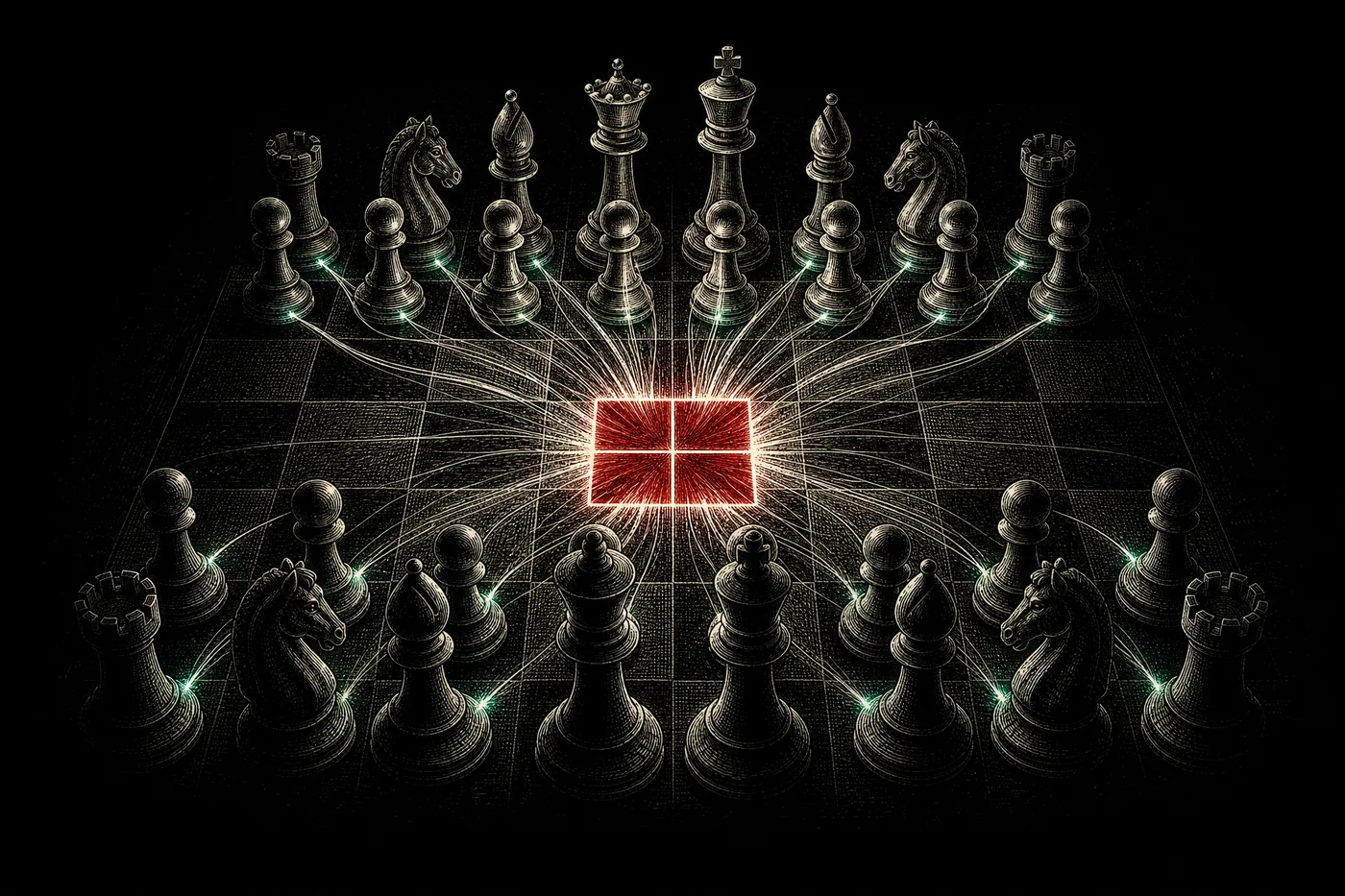
Another close cousin — removing the defender:
- Removing the defender usually means you capture or trade off the guard — it physically leaves the board.
- Deflection means the guard survives but gets lured to a different square, no longer doing its job.
In our example, the black queen didn’t get captured — it captured White’s queen and moved to d8, surviving but uselessly far from the back rank. That’s deflection: the defender lives, but its defense doesn’t. (In practice, coaches sometimes use these terms interchangeably. The shared idea — no defender, no defense — matters more than the label.)
How do you spot a deflection?
Sharpen your radar with this routine:
- Find the key square or piece you want to attack — a mate square, a hanging piece, a back rank — and note what’s defending it.
- Identify the single overworked or pinned-to-duty defender. Often one piece is doing all the guarding.
- Look for a way to force that defender to move — a check, a capture, or a sacrifice it can’t decline.
- Calculate the payoff. After the defender’s deflected, is the weakness truly fatal? Make sure a second defender doesn’t swoop in.
The trigger question: “What’s this defender’s job — and how do I make it stop doing it?”
A bit of history
Deflection sacrifices are the bread and butter of brilliancy prizes — those dazzling games where a player gives up huge material to pull off a forced mate. Many of the most celebrated “queen sacrifices” in chess history are really just deflections in a fancy hat: the queen isn’t gone for nothing, it’s gone to drag a defender off duty. Spectators gasp, the defender takes the bait, and mate arrives two moves later. It’s been thrilling chess fans for as long as the game’s had a press.
Common mistakes to dodge
- Sacrificing without a follow-up. Deflection only works if pulling the defender away actually wins something. Calculate the finish before you throw material.
- Assuming the deflection is forced. Your “must-take” sacrifice might have a quiet refusal — your opponent ignores the bait. Always check whether they can decline.
- Missing the backup defender. You deflect one guard, but a second piece covers the same square. Count all defenders first.
- Confusing it with decoy. Deflection pushes a piece away; decoy lures it in. Keep the directions straight.
Key takeaways
- Deflection forces an enemy piece to abandon a key defensive duty, leaving a weakness exposed.
- It’s often a sacrifice — you give up material to drag the defender off its post.
- It differs from decoy (which lures a piece onto a bad square) and from removing the defender (which captures the guard outright).
- Hunt for overworked single defenders of mate squares and back ranks.
- Always calculate the finish — deflection without a payoff is just giving away material.
Keep climbing
Deflection, decoy, and overloading form a tight trio of “distract the defender” tactics. Learn all three and a huge category of combinations opens up.
Next up: The decoy — luring a piece into a trap · Also essential: overloading, removing the defender, and the pin. Want the full map? Visit the tactics hub.
Written and fact-checked by the Chess Lab Academy Editorial Team (AI-assisted, human-edited) · Every position verified with Stockfish 17 and rules checked against the FIDE Laws of Chess · Last verified 2026-06-25 · Sources · How we verify content.
