
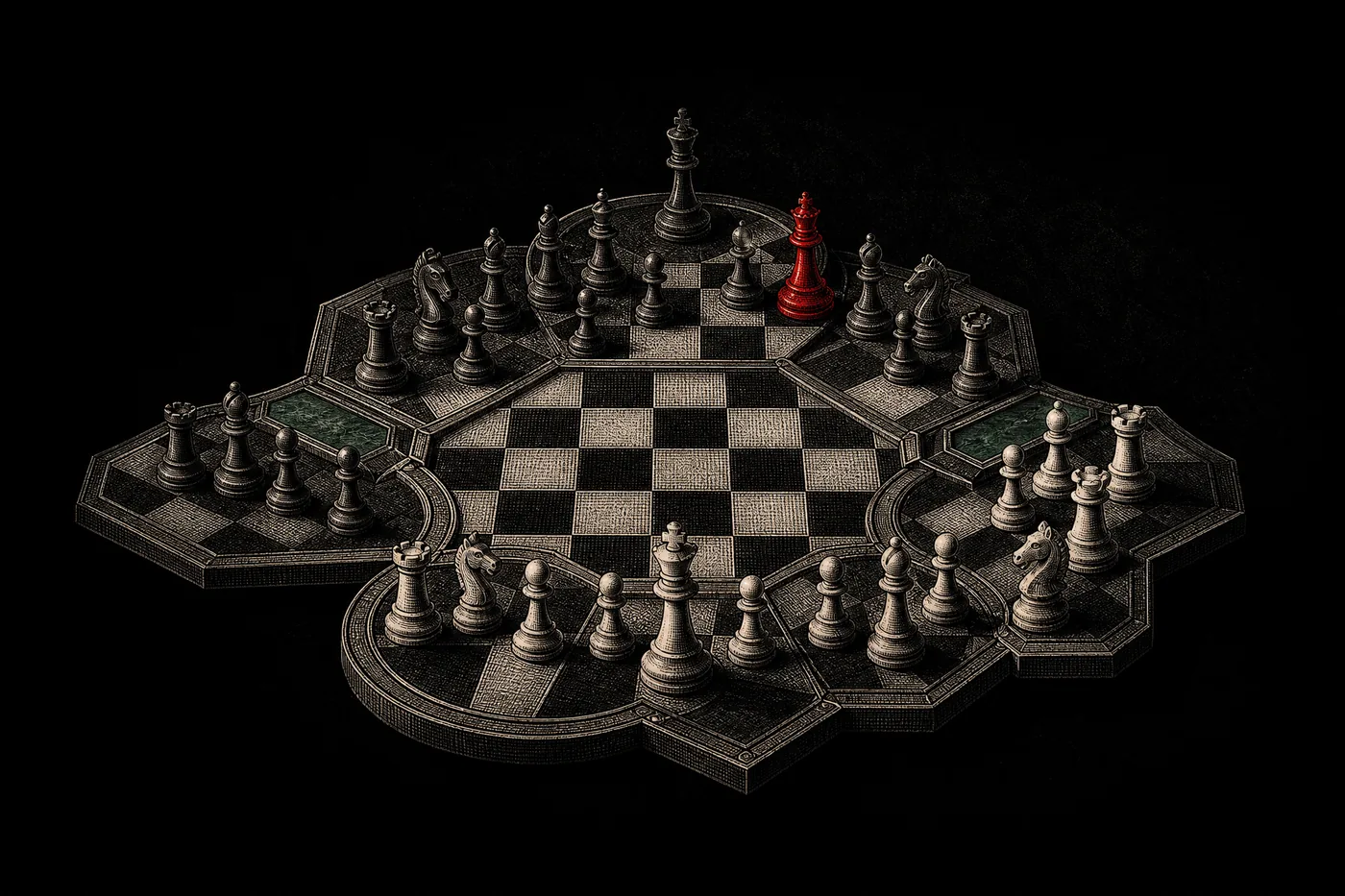
King of the Hill flips one of chess’s oldest instincts on its head. Normally you spend the whole game hiding your king in the corner — here, you win by marching your king to the middle of the board. Get your king safely onto any of the four center squares — d4, e4, d5, or e5 — and you win on the spot. (Old-fashioned checkmate still wins too.)
Suddenly the center isn’t just where the action is — it’s the finish line. Every game becomes a tense race where both players are eyeing the same four squares, and a king that looks “exposed” might actually be one step from victory.
King of the Hill at a glance
- Players: 2 (standard chess otherwise)
- How it differs: get your king to a center square (d4, e4, d5, e5) and you win instantly — checkmate also wins as usual
- Where it’s played: Lichess and Chess.com both support it as a variant
- Vibe: aggressive and fast; the center is the whole battlefield
The rules: how King of the Hill works
Here’s the beautiful part — every normal rule of chess stays exactly the same. Pieces move identically, checkmate still ends the game, castling, en passant, promotion — all standard. There is precisely one thing added: a second way to win.
The winning condition
- If you make a legal move that lands your king on d4, d5, e4, or e5 — the four central squares, “the hill” — you win immediately.
- The move has to be legal. You can’t move your king onto a center square if doing so would put it in check — that move would be illegal anyway, so it doesn’t count as a win. Your king has to arrive on the hill safely.
- Checkmate still wins. The classic goal is fully intact. So you’re always juggling two threats at once — mate the enemy king or get your own king to the middle — and defending against both.
That’s the entire rulebook difference. If you know standard chess, you’re ready to play King of the Hill right now.
Why this changes the whole game
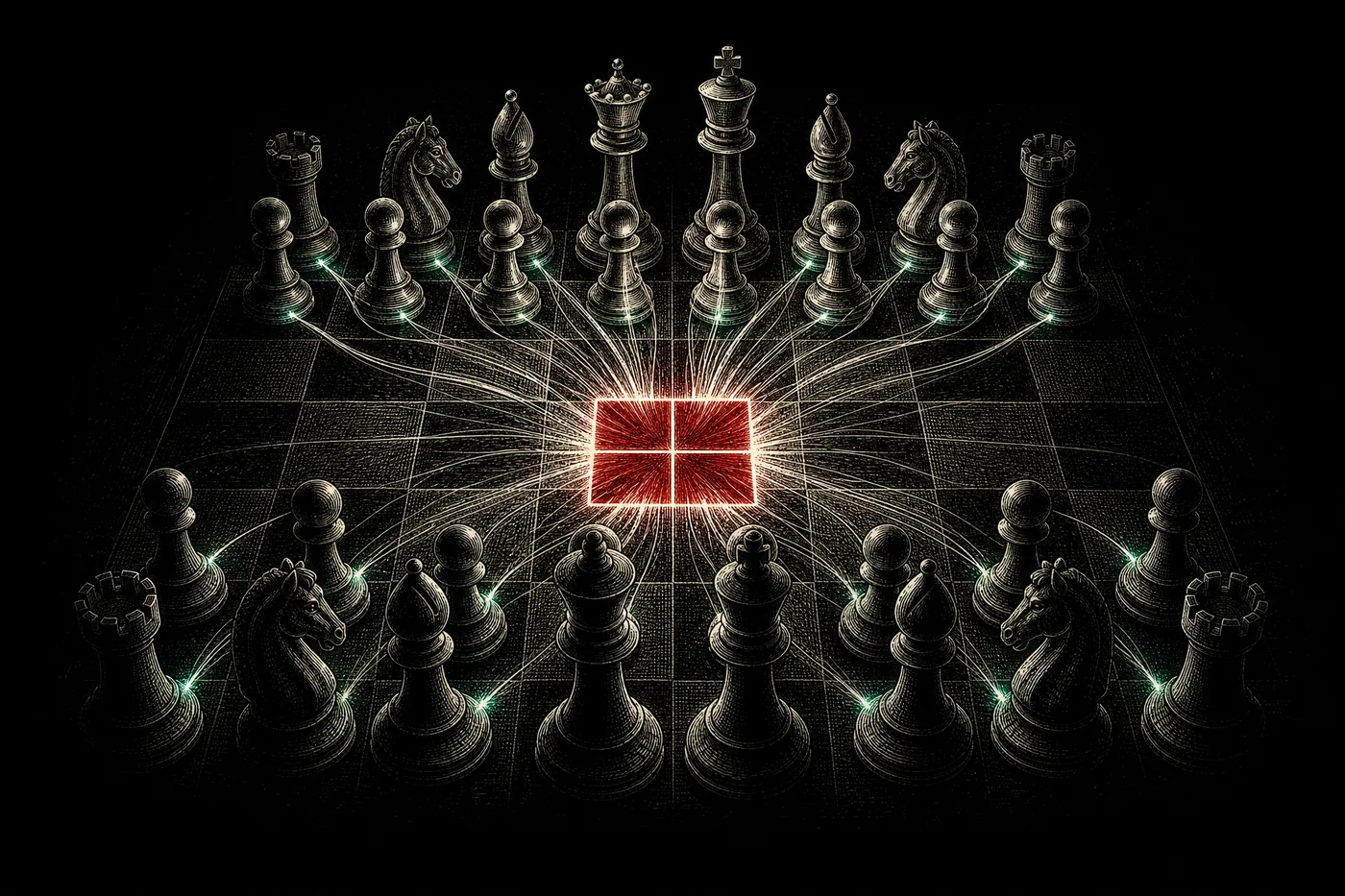
In normal chess your king is a liability you protect. In King of the Hill your king is also an attacker with a mission. Both players must constantly watch two dangers: the usual checkmate threat and the enemy king sprinting toward the center. Controlling the four hill squares — attacking them so the enemy king can’t safely step on — becomes just as important as controlling material. The middle of the board turns into a contested summit that both kings want to climb.
How to win at King of the Hill
Strategy diverges sharply from regular chess. A few essentials:
- Fight for the center squares — both ways. You want to reach d4/e4/d5/e5, and you want to cover them so the enemy king can’t. Pieces that control those four squares (knights and queens are great at this) are doing double duty: normal central control and hill defense.
- Your king is a runner, so plan its route. Look for a safe path to the center. Sometimes advancing the king a little, guarded by your own pieces, is a genuine winning plan — not the reckless blunder it would be in classical chess.
- But don’t get mated on the way. A king marching up the board is still a king — walk it into checks or a mating net and you’ve lost. Balance ambition with king safety; escort your king with defenders rather than sending it out alone.
- Block the enemy king’s approach. If your opponent’s king is edging toward the hill, put pieces on or near the center squares to slam the door. Denying the hill is as good as scoring it yourself.
- Keep both win conditions in mind every move. The best players threaten mate and a king march at the same time, forcing the opponent to defend two things at once. If they stop your king, maybe the mating attack breaks through — and vice versa.
Where to play King of the Hill
- Lichess supports King of the Hill as a built-in variant — casual, rated, and tournament play, free, with the center squares highlighted so you can see the goal.
- Chess.com offers it on their Variants page as well.
- Over the board it’s simple to play casually — use a normal set and just remember the extra rule: king to the middle wins.
Frequently asked questions
Is King of the Hill harder than normal chess? It’s usually faster and more aggressive, and many people find it easier to enjoy because there’s a clear, intuitive goal — get to the middle. But juggling two win conditions at once takes some getting used to, so it stretches your thinking in fun new ways.
Can beginners play King of the Hill? Yes, and it’s a great teaching variant — it naturally drills the value of controlling the center, one of the most important ideas in all of chess. Learn the basic rules first, then race for the hill.
Which squares win the game? The four central squares: d4, d5, e4, and e5. Get your own king legally onto any one of them and you win instantly.
Can I still win by checkmate? Absolutely. Checkmate is always a legal way to win in King of the Hill. The center-square rule is just a second, faster path to victory.
The bottom line
King of the Hill keeps every rule of chess and adds one irresistible new goal: get your king to the middle and win. That single twist transforms your king from a target into an attacker, makes the four center squares the most valuable real estate on the board, and keeps every game fast and double-edged. If you want a fresh, aggressive spin on chess that’s dead simple to learn, climb the hill.
Craving more variants? Try the check-hunting rush of Three-Check, memory-proof Chess960, or the 2-vs-2 chaos of Bughouse — all waiting in the variants library.
Written and fact-checked by the Chess Lab Academy Editorial Team (AI-assisted, human-edited) · Rules verified against the Lichess King of the Hill page and Chess.com’s King of the Hill page · Last verified 2026-07-13 · How we verify content.
