
Chess is a two-player strategy game played on an 8×8 board where each side commands 16 pieces. Your goal is to checkmate the enemy king — trap it so it’s under attack and can’t escape. White moves first, then players alternate turns, each moving one piece per turn. That’s the whole game in a nutshell, and you can learn the rest in an afternoon.
This is your home base. Below you’ll find everything a brand-new player needs, and links to deeper lessons on every piece of the puzzle.
The 60-second version
- Board: 8×8 grid, 64 squares. Light square in your bottom-right corner.
- Goal: Checkmate the enemy king (attack it with no legal escape).
- Turns: White goes first; players alternate, one move each.
- Pieces: Pawn, knight, bishop, rook, queen, king — each moves differently.
- Special moves: Castling, en passant, and pawn promotion.
What’s the goal of chess?
Forget capturing everything — chess isn’t about clearing the board. The whole game points at one target: the enemy king.
When you attack the king, that’s check. The opponent must respond — by moving the king, blocking the attack, or capturing the attacker. If they can’t do any of those things, that’s checkmate, and the game’s over. You win.
There’s no “capturing” the king like a normal piece. The king is the heart of your army; the moment it’s trapped, the game ends. Everything else you do — grabbing pawns, trading pieces, controlling the center — is just a means to that one end.
Not every game ends in checkmate, though. Plenty end in a draw (a tie), which we’ll cover below. For the deep dive on the win condition, see what is checkmate.
How do you set up the board?
Before anyone moves, you’ve got to set up correctly — and beginners get this wrong constantly.
The golden rule: “white on the right.” When the board faces you, the bottom-right corner square must be light-colored. Get that backward and your whole army is mirrored.
Here’s the back-row order from each player’s left to right: rook, knight, bishop, queen, king, bishop, knight, rook. The two memory tricks that never fail:
- “Queen on her own color” — the white queen sits on a light square (d1), the black queen on a dark square (d8). If your queen’s on the wrong color, you’ve swapped her with the king.
- Pawns fill the entire row in front.
We walk through it square by square in how to set up a chessboard.
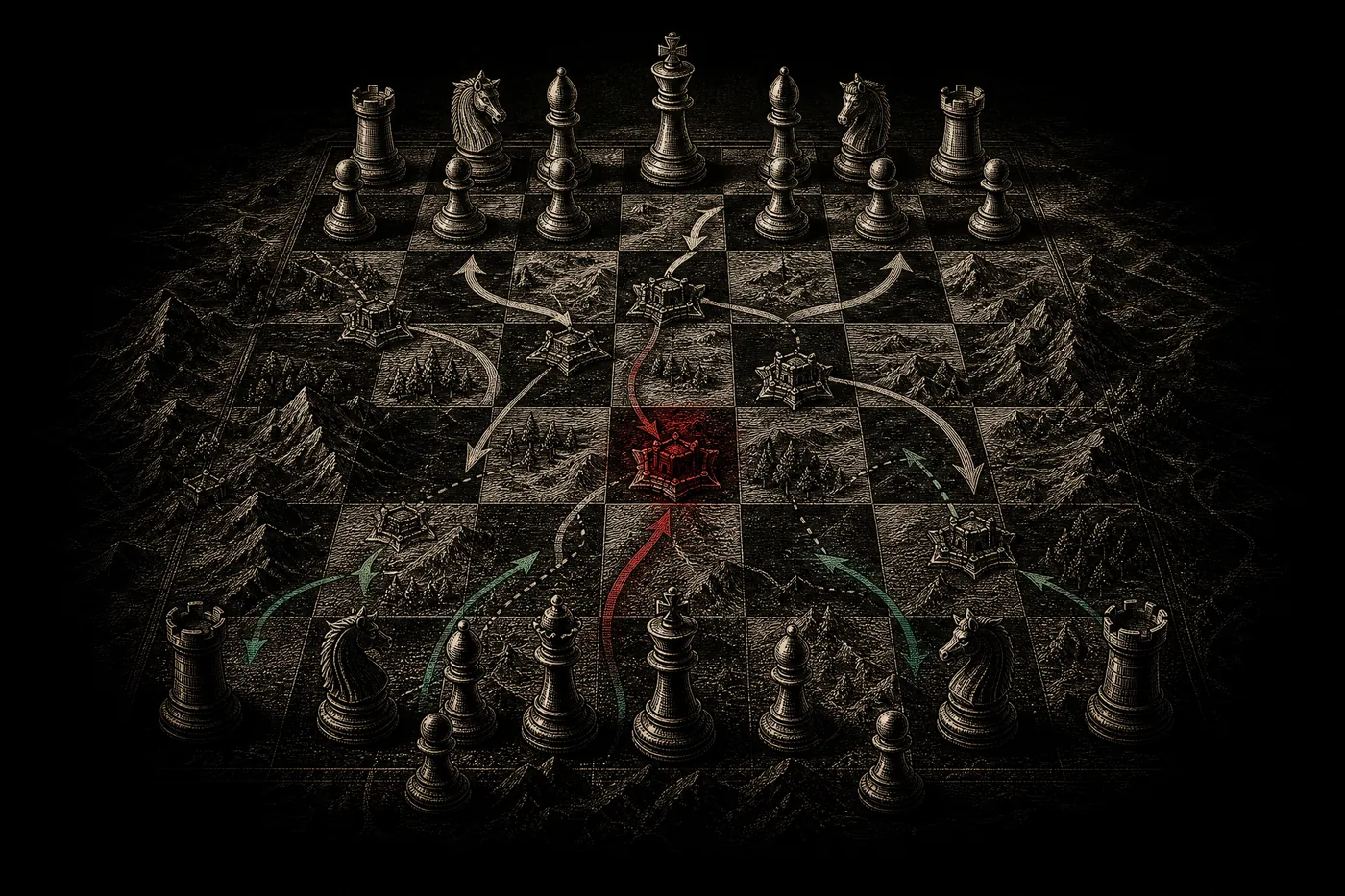
How do the chess pieces move?
Each of the six piece types has its own personality. Here’s the quick tour:
- Pawn — Marches straight forward one square (or two on its very first move), but captures diagonally. It’s the only piece that moves and attacks in different directions.
- Knight — Jumps in an “L” shape: two squares one way, then one square perpendicular. It’s the only piece that can leap over others.
- Bishop — Slides any distance diagonally. Each bishop is stuck on one color forever.
- Rook — Slides any distance in straight lines: up, down, left, right.
- Queen — The powerhouse. Moves any distance in any straight direction — like a rook and bishop combined.
- King — Moves one square in any direction. Slow but irreplaceable.
No piece (except the knight) can jump over others, and you can never move onto a square occupied by your own piece. Capturing simply means landing on an enemy piece’s square and removing it. The full breakdown with diagrams lives in how the pieces move.
How much is each piece worth?
Since you’ll be trading pieces all game, you need a rough sense of what each is worth. Players use a classic point system:
| Piece | Points |
|---|---|
| Pawn | 1 |
| Knight | 3 |
| Bishop | 3 |
| Rook | 5 |
| Queen | 9 |
| King | priceless (game over if it’s lost) |
These numbers aren’t official rules — they’re a guideline to help you judge trades. Swapping your bishop (3) for the enemy rook (5)? Usually a great deal. Giving up your queen (9) for a knight (3)? Almost always a disaster. We unpack all the nuance in chess piece values.
What are the special moves?
Once the basics click, three special rules make chess far richer:
- Castling — A two-in-one move that tucks your king safely into the corner while activating a rook. The only move where you shift two of your own pieces at once. See how to castle.
- En passant — A sneaky pawn capture. If an enemy pawn dashes two squares forward to skip past yours, you can capture it as if it only moved one — but you must do it immediately. Full rules in en passant.
- Pawn promotion — Get a pawn all the way to the far end of the board and it transforms into any piece you want (almost everyone picks a queen). Details in pawn promotion.
How does a game actually end?
Three main outcomes:
- Checkmate — The king is in check and has no legal escape. The attacker wins. This is the goal.
- Resignation — A player who sees defeat coming can simply give up. Totally normal, and polite at higher levels.
- Draw (a tie) — Several ways this happens: stalemate (a player has no legal move but isn’t in check), insufficient material to checkmate (e.g., just two kings left), the 50-move rule, threefold repetition, or mutual agreement.
That stalemate rule trips up beginners hard: if you corner the enemy king but leave it no legal move while it’s not in check, you’ve accidentally made a draw instead of winning. The full rulebook is in the rules of chess.
Why it matters: chess teaches you to think ahead
Here’s the real payoff. Chess isn’t just a game — it’s a workout for planning, pattern recognition, and patience. Every move asks the same question: “If I do this, what can my opponent do back?” That habit of looking ahead is the entire skill, and it’s why people play chess for a lifetime without ever getting bored. You’ll lose plenty of games early on. Everyone does. Each loss just shows you a pattern you’ll recognize next time.
A fun bit of history
Chess is roughly 1,500 years old. It traces back to a game called chaturanga in India around the 6th century, spread through Persia and the Islamic world, and reached Europe by the 1000s. The modern rules — including the powerful queen and the two-square pawn move — mostly settled in Europe around the 1500s. Fun fact: the queen used to be one of the weakest pieces, only able to shuffle one square diagonally. When she was upgraded to the board’s most powerful piece, the faster new game was nicknamed “Mad Queen Chess.” She’s been running the show ever since.
Common beginner mistakes to dodge
- Setting up the board wrong. Remember “white on the right” and “queen on her own color.”
- Leaving your king in the center. Castle early to tuck it away safely.
- Bringing the queen out too soon. She gets chased around and you waste moves. Develop knights and bishops first.
- Grabbing pawns while ignoring danger. Don’t go pawn-hunting if your king is exposed.
- Forgetting it’s a two-player game. Always ask what your opponent is threatening before you move.
Key takeaways
- Chess is played on an 8×8 board; set it up with a light square bottom-right and the queen on her own color.
- The goal is checkmate — trapping the enemy king so it can’t escape.
- Each piece moves differently; knights jump, the queen is strongest, the king moves one square.
- Piece values (pawn 1, knight/bishop 3, rook 5, queen 9) help you judge trades.
- Learn the three special moves: castling, en passant, and promotion.
- Games end in checkmate, resignation, or a draw (including stalemate).
Keep climbing
You’ve got the big picture — now go deep on each piece of it.
Start here: Set up the board, then learn how the pieces move and the full rules of chess. After that, castle your king to safety and study what checkmate really means.
Written and fact-checked by the Chess Lab Academy Editorial Team (AI-assisted, human-edited) · Rules verified against the FIDE Laws of Chess and every position checked with Stockfish 17 · Last verified 2026-06-25 · Sources · How we verify content.
