
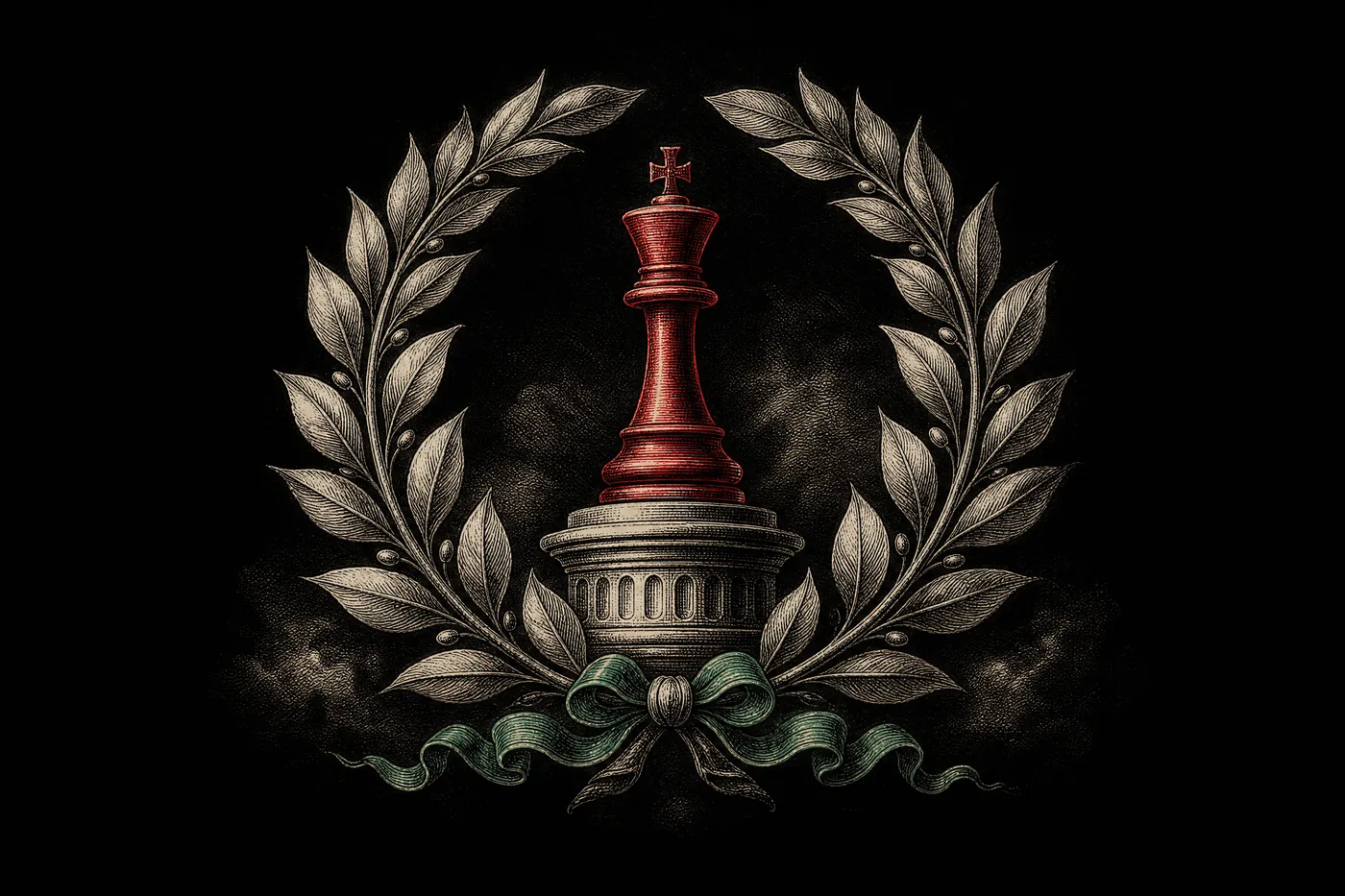
Mikhail Tal was the Latvian-Soviet grandmaster the chess world knew as “The Magician from Riga” — and for a whole generation of players, the most thrilling attacker who ever lived. In 1960, at just 23, he tore the World Championship away from the great Mikhail Botvinnik to become the 8th World Champion — the youngest ever at that point. He didn’t win with quiet technique. He won by throwing pieces at the enemy king, dragging opponents into wild, unclear complications, and trusting his imagination to find a path through the chaos.
Quick facts
- Full name: Mikhail Nekhemyevich Tal · Born: 9 November 1936, Riga, Latvia (then USSR) · Died: 28 June 1992, Moscow (aged 55)
- Title: Grandmaster · 8th World Chess Champion (1960–1961)
- Peak FIDE rating: 2705 (January 1980), when he was ranked world #2
- Famous for: breathtaking, intuitive sacrifices — and a record 95-game unbeaten streak
- Nickname: “The Magician from Riga”
Who was Mikhail Tal?
Born in Riga in 1936, Tal was a prodigy with a photographic memory and a taste for adventure over the board. He rose through Soviet chess fast, winning the Soviet Championship in 1957 and again in 1958 — the first of six Soviet titles he’d collect across his career. At the 1959 Candidates Tournament he announced himself to the world, and famously scored a perfect 4–0 against a 16-year-old Bobby Fischer along the way.
That run earned him a shot at the crown. In 1960 he faced reigning champion Mikhail Botvinnik, the stern patriarch of the Soviet school, and beat him 12½–8½ to become World Champion at 23 — the youngest in history at the time (a record that stood until Garry Kasparov in 1985). His reign was short: Botvinnik invoked his right to a rematch, and in 1961 the older champion, better prepared and helped by Tal’s fragile health, won it back 13–8.
Tal never regained the title, but that hardly captures his career. He kept terrifying the world’s best for another three decades, won more Soviet Championships, racked up eight team gold medals at Chess Olympiads, and in 1988, at age 51, won the World Blitz Championship at Saint John — finishing ahead of both Kasparov and Karpov. He was also one of the game’s most beloved figures: warm, funny, generous with fans, and endlessly creative right up to the end.
What was Tal’s playing style?
Tal was the definition of an attacking, sacrificial player. Where others calculated everything to the last detail, he trusted intuition — he’d give up a knight or a bishop for an attack he couldn’t fully prove, betting that the resulting mess would be far harder for his opponent to solve than for him. He described the goal himself: “You must take your opponent into a deep dark forest where 2+2=5, and the path leading out is only wide enough for one.”
Not every sacrifice was objectively sound — Tal cheerfully admitted as much (“There are two types of sacrifices: correct ones, and mine”). But over the board, under the clock, against a human opponent, they worked far more often than they had any right to. We break it all down in Tal’s playing style.
What openings did Mikhail Tal play?
Tal chose openings that led to sharp, unbalanced positions where his tactical genius could run wild. As Black he loved the Modern Benoni and the Sicilian Defense for their fighting, asymmetrical structures, and he had deep knowledge of the Caro-Kann and the Nimzo-Indian too. As White he was happy in open, attacking positions of every kind.
See the full picture in Tal’s openings.
Career highlights
- 1957 & 1958: wins the Soviet Championship back-to-back (six Soviet titles in all).
- 1959: dominates the Candidates Tournament, including a 4–0 clean sweep of a young Bobby Fischer.
- 1960: beats Botvinnik 12½–8½ to become the 8th World Champion, aged 23 — the youngest ever at the time.
- 1961: loses the rematch to Botvinnik 13–8.
- 1973–74: goes 95 games unbeaten — a record that stood until Ding Liren in 2018.
- 1988: wins the World Blitz Championship at Saint John at age 51, ahead of Kasparov and Karpov.
The best games
Tal’s masterpieces are the stuff of legend — the knight sacrifice against Botvinnik in the 1960 title match, his ferocious Candidates wins, and dazzling attacks that are still replayed for pure joy. We’ve gathered the highlights in Mikhail Tal’s best games.
Fun facts
- He was born with a congenital deformity of his right hand (ectrodactyly), and battled serious health problems — including chronic kidney disease — for much of his life, yet still played some of the boldest chess ever seen.
- He was a working chess journalist, editing the Latvian chess magazine Šahs (“Chess”) from 1960 to 1970.
- He is the only person to win a World Championship, lose it, and then win a World Blitz Championship decades later at age 51.
- The prestigious Tal Memorial super-tournament in Moscow was named in his honour, celebrating the attacking spirit he brought to the game.
FAQ
Why was Mikhail Tal called “The Magician from Riga”? Because his sacrifices and attacks looked like sorcery. He’d give up material for attacks that seemed to come from nowhere, conjuring wins out of positions other players thought were equal or even worse for him.
Was Tal the youngest World Champion ever? He was the youngest at the time — he won the title in 1960 at age 23. That record stood until Garry Kasparov took the crown at 22 in 1985 (and Gukesh Dommaraju has since lowered it further).
What was Mikhail Tal’s peak rating? His peak FIDE rating was 2705, reached in January 1980, when he was ranked world #2. Note that FIDE only introduced its rating system in 1970, well after his 1960 peak — so ratings understate how dominant he was in his prime.
How long was Tal’s unbeaten streak? 95 consecutive games without a loss (46 wins, 49 draws), from October 1973 to October 1974 — a record that stood for over four decades until Ding Liren surpassed it in 2018.
What openings did Tal play? Sharp, fighting ones — the Modern Benoni and Sicilian as Black, plus the Caro-Kann and Nimzo-Indian, all chosen for the rich, tactical positions they produced.
Keep exploring
Dig deeper into the legend: his best games · his playing style · his opening repertoire · his rating history · fun facts · or browse all chess players.
Written and fact-checked by the Chess Lab Academy Editorial Team · Facts verified against Wikipedia, Chess.com, and the FIDE Open Chess Museum, as of July 2026 · Last verified 2026-07-10 · How we verify content.
