
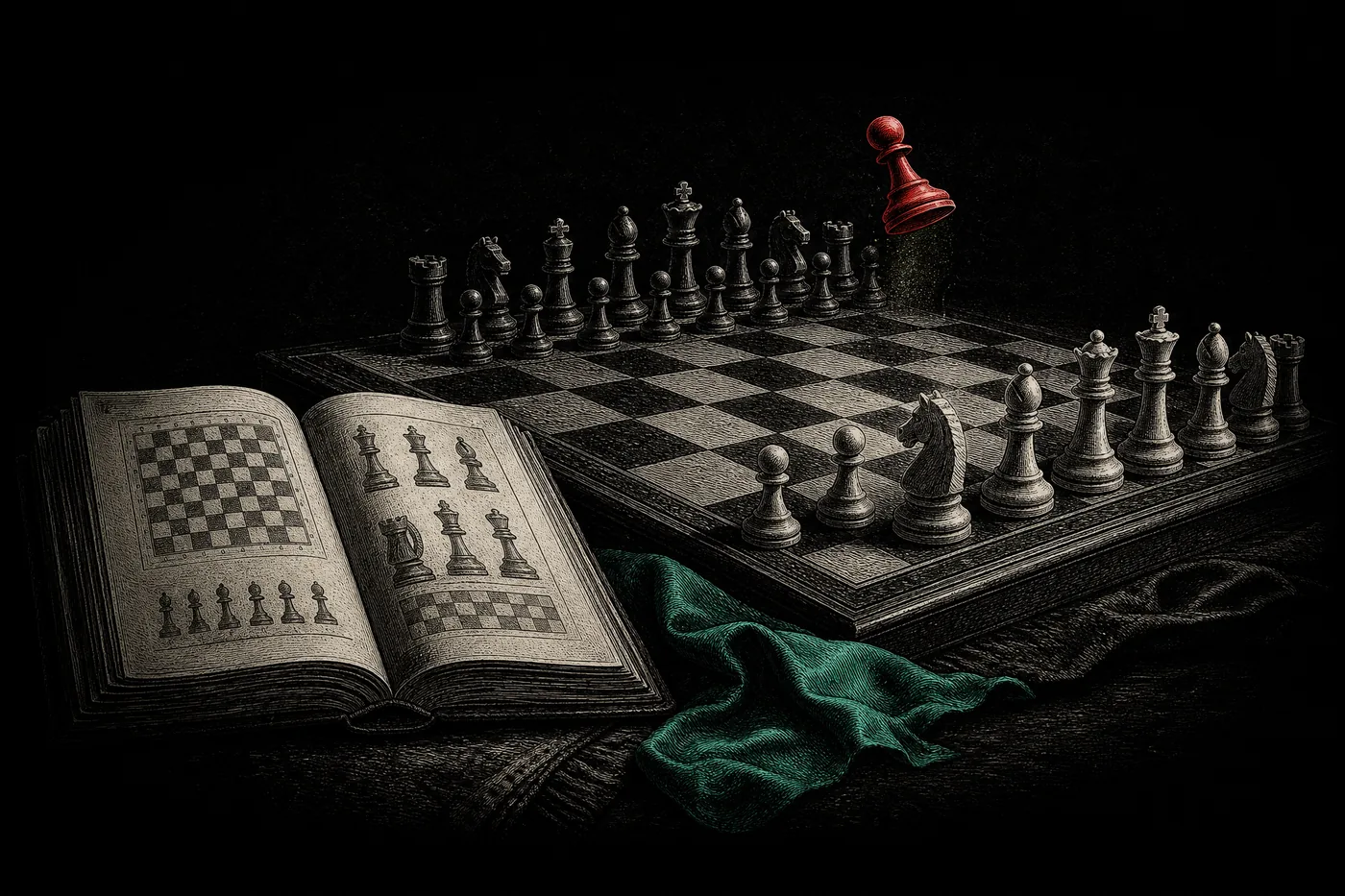
Chess pieces each move in their own special way: the pawn marches forward one square (two on its first move), the knight jumps in an L-shape, the bishop glides diagonally, the rook slides in straight lines, the queen does both straight and diagonal, and the king steps one square in any direction. Master these six patterns and you can play.
That’s the whole game in a nutshell. Below we’ll walk through each piece quickly, then point you to a full deep-dive page for every one — because each piece has its own personality (and its own sneaky tricks).
The 30-second cheat sheet
- Pawn: forward 1 (or 2 on its first move), captures diagonally.
- Knight: L-shape (2+1), and it’s the only piece that jumps over others.
- Bishop: any distance, diagonally, stays on one color forever.
- Rook: any distance, straight lines (up/down/across).
- Queen: any distance, straight OR diagonal — the powerhouse.
- King: one square in any direction, and you must keep it safe.
How do all the chess pieces move?
Here’s the board on move one. Both armies are lined up and identical, mirror images across the middle. Your back row (the “back rank”) holds the heavy hitters; your front row is a wall of pawns.
Let’s meet each one. Quick version now, full version one click away.
The pawn — the little soldier
Pawns are your foot soldiers: small, plentiful, and braver than they look. A pawn moves straight forward one square. On its very first move, it has the option to leap two squares instead. The twist? A pawn captures differently than it moves — it grabs enemy pieces by stepping one square diagonally forward, never straight ahead.
Reach the far end of the board and your pawn gets a glow-up called promotion — it transforms into any piece you want (almost everyone picks a queen). There’s also a quirky special capture called en passant. We cover both in full on the pawn page.
Full guide: How does a pawn move?
The knight — the jumper
The knight is the weird one, and we mean that lovingly. It moves in an L-shape: two squares in one direction, then one square at a right angle (or one-then-two — same thing). And here’s its superpower: the knight is the only piece that can jump over other pieces, friend or foe. Nothing blocks it. From the middle of the board, a knight can reach up to eight different squares.
Full guide: How does a knight move?
The bishop — the diagonal sniper
Bishops love diagonals. A bishop slides any number of empty squares along a diagonal, forward or backward. Because it only travels diagonally, each bishop is stuck on one color for the entire game — a light-squared bishop never, ever touches a dark square. You start with one of each, and together they cover the whole board.
Full guide: How does a bishop move?
The rook — the straight-line tank
The rook is simple and brutal. It slides any number of empty squares in a straight line — up, down, left, or right. No diagonals. Rooks feel clumsy early (they’re stuck in the corners) but become monsters in the endgame when the board opens up. Fun fact: the rook is also the piece that joins your king in castling.
Full guide: How does a rook move?
The queen — the powerhouse
The queen is the strongest piece, and it’s not close. She moves like a rook and a bishop combined: any number of squares in a straight line OR a diagonal. That’s it — no secret extra rules. Her power comes purely from covering so many squares at once. Protect her, use her, but don’t bring her out too early (more on that mistake below).
Full guide: How does a queen move?
The king — the one you can’t lose
The king is the whole point of the game. It moves exactly one square in any direction — horizontally, vertically, or diagonally. It’s slow, but it’s everything: if your king is trapped and can’t escape capture, that’s checkmate and the game’s over. The king also gets one special team-up move with a rook called castling.
Full guide: How does a king move?
How do you capture pieces in chess?
For almost every piece, capturing is the same as moving — you just land your piece on a square occupied by an enemy piece, remove it from the board, and your piece takes its place. A rook captures along the same straight lines it travels; a bishop captures along its diagonals; the queen and king capture however they move.
The one exception is the pawn, which moves straight but captures diagonally. That’s the single most common rule beginners forget, so tattoo it on your brain.
You can never capture your own pieces, and you can never capture the enemy king — instead you put it in check, and if it can’t escape, that’s checkmate.
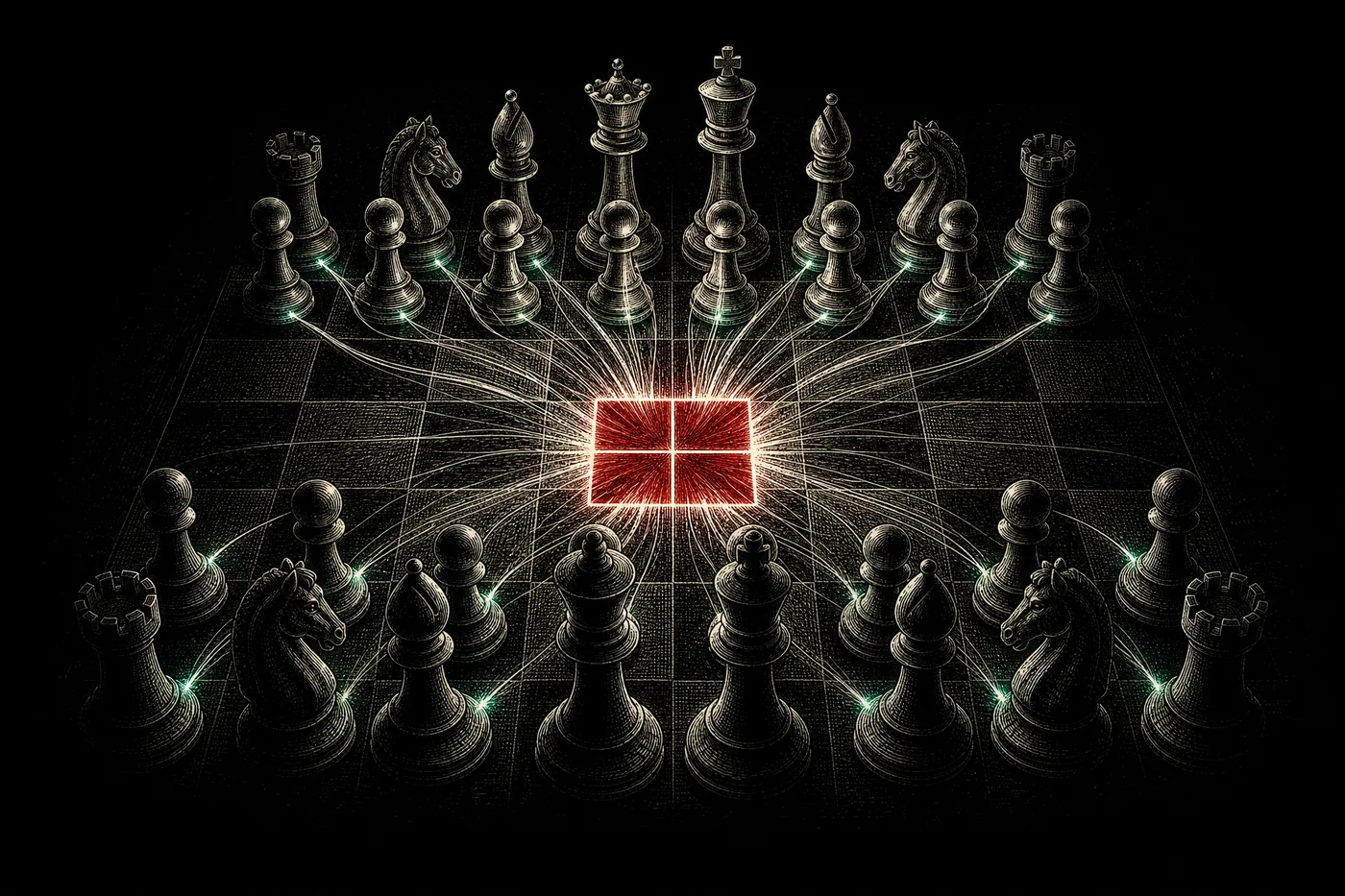
Which chess piece is the strongest?
Players use a rough point-value system to compare pieces. It’s not an official rule — you don’t score points — but it’s a fantastic guide for deciding whether a trade is worth it.
| Piece | Value | Why |
|---|---|---|
| Pawn | 1 | The baseline. Tiny, but they add up. |
| Knight | 3 | Great in tight, cluttered positions. |
| Bishop | 3 | Loves open boards and long diagonals. |
| Rook | 5 | Dominates open files and the endgame. |
| Queen | 9 | The undisputed heavyweight champ. |
| King | ∞ | Priceless — lose it and you lose the game. |
So a queen (9) is worth roughly two rooks (5+5) and is way more valuable than a bishop (3). The king has no point value because you can’t trade it — it’s the one piece that’s literally the game itself.
Why learning the moves first matters
It’s tempting to rush toward strategy, openings, and flashy tactics. But every single one of those is built on top of how the pieces move. You can’t spot a fork if you don’t feel where a knight jumps. You can’t see a pin if you don’t sense the bishop’s diagonal. Strong players don’t calculate each piece’s moves slowly — they see the patterns instantly, like reading words instead of spelling them letter by letter.
Spend an hour really internalizing these six patterns and everything afterward gets dramatically easier. Promise.
Common beginner mistakes
- Pushing pawns straight into pieces to capture. Pawns capture diagonally. Two pieces nose-to-nose head-on are just stuck — neither can take the other.
- Trying to jump non-knights over pieces. Only the knight leaps. Rooks, bishops, and queens are blocked by anything in their path.
- Forgetting bishops are color-locked. If your bishop is on a light square, it’ll be on light squares forever. Plan around it.
- Bringing the queen out too early. She’s powerful, but a lone early queen gets chased around by smaller pieces while your opponent develops for free. Patience.
A fun bit of history
The pieces didn’t always move like this. In the medieval ancestor of chess, the queen was pathetically weak — it could only shuffle one square diagonally, and the bishop only hopped exactly two. Around the late 1400s in Europe, players supercharged the queen and bishop into the long-range monsters we know today. The new, faster version was such a hit it swept across the continent and basically created modern chess. So the powerhouse queen on your board is a Renaissance upgrade.
Key takeaways
- Six pieces, six patterns: pawn (forward, captures diagonally), knight (L-jump), bishop (diagonal), rook (straight), queen (both), king (one square anywhere).
- The knight is the only piece that jumps over others.
- Most pieces capture the same way they move — the pawn is the famous exception.
- Rough values: pawn 1, knight 3, bishop 3, rook 5, queen 9, king priceless.
- Learn the moves cold first; strategy is so much easier once the patterns are automatic.
Keep climbing
Now go deep on whichever piece you like — each one has tricks the quick version above couldn’t cover.
Start here: the pawn and the knight trip up the most beginners. Also great: the full rules of chess and the golden opening principles.
Written and fact-checked by the Chess Lab Academy Editorial Team (AI-assisted, human-edited) · Rules verified against the FIDE Laws of Chess (Article 3) and every position checked with Stockfish 17 · Last verified 2026-06-25 · Sources · How we verify content.
