
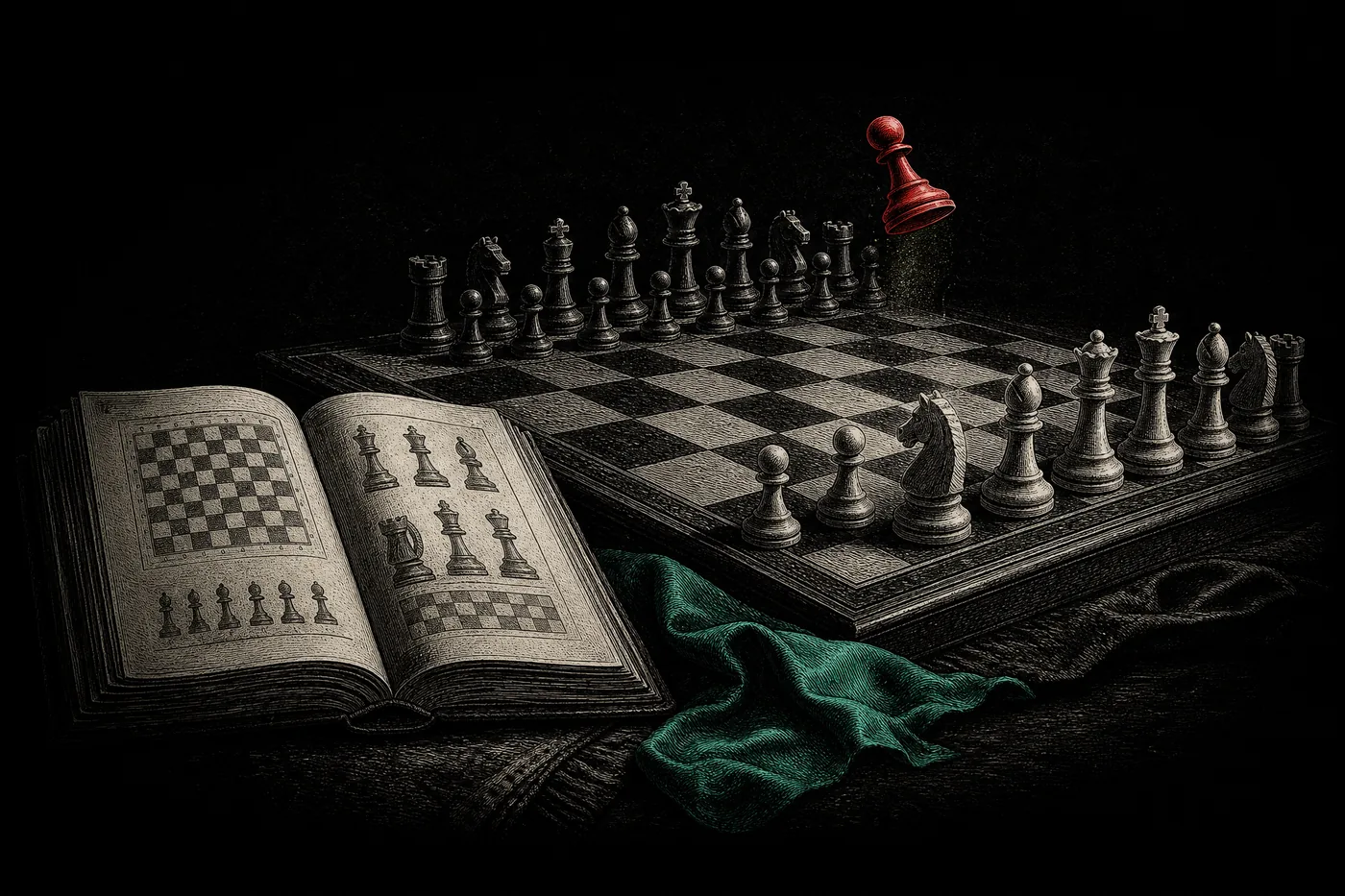
Chess rules are simpler than they look. Two players take turns moving pieces on an 8×8 board; White always moves first. Each piece moves a specific way, you capture by landing on an enemy piece, and you win by checkmating the opponent’s king — attacking it so it can’t escape. Add a few special moves and draw conditions, and you know the whole game.
Let’s walk through every rule, plain and clear, so you can sit down and play with confidence.
The rules at a glance
- White moves first, then players alternate. One move per turn.
- Capture by moving onto an enemy piece’s square.
- Check = the king is attacked. Checkmate = attacked with no escape = game over.
- Special moves: castling, en passant, pawn promotion.
- Draws: stalemate, repetition, 50-move rule, insufficient material, agreement.
How does a chess game start and flow?
You begin from the standard setup (light square bottom-right, queen on her own color — full details in how to set up a chessboard).
The flow couldn’t be simpler:
- White moves first. This is non-negotiable — it’s a real (small) advantage.
- Players alternate, making exactly one move per turn.
- You must move on your turn — passing isn’t allowed.
- You can never skip a move or move twice (castling is the one exception that shifts two pieces, but it’s still a single turn).
How do the pieces move and capture?
Every piece moves its own way, and for most of them, moving and capturing are the same motion — you just land on the enemy piece and remove it. Here’s the rundown:
- Pawn — Forward one square (two on its first move). It captures diagonally, never straight ahead. This split is the pawn’s quirk.
- Knight — An “L” shape: two squares then one perpendicular. It jumps over anything in the way.
- Bishop — Any distance diagonally, locked to one color.
- Rook — Any distance in straight lines (horizontal or vertical).
- Queen — Any distance in any straight line — rook plus bishop powers combined.
- King — One square in any direction.
Two universal limits: only the knight can jump over other pieces, and you can never land on your own piece. For the full visual guide, see how the pieces move.
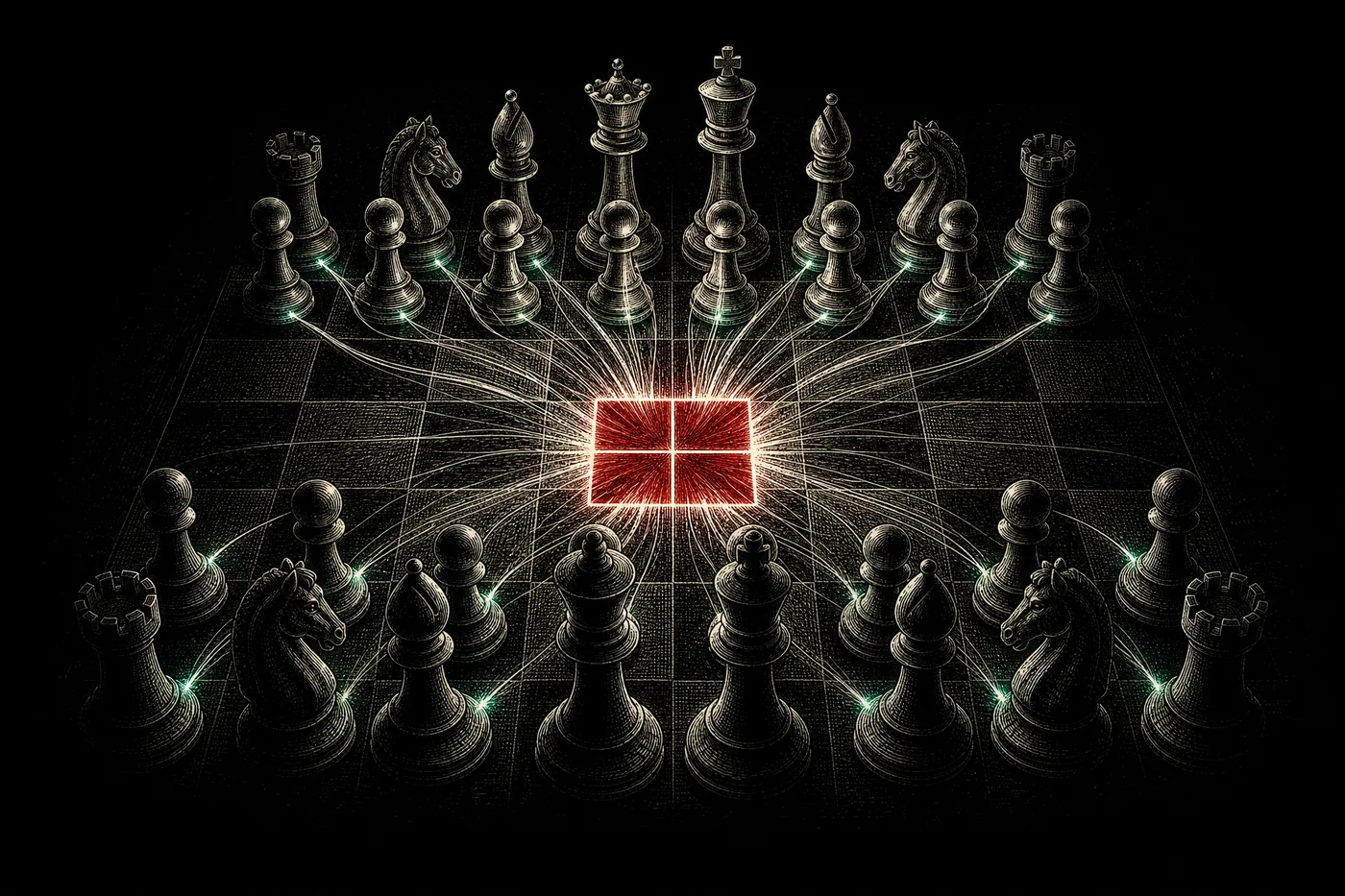
What’s the difference between check and checkmate?
This is the core of the game, so let’s nail it.
- Check means the king is under direct attack. When you’re in check, you must get out of it immediately — there’s no ignoring it. You have three options: move the king to a safe square, block the attack with another piece, or capture the attacking piece.
- Checkmate means the king is in check and none of those three escapes work. The king is trapped. Game over — the attacker wins.
Important: you never actually capture the king. The instant it’s checkmated, the game ends. And you can’t make a move that leaves (or puts) your own king in check — that’s always illegal. For worked examples, see what is checkmate.
What are the special moves in chess?
Three rules go beyond the basic piece movements:
1. Castling — Your king hops two squares toward a rook, and that rook jumps to the square the king crossed. It’s the only move where you shift two of your own pieces in one turn. You can only castle if neither piece has moved, the path is clear, and your king isn’t in, passing through, or landing in check. Full details in how to castle.
2. En passant (“in passing”) — If an enemy pawn uses its two-square first move to slip past your pawn (landing right beside it), you may capture it as though it had only moved one square. You must do it on your very next move or the chance is gone forever. See en passant.
3. Pawn promotion — When a pawn reaches the far side of the board, it instantly becomes a queen, rook, bishop, or knight (your choice — and yes, you can have two queens). Almost everyone picks the queen because she’s the strongest. More in pawn promotion.
How do you win at chess?
There are two ways to actually win:
- Checkmate — Trap the enemy king as described above. This is the classic win.
- Resignation — Your opponent, seeing the writing on the wall, gives up. At all levels this is a normal, graceful way to end a hopeless game.
There’s also timeout in games played with a clock: if your opponent runs out of time, they usually lose (as long as you have enough material to theoretically checkmate). But the heart of winning is always checkmate.
What counts as a draw (a tie)?
Not every game has a winner. A draw means nobody wins, and there are five ways it happens:
- Stalemate — The player to move has no legal move but is not in check. Counterintuitive but crucial: this is a draw, not a win for the attacker.
- Insufficient material — Neither side has enough pieces to force checkmate (e.g., king vs. king, or king and a lone bishop vs. king). It’s physically impossible to mate, so it’s a draw.
- Threefold repetition — If the exact same position occurs three times (with the same player to move and the same options), either player can claim a draw.
- The 50-move rule — If 50 consecutive moves pass by both players with no pawn move and no capture, the game is drawn. It stops endless shuffling.
- Agreement — Both players simply agree to call it a tie.
Stalemate is the big one to memorize. When you’re winning easily, a careless move that leaves your opponent with no legal move (but not in check) throws away the whole game. Always leave the losing king an escape square until you’re ready to deliver mate.
Why it matters: the rules ARE the strategy
Here’s a thing that surprises new players: once you truly know the rules, you already understand basic strategy. The value of castling comes straight from the check rules. The reason you don’t want to be stalemated comes from the draw rules. En passant exists because of the two-square pawn move. The rules aren’t a dry list to memorize — they’re the logic that makes every good move good. Learn why each rule exists and the strategy follows naturally.
A fun bit of history
Many of these rules are surprisingly recent. The two-square first pawn move and en passant were added in Europe around the 15th–16th centuries to speed games up. The 50-move rule has been tweaked for centuries to stop players from dragging out drawn endgames forever. And the powerful modern queen? She was a medieval upgrade — older versions of chess had a feeble queen that could only creep one diagonal square at a time. The rulebook you’re learning is the result of 1,500 years of players slowly improving the game.
Common rule mistakes beginners make
- Thinking stalemate is a win. It’s a draw. This loses winning games constantly.
- Trying to castle out of check. Illegal — you can never castle to escape a check.
- Missing the en passant window. You must capture immediately or lose the right.
- Moving into check. Any move that leaves your own king attacked is illegal; the move simply isn’t allowed.
- Forgetting pawns capture diagonally. A pawn can’t capture the piece directly in front of it.
Key takeaways
- White moves first; players alternate one move per turn, and you must move.
- You win by checkmate (king attacked, no escape) or by the opponent resigning.
- Check must be answered immediately — move, block, or capture.
- Special moves: castling, en passant, and pawn promotion.
- Draws happen via stalemate, repetition, 50-move rule, insufficient material, or agreement.
- Stalemate is a draw, not a win — the single most important rule for beginners.
Keep climbing
Now that you know the rulebook, put it to work.
Next up: How the pieces move in detail · then castle your king to safety and master checkmate patterns.
Written and fact-checked by the Chess Lab Academy Editorial Team (AI-assisted, human-edited) · Rules verified against the FIDE Laws of Chess and every position checked with Stockfish 17 · Last verified 2026-06-25 · Sources · How we verify content.
