
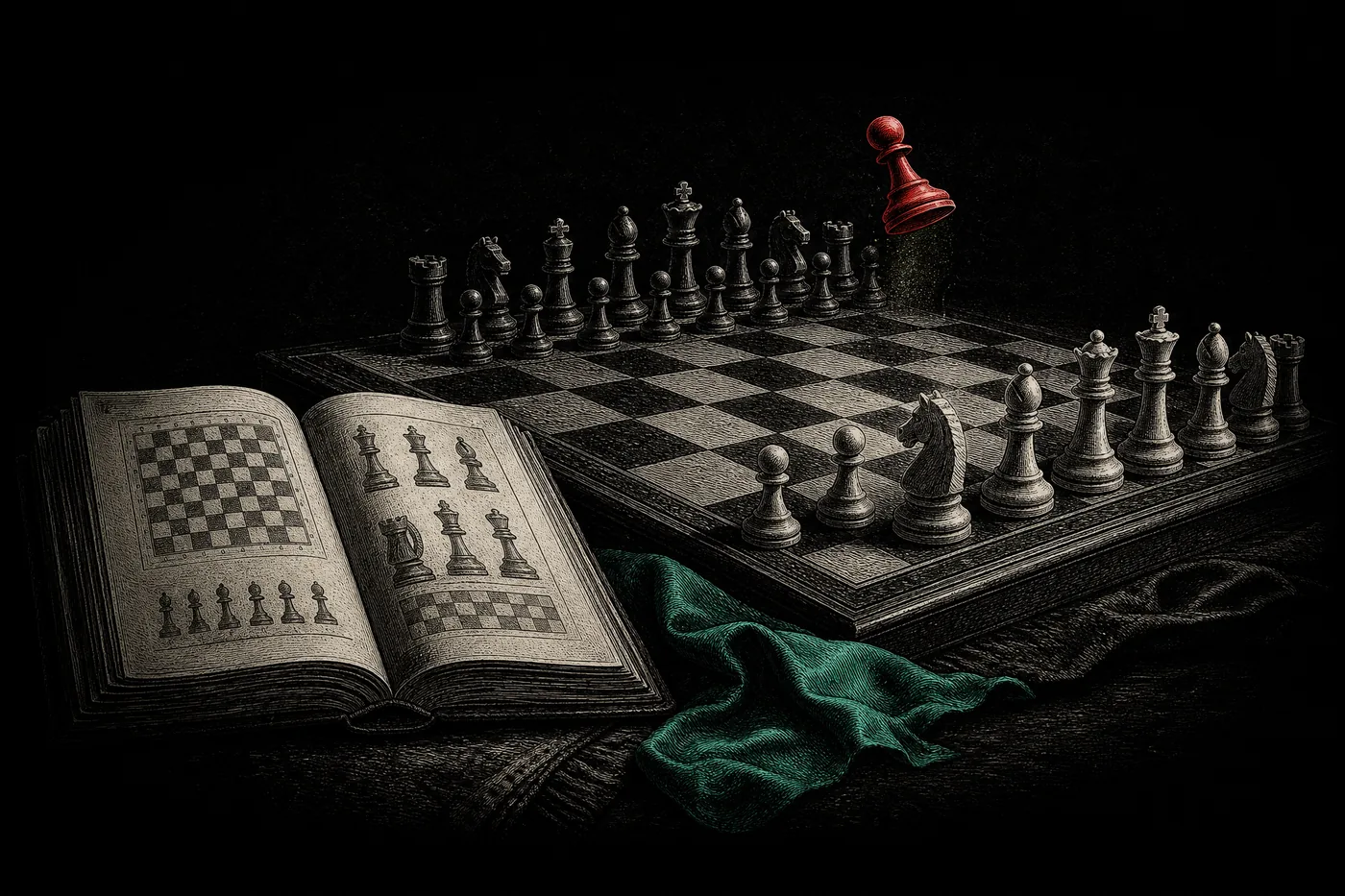
A king moves exactly one square in any direction — horizontally, vertically, or diagonally. That’s its whole movement: slow, short, but in every direction. The catch is that the king is the one piece you can never afford to lose. If it’s trapped and can’t escape capture, that’s checkmate, and the game is over.
So the king is both the weakest mover and the most important piece on the board. Let’s break down how it moves, the special rules that protect it, and the one team-up move it gets.
King cheat sheet
- Move: one square in any direction (8 possible squares max).
- Cannot move into a square attacked by an enemy piece.
- Cannot stand next to the enemy king.
- Captures like it moves — one square onto an enemy piece (if that square is safe).
- Castles once per game with a rook (its only special move).
How does the king move on the board?
One square at a time, in any of the eight directions around it — up, down, left, right, or any diagonal. Think of it as the queen’s pattern shrunk down to a single step.
In the center, the king has up to 8 squares to choose from; on an edge it’s down to 5, and in a corner just 3. The king is the slowest piece in the game — but don’t underestimate it. In the endgame, when most pieces are gone and there’s no danger of checkmate, the king becomes a genuinely strong fighting piece that marches up the board to support pawns. Early game: hide it. Late game: use it.
There are two unbreakable restrictions on where a king can go:
- It can never move into check. A king cannot step onto any square that an enemy piece attacks. It refuses to walk into danger.
- The two kings can never touch. Kings must always stay at least one square apart. This is really just the rule above in disguise — if you moved your king next to the enemy king, you’d be stepping into a square the enemy king attacks.
Can a king capture pieces?
Yes — the king captures just like it moves, by stepping one square onto an enemy piece and taking its place. A king can snap up an undefended pawn or piece sitting right next to it.
But there’s a big condition: the king can only capture a piece if the square it lands on is safe afterward. If that enemy piece is defended by another enemy piece, the king can’t take it — capturing would put the king in check, which is illegal.
So the king is a cautious attacker: it can grab loose pieces nearby, but it won’t (and legally can’t) walk into a trap. This is the key difference between the king and every other piece — for everyone else, you choose whether a move is wise; for the king, the rules forbid moving into danger at all.
What are check and checkmate?
This is the heart of the whole game, so let’s be clear about the three states your king can be in:
- Check: your king is currently attacked by an enemy piece. You must respond immediately — you have to get out of check on your very next move. There are three ways: move the king to a safe square, block the attack with another piece, or capture the attacking piece.
- Checkmate: your king is in check and there’s no legal way to escape — can’t move, can’t block, can’t capture. Game over; the checkmating side wins. (You never actually capture the king; checkmate ends it the moment escape becomes impossible.)
- Stalemate: it’s your turn, your king is not in check, but you have no legal move at all. Surprise — that’s a draw, not a loss. Stalemate has saved countless losing players, and it’s the single trickiest rule for beginners to remember.
Want the full picture? Dive into what checkmate is and how to spot it.
How does the king castle?
Castling is the king’s one and only special move, and the only time it gets to move two squares. The king teams up with one of its rooks: the king slides two squares toward the rook, and the rook hops over to the king’s other side — all in a single turn.
Castling does two great things at once: it tucks your king into the safety of the corner and brings a rook into the game. But it has strict conditions — the king and rook must not have moved, the path must be clear, and the king can’t be in check, move through check, or land in check. All the details (including the side everyone forgets they can use) are in our full guide to how to castle.
Why king safety is everything
Here’s the thing every strong player knows in their bones: you can be up a queen, a rook, and three pawns, but if your king gets checkmated, you lose instantly. The king isn’t worth “points” because it’s not a tradeable piece — it’s the entire game. Keeping it safe outranks every other concern.
That’s why beginners are told to castle early and not to fling open the pawns in front of their king. A king sitting exposed in the center, or behind a wrecked pawn shield, is an invitation for disaster. We’ve got a whole lesson on this: king safety. Read it — it’ll win you more games than any opening trick.
Common king mistakes
- Leaving the king in the center. The most punished beginner error. Castle early to get your king out of the crossfire.
- Pushing the pawns in front of a castled king. Those pawns are its shield. Shoving them forward without reason opens cracks attackers love.
- Bringing the king out too early. The king is great in the endgame, but in the opening and middlegame it’s a liability. Keep it hidden until the danger passes.
- Forgetting stalemate when winning. When your opponent is down to just a king, make sure they always have a legal move until you actually deliver checkmate — or you’ll hand them a draw.
Key takeaways
- A king moves one square in any direction — the slowest but most important piece.
- It can never move into check or sit next to the enemy king.
- It captures like it moves, but only onto a safe square.
- Check must be answered; checkmate ends the game; stalemate is a draw.
- The king’s only special move is castling; above all, keep it safe.
FAQ
Can a king capture pieces? Yes, by moving one square onto an enemy piece — but only if that square isn’t defended. The king can never capture into check.
Can two kings be next to each other? No. Kings must always stay at least one square apart, because moving next to the enemy king would put your king in check.
How many squares can a king move? Just one per turn, in any direction (up to 8 options in the open). The single exception is castling, where it moves two squares.
What’s the difference between check and checkmate? Check means your king is attacked but can still escape. Checkmate means it’s attacked with no legal escape at all — and that ends the game.
Can the king move into check? No, never. The rules forbid the king from moving onto any square attacked by an enemy piece.
Is the king the most valuable piece? In a sense — it’s priceless, because losing it (checkmate) loses the game. It has no point value precisely because you can’t trade it.
Keep climbing
That’s all six pieces! You officially know how every chess piece moves. The natural next step is keeping your most important piece alive.
Next up: Why king safety wins games and how to castle · Back to the overview of all pieces · Or learn to land the finish: what is checkmate?
Written and fact-checked by the Chess Lab Academy Editorial Team (AI-assisted, human-edited) · Rules verified against the FIDE Laws of Chess (Article 3.8) and every position checked with Stockfish 17 · Last verified 2026-06-25 · Sources · How we verify content.
