
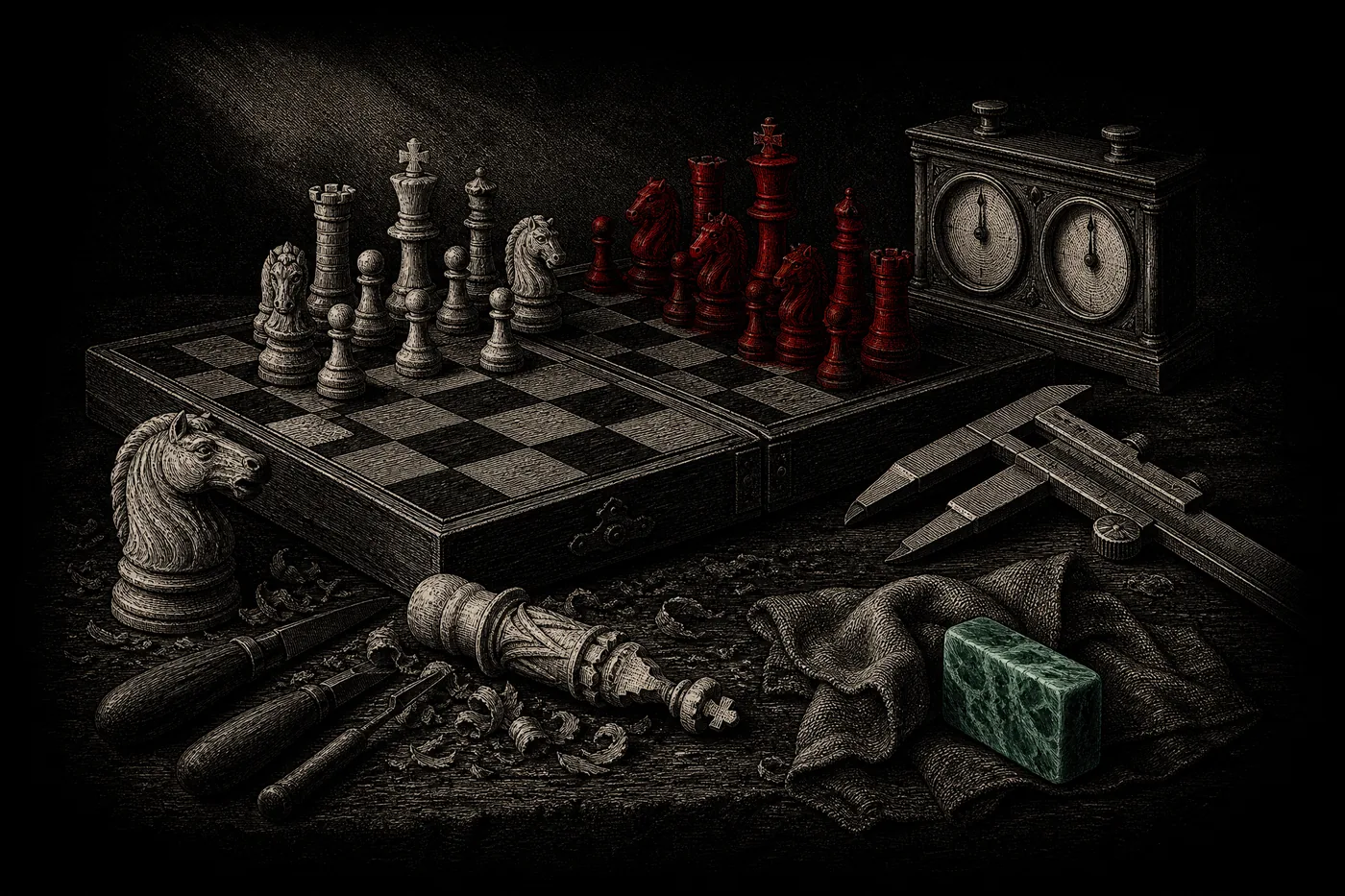
Luxury chess sets can cost as much as a nice holiday, and the honest truth is that some of that price is real craftsmanship and some of it is just prestige. A premium set won’t help you win a single game more than a good club set will — a queen moves the same whether she’s ABS or ebony. What you’re actually buying is materials, craftsmanship, weight, and the pleasure of owning something beautiful. If that’s worth it to you, wonderful. Let’s look at where the money genuinely goes, so you can tell substance from markup.
The 10-second version
- You’re paying for rare woods, hand carving, heavy weighting, and a quality board — not better chess.
- The big cost drivers are ebony/rosewood and hand-carved detail.
- Buy luxury to own and enjoy; buy a good weighted plastic set to grind games.
What you’re actually paying for
Rare, dense woods
The single biggest driver. Ebony (genus Diospyros) is a jet-black, extremely dense hardwood — some species are famously dense enough to sink in water — and it takes a near-mirror polish, which is why it’s the classic premium black. Rosewoods (Dalbergia) bring rich color and figure. Both are expensive partly because they’re genuinely scarce: many ebony-yielding species are now threatened, and in 2017 the entire Dalbergia genus was placed under CITES Appendix II, so legal international trade requires permits. Scarcity plus regulation equals price. (Ebony — Wikipedia; CITES)
Hand carving
A machine-turned knight is fine; a hand-carved knight with a detailed mane, flared nostrils, and individual character is a small sculpture, and the labor shows in the price. On premium sets the knight is where you can most see (and pay for) the craftsmanship.
Heavy weighting and finish
Luxury sets are typically double- or triple-weighted with metal in the base, capped with quality felt, and hand-polished through multiple stages for a deep finish. That heft and glow is a real, tangible part of the experience.
The board
A serious set deserves a serious board — solid hardwood with inlaid squares, often with the same rare woods, sometimes with a matching storage box or drawers. The board can be a large chunk of the total cost.
| What you pay for | Real value? |
|---|---|
| Ebony / rosewood | Yes — rare, dense, regulated, beautiful |
| Hand carving | Yes — genuine skilled labor |
| Triple weighting + hand polish | Yes — real feel and finish |
| Inlaid hardwood board | Yes — craftsmanship and materials |
| ”Collector edition” / branding | Sometimes — this is where markup hides |
Is a luxury set worth it?
Be honest with yourself about why you want it:
- **You love beautiful objects and will display and use it ** yes, genuinely worth it. A fine set is a joy to own.
- **A milestone gift or heirloom to hand down ** an excellent use of the money. This is what premium sets are made for.
- **You think it’ll improve your chess ** it won’t. Spend on lessons, books, or practice instead — your rating doesn’t care what your pieces are made of.
- **You’re brand-new and unsure you’ll stick with chess ** start with a good weighted plastic or mid-range wooden set first. Fall in love with the game, then treat yourself.

Common mistakes to dodge
- Over-buying before you play. The classic error: a stunning ebony set that sits untouched because the owner never really got into chess. Earn the upgrade.
- Paying ebony prices for “ebonized.” “Ebonized” means stained boxwood, not solid ebony — a fine finish, but a fraction of the cost. Read the materials description carefully so you know which you’re getting.
- Ignoring sourcing. Rosewood and ebony are regulated and some species are threatened. A trustworthy seller is upfront about legal, responsible sourcing — treat vagueness as a red flag.
- Buying a set you’re afraid to touch. If it’s so precious it lives in a box, it’s décor, not a chess set. Buy something you’ll actually enjoy using.
- Forgetting playability. Luxury doesn’t override fit — the pieces still need to suit the board’s square size, per the usual proportions. Pretty and wrongly sized is still wrongly sized.
FAQ
Are expensive chess sets worth it? For beauty, craftsmanship, and the pleasure of owning something special — yes, if that’s what you value. For your actual chess performance — no. A premium set doesn’t play any better than a good club set.
What makes a chess set “luxury”? Rare dense woods (ebony, rosewood), hand carving, heavy weighting, a hand-polished finish, and a quality inlaid board — plus, sometimes, brand prestige that’s more markup than substance.
Why is ebony so expensive? It’s a very dense, slow-growing, increasingly scarce hardwood — many ebony species are now considered threatened — so both its rarity and the regulations protecting it push the price up.
Should a beginner buy a luxury set? Usually not yet. Start with a good weighted plastic or mid-range wooden set, make sure you love the game, and upgrade once you know you’ll use and treasure it.
The bottom line
A luxury chess set buys you materials, craft, weight, and beauty — a genuine pleasure to own, and a wonderful heirloom or gift. It does not buy you better chess. Spend the money when you want the object, and keep a sturdy everyday set for the games that actually train you.
Next: the full chess set materials guide, how weighting works, or wood vs plastic for a sensible first set. Back to the gear hub.
Written and fact-checked by the Chess Lab Academy Editorial Team (AI-assisted, human-edited) · Material and sourcing facts verified against Wikipedia and CITES timber trade listings · Last verified 2026-07-13 · How we verify content.
