
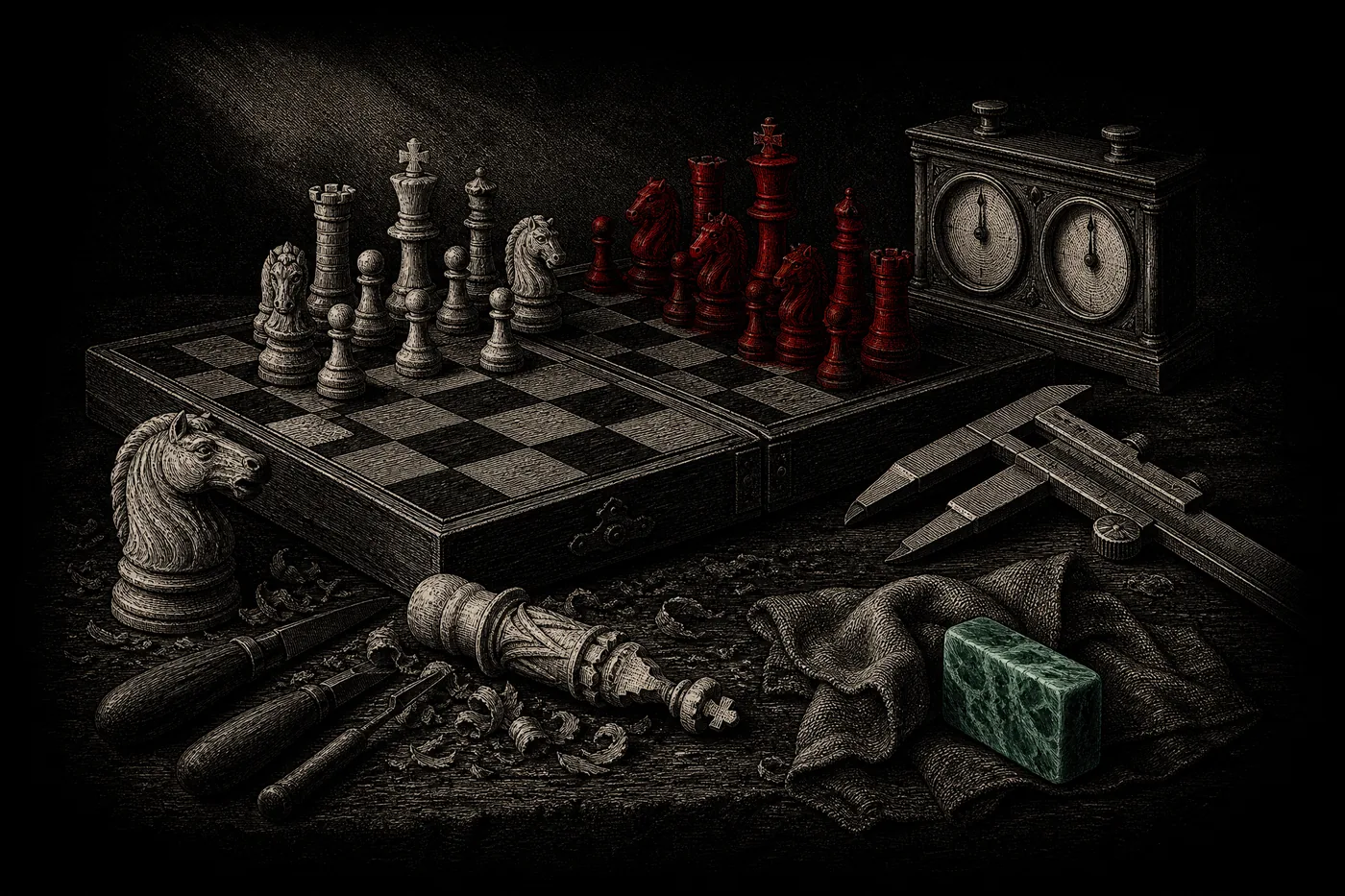
When you shop for a chess set, half the price tag is really about material — what the pieces are made of decides how they look, how heavy they feel, how they age, and how much they cost. The good news: there are only a handful of materials you’ll actually meet, and once you know what each one is, the fancy product descriptions stop being intimidating. Here’s the honest rundown.
The 10-second version
- Plastic (ABS): cheap, tough, the tournament and beginner default.
- Boxwood: the classic light wood for the white pieces.
- Sheesham / rosewood / ebony: progressively fancier dark woods for the black pieces.
- Pick the material that matches how you’ll use the set, not the prettiest photo.
The materials, one by one
Plastic (usually ABS)
Most affordable and club sets are molded from ABS, a hard, impact-resistant plastic. It’s the material of choice for schools, clubs, and tournaments because it shrugs off drops and travel, cleans easily, and is cheap to replace. Good plastic sets are weighted with metal in the base so they don’t feel hollow. Not glamorous, extremely practical.
Boxwood
Boxwood is the traditional light wood for the “white” army. It’s a light-colored, unusually fine-grained and relatively dense wood that’s been prized for centuries for carving and turning — exactly what you want for the crisp detail on a knight or a crown. Because it’s pale, it’s also the base for “ebonized” pieces: boxwood stained black to stand in for true ebony. That’s a genuine, traditional finish, not a fake. (Buxus — Wikipedia)
Sheesham (Indian / “golden” rosewood)
Sheesham — botanically Dalbergia sissoo, also called North Indian rosewood — is one of the most common dark woods in mid-range sets. It’s a hardwood native to the Indian subcontinent, with a golden-to-dark-brown heartwood, attractive grain, and a specific gravity around 0.7–0.8 (so, genuinely dense and heavy). It’s popular because it’s handsome, reasonably hard, and less prone to cracking than the very hardest woods. (Dalbergia sissoo — Wikipedia)
Rosewood
“Rosewood” covers several prized Dalbergia species valued for their rich coloration, strength, and high density. It sits a step above sheesham in most ranges: deeper, more dramatic figure, harder, pricier. One important honest note: rosewoods are heavily regulated — in 2017 the entire Dalbergia genus was listed under CITES Appendix II, so legitimate international trade requires permits, and Brazilian rosewood is more tightly protected still. Reputable sellers source responsibly. (CITES)
Ebony
Ebony (genus Diospyros) is the luxury benchmark: a jet-black, very dense, fine-textured hardwood — some species are famously dense enough to sink in water. Polished ebony takes a near-mirror finish and gives pieces a serious, substantial feel, which is why it’s the classic black for premium sets. It’s also the priciest, and many ebony-yielding species are now threatened, so responsible sourcing genuinely matters here. (Ebony — Wikipedia)
The others you’ll see
- Acacia / sheesham blends — common, affordable mid-range woods.
- Metal (brass/bronze/pewter) — heavy, decorative, usually display-focused rather than for regular play.
- Marble / stone / glass — striking on a shelf, but heavy, chip-prone, and awkward to actually play with.
Quick comparison
| Material | Color | Feel / density | Typical tier |
|---|---|---|---|
| Plastic (ABS) | Any | Light unless weighted | Entry-level |
| Boxwood | Pale cream | Fine, firm | Entry to mid |
| Sheesham | Golden-brown | Dense, warm | Mid-range |
| Rosewood | Deep red-brown | Very dense, hard | Mid to premium |
| Ebony | Black | Extremely dense | Premium |

Which material fits you?
- **Just want to play, or teaching kids ** plastic. Tough, cheap, easy. See wood vs plastic.
- **A lovely everyday home set ** boxwood-and-sheesham. The classic value-for-money wooden combo.
- **A statement piece or gift ** rosewood or ebony. Beautiful, hefty, and where the luxury guide picks up.
- **A shelf ornament you won’t play much ** stone/metal/glass can look great, but know you’re buying décor, not a playing set.
Common mistakes to dodge
- Paying ebony money for an ebonized set — without knowing it. “Ebonized” means stained boxwood, which is perfectly nice and much cheaper than solid ebony. Read the description so you know which you’re buying.
- Buying stone or glass to actually play with. They’re heavy, cold, chip easily, and slide poorly. Gorgeous on a shelf, frustrating in a real game.
- Ignoring sourcing on rosewood/ebony. These woods are regulated and some are threatened. Buy from sellers who are upfront about legal, responsible sourcing.
- Letting material override size. A set’s dimensions decide whether it plays well; material decides how it looks and feels. Get the proportions right first.
FAQ
What are chess pieces usually made of? Either molded ABS plastic (most affordable, club, and tournament sets) or turned hardwood — typically boxwood for the light pieces and sheesham, rosewood, or ebony for the dark ones.
Is sheesham the same as rosewood? Sheesham is a rosewood — Dalbergia sissoo, or North Indian rosewood. When sellers list “rosewood” separately, they usually mean a different, often denser and pricier Dalbergia species.
What’s the difference between ebony and ebonized? Ebony is a naturally black hardwood. “Ebonized” pieces are boxwood dyed black to imitate it — a traditional, honest finish that costs far less.
Which material lasts longest? Plastic is the most abuse-proof for daily and travel use. Quality hardwood lasts generations if cared for, but can chip or crack if dropped or left in harsh humidity.
The bottom line
There’s no single “best” material — there’s the best material for you. Buy plastic to play hard and cheap, boxwood/sheesham for a beautiful everyday set, and rosewood or ebony when you want something special (and sourced responsibly).
Next: wood vs plastic, how weighting works, or the luxury chess sets breakdown. Start over at the gear hub.
Written and fact-checked by the Chess Lab Academy Editorial Team (AI-assisted, human-edited) · Wood-species facts verified against Wikipedia and CITES timber trade listings · Last verified 2026-07-13 · How we verify content.
