
Alexander Alekhine is the Russian-French genius who became the 4th World Chess Champion in 1927 — and one of the most feared attacking players who ever lived. He’s the only World Champion to die while still holding the title, and he’s so woven into the game that there’s a whole opening named after him: Alekhine’s Defense. Nearly a century on, players still study his games for their dazzling, deeply-calculated combinations.
Quick facts
- Full name: Alexander Alexandrovich Alekhine · Born: 31 October 1892, Moscow, Russia · Died: 24 March 1946, Estoril, Portugal (aged 53)
- Nationality: Russian-born; became a French citizen in 1927
- World title: 4th World Chess Champion — 1927–1935 and again 1937–1946
- Famous for: ferocious attacking chess, the 1927 upset of Capablanca, and his namesake defense
- Style: fierce, imaginative attacker with hidden positional and endgame depth
Who was Alexander Alekhine?
Born in Moscow in 1892 into a well-off family, Alekhine learned chess young and rose fast. By his early twenties he was already one of the strongest players in the world. He trained in law and was widely known throughout his career as “Dr. Alekhine,” but chess was his life’s work — he became one of the first players to treat deep, professional preparation as a science.
His life spanned an era of upheaval. He lived through the Russian Revolution, left Russia in the early 1920s, and settled in the West, becoming a French citizen in 1927 — the same year he won the world title. He would spend the rest of his career representing France.
The defining moment came in 1927 in Buenos Aires. Alekhine challenged José Raúl Capablanca — the Cuban legend so dominant he seemed almost unbeatable, and against whom Alekhine had never won a single game before the match. Over a marathon 34 games, Alekhine pulled off one of the biggest upsets in chess history, winning +6 −3 =25 to become champion. It stood as the longest World Championship match in history until Karpov–Kasparov in 1984.
He held the crown from 1927 to 1935, dominating the tournament circuit along the way. In 1935 he lost the title in a shock defeat to the Dutch challenger Max Euwe — but in a 1937 rematch he roared back to reclaim it convincingly. This time he held the title until his death in 1946, making him the only champion to die undefeated on the throne.
What was Alekhine’s playing style?
Alekhine is remembered as one of the game’s great attacking geniuses — Wikipedia sums up his “fierce and imaginative attacking style, combined with great positional and endgame skill,” and he’s been called “the supreme genius of the complicated position.” But the popular image of a wild tactician misses half the story. His best wins are usually built on a slow accumulation of pressure, space, and activity; only once his pieces were perfectly placed did he unleash the explosive combinations he’s famous for.
We break this down with examples in Alekhine’s playing style.
What openings did Alekhine play?
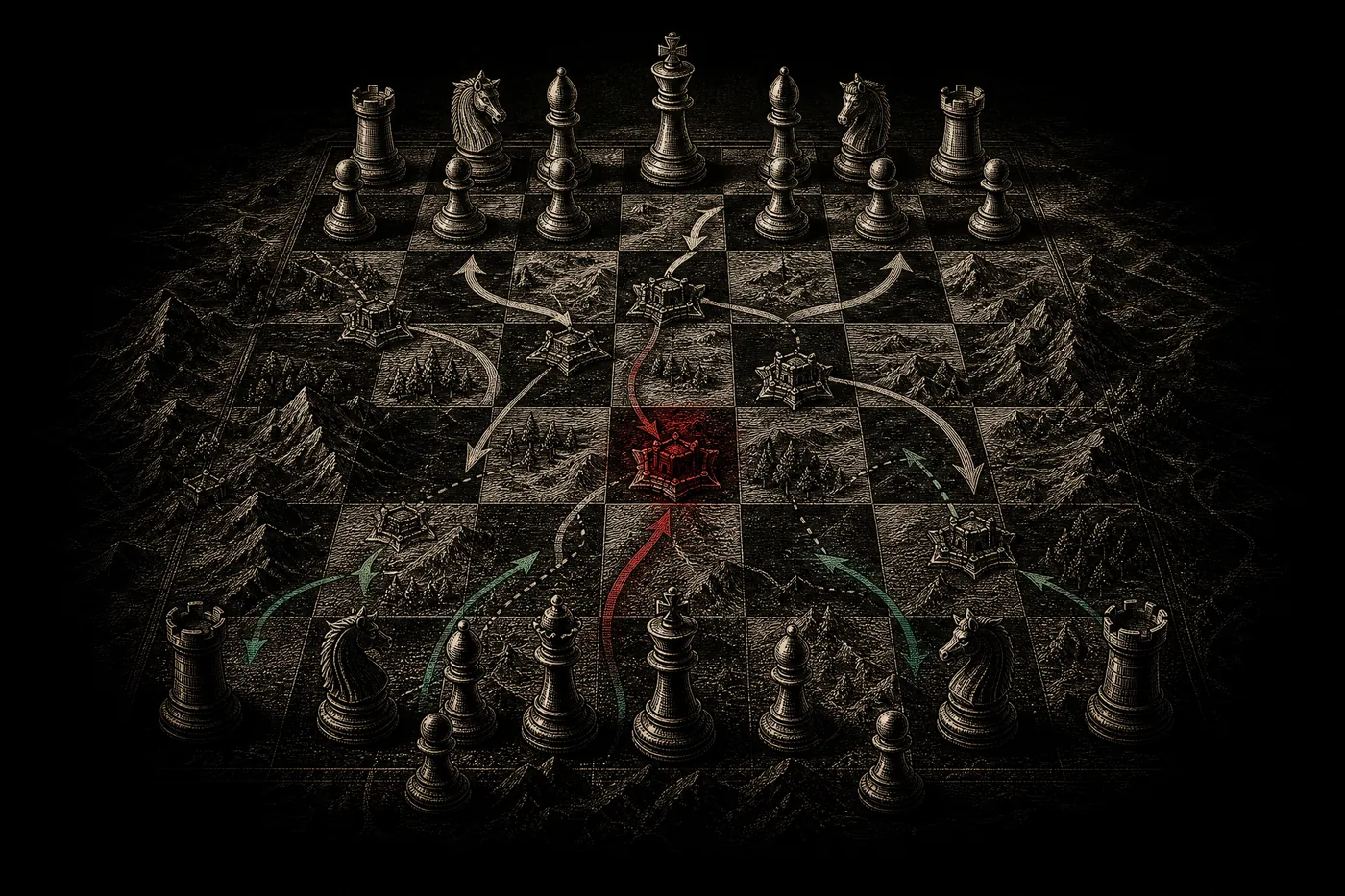
As White, Alekhine’s favorite was the Ruy Lopez, often with an early queen development. As Black he was a classical, deeply-prepared Queen’s Gambit Declined player against 1.d4. And of course there’s the opening that carries his name: the provocative Alekhine’s Defense (1.e4 Nf6), which he unveiled at the 1921 Budapest tournament and helped popularize as a serious, hypermodern idea.
See the full breakdown in Alekhine’s openings.
Career highlights
- 1914: finishes third at the great St. Petersburg tournament, behind only Lasker and Capablanca — announcing himself as a world-class talent.
- 1921: introduces Alekhine’s Defense (1…Nf6) at Budapest.
- 1927: defeats Capablanca in Buenos Aires (+6 −3 =25) to become the 4th World Champion.
- 1930: wins San Remo with a crushing +13 =2 (no losses), 3½ points clear of the field.
- 1931: wins Bled with +15 =11, a colossal 5½ points ahead of second place.
- 1933: sets a blindfold record, playing 32 games at once in Chicago.
- 1935: loses the title to Max Euwe — then regains it in 1937.
- 1946: dies in Portugal as the reigning, undefeated World Champion.
The best games
Alekhine left behind some of the most beautiful games in chess literature — the triple-queen-sacrifice against Bogoljubov, the “most beautiful combination” against Réti, and the famous “Alekhine’s Gun” against Nimzowitsch. We’ve gathered the highlights in Alekhine’s best games.
Fun facts
- There’s a whole opening named after him — Alekhine’s Defense — plus attacking lines that bear his name in the French and other openings.
- The “Alekhine’s Gun” — stacking two rooks behind the queen on one file for maximum firepower — is named after a famous 1930 game of his.
- He was a blindfold-chess record holder, once playing 32 opponents simultaneously without sight of the boards.
- He’s the only World Chess Champion to die while still holding the title.
FAQ
Who was Alexander Alekhine? He was a Russian-French chess master and the 4th World Chess Champion (1927–1935 and 1937–1946), famous for his ferocious attacking style and for the opening named after him.
How did Alekhine become World Champion? He beat the seemingly-invincible José Raúl Capablanca in a marathon 34-game match in Buenos Aires in 1927, winning +6 −3 =25 — a huge upset, since he’d never beaten Capablanca before the match.
Is the Alekhine Defense named after him? Yes. Alekhine introduced 1.e4 Nf6 at the 1921 Budapest tournament, and the Alekhine’s Defense has carried his name ever since.
Did Alekhine ever lose the world title? Once — to Max Euwe in 1935 — but he won it back in a 1937 rematch and held it until he died in 1946.
When did Alekhine die? On 24 March 1946, in Estoril, Portugal, aged 53, while still the reigning World Champion.
Keep exploring
Go deeper into the legend: his best games · his playing style · his opening repertoire · his career & strength · fun facts · or browse all chess players.
Written and fact-checked by the Chess Lab Academy Editorial Team · Facts verified against Wikipedia, Chess.com, and the FIDE Open Chess Museum, as of July 2026 · Last verified 2026-07-10 · How we verify content.
