

Here’s a puzzle. Emanuel Lasker held the World Championship for 27 years — longer than anyone before or since — and yet, for decades, people struggled to explain how. He didn’t seem to have a system the way his rival Siegbert Tarrasch did. His moves sometimes looked odd. So what was really going on? Let’s break down the style of chess’s greatest pragmatist.
The short version: Lasker played practical, fighting chess aimed at the human being across the board. He was a superb defender, a brilliant endgame player, and flexible enough to attack or grind depending on what the position — and the opponent — demanded. Chess.com sums him up as a player who “could do everything well.”
The “psychological” myth (and the truth behind it)
For a long time the story was that Lasker won by psychology — that he studied his opponents and even played deliberately inferior moves to lure a particular rival into discomfort. It’s a great legend, and his contemporaries genuinely believed it, because they couldn’t otherwise explain why his “wrong” moves kept winning.
Modern analysis tells a more flattering story. Lasker wasn’t playing bad moves on purpose; he was ahead of his time. He understood that chess is a fight between two fallible humans, so he valued practical difficulty over textbook “correctness.” He’d happily enter a messy, double-edged position that was hard for both players — confident that he’d navigate it better. To his rivals, who prized clarity and rules, that looked like witchcraft. Really it was just a deeper, more flexible understanding of the game.
A fighter who never gave up a position
If there’s one word for Lasker, it’s resilient. He was famous for defending grimly worse positions and clawing his way back to a draw or even a win. Where other players slumped when the game turned against them, Lasker dug in, set problems, and waited for the opponent to slip. His 1910 title match against Carl Schlechter is the classic example: down in the match, he had to win the final game to save his crown — and he did.
That fighting spirit is exactly what Albert Einstein, his friend, admired — describing Lasker as possessing a rare kind of fighting spirit found only in highly gifted people. For an improving player, it’s maybe the single most useful trait to copy: the game isn’t over until it’s over.
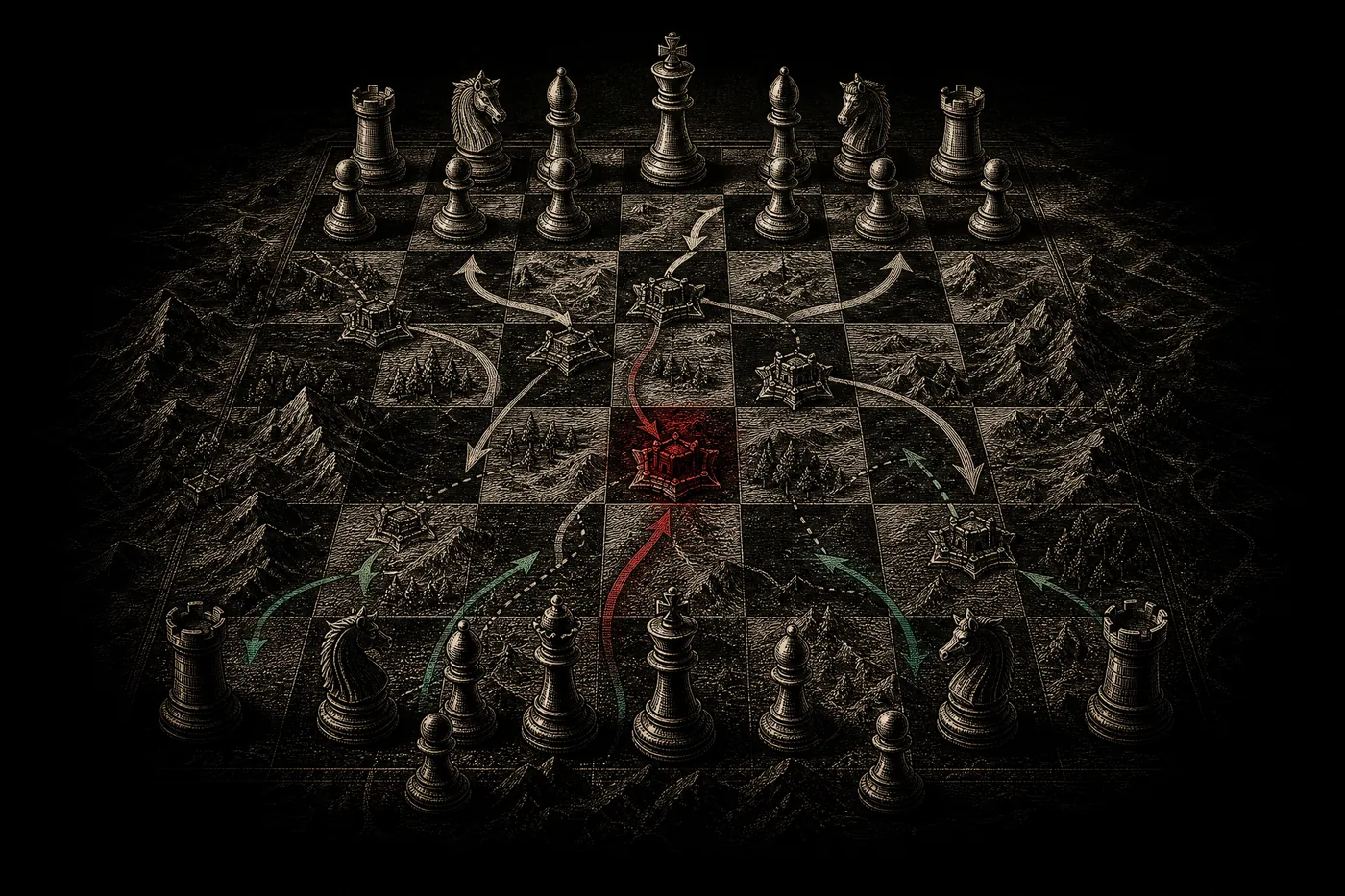
Endgame mastery
Lasker’s endgame play was the quiet engine behind his long reign. He was a complete player, but the ending was where his pragmatism paid off most reliably. He’d steer toward positions with a tiny, durable advantage — a slightly better pawn structure, a marginally more active piece — and then convert with technique that rarely wobbled.
The board below is the perfect illustration: the Ruy Lopez Exchange, with the queens already traded. It looks lifeless. In Lasker’s hands, against Capablanca in 1914, it became a slow, suffocating win. He didn’t need fireworks; he needed a small edge and a long game.
You can read the full story of that game on his best games page.
Attack when it counted
None of this means Lasker was a dry, defensive player. When the position called for aggression, he was as dangerous as anyone — his double-bishop sacrifice against Bauer in 1889 is one of the most famous attacking combinations in history. The point is that he attacked because the position demanded it, not out of habit. He’d defend, grind, or sacrifice depending on what actually worked. That versatility — being genuinely comfortable in every kind of position — is what made him so hard to prepare against.
Flexibility over dogma
Lasker played during an era of loud opening theories and universal “rules.” Tarrasch, his great rival, preached a rigid, principle-driven style. Lasker’s answer was essentially: it depends. He trusted concrete evaluation and practical judgment over dogma, choosing the move that gave his side the best real-world chances. That undogmatic flexibility is a big part of why later champions and analysts came to see him as strikingly modern — he’d fit right into today’s engine-shaped, “every position on its own terms” chess.
What you can steal from Lasker’s style
- Play the opponent, not just the board. Aim your choices at what this person finds uncomfortable.
- Never resign in your head. Defend stubbornly; make your opponent prove the win.
- Treat the endgame as a weapon. A tiny, well-nursed advantage is often enough.
- Drop the dogma. Judge each position on its merits instead of forcing it into a rule.
FAQ
How would you describe Lasker’s playing style in one line? Fighting, flexible, and pragmatic — a superb defender and endgame technician who played the opponent as much as the board.
Did Lasker really play bad moves on purpose to trick people? That’s the old legend. Modern analysis suggests he was actually ahead of his time — choosing practically awkward, flexible positions that only looked wrong to his more dogmatic rivals.
What was Lasker’s greatest strength? His resilience and endgame technique. He could defend lost-looking positions and convert tiny advantages more reliably than almost anyone of his era.
Was Lasker an attacker or a defender? Both. He’s best described as a complete, universal player — capable of a brilliant sacrifice or a patient grind, whichever the position required.
Keep exploring
Back to Emanuel Lasker’s profile · his best games · his openings · his rating & career arc · fun facts · or browse all chess players.
Written and fact-checked by the Chess Lab Academy Editorial Team · Facts verified against Wikipedia, Chess.com, and the World Chess Hall of Fame, as of July 2026 · Last verified 2026-07-10 · How we verify content.
