
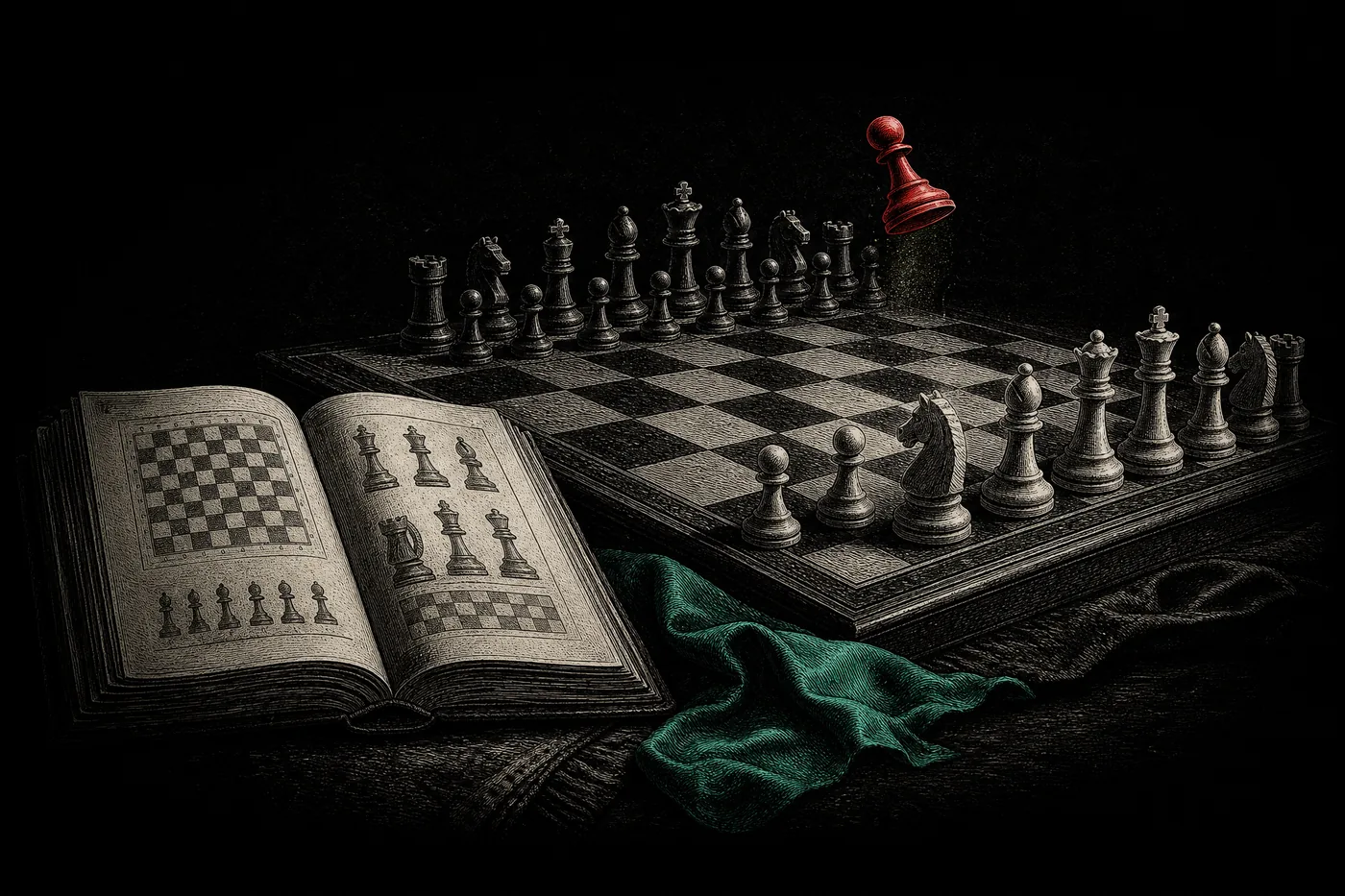
To get good at chess, focus on three things in order: stop hanging your pieces, learn basic tactics, and play lots of games you actually review. Skip the fancy opening memorization — beginners improve fastest by not blundering, spotting simple tactics, and finishing games with the basic checkmates. That’s the whole roadmap. Everything else is detail.
Improvement isn’t about talent or a photographic memory. It’s about a handful of habits, repeated. Let’s build your roadmap step by step so you always know exactly what to work on next.
The fast-track roadmap
- Don’t hang pieces — check every move: “is anything I’m leaving undefended?”
- Learn the 6–8 core tactics (fork, pin, skewer, discovered attack…).
- Follow opening principles — don’t memorize lines.
- Know the basic checkmates so you convert winning endgames.
- Play, then review — every game, win or lose.
- Be patient. Real progress shows up over months, not days.
How do you get good at chess as a beginner?
The single biggest jump in strength for any beginner comes from one boring-sounding habit: stop giving away your pieces for free. Seriously. Most beginner games aren’t lost to brilliant combinations — they’re lost to a queen left hanging or a knight forgotten on the rim.
So before every single move, run a two-second safety check:
- “Is the piece I’m moving leaving something undefended?”
- “Did my opponent’s last move threaten anything?”
- “Is anything I own currently attacked and not protected?”
This is unglamorous. It is also the fastest way to gain rating points that exists. Do this consistently and you’ll beat opponents who “know more” than you, simply because they hang pieces and you don’t.
What should beginners study first?
In priority order, here’s where your study time pays off the most:
- Board safety (blunder-checking). Covered above. Free rating.
- Basic tactics. A tactic is a short forcing sequence that wins material or mates. The core set: fork (one piece attacks two), pin (a piece can’t move without exposing something behind it), skewer (the reverse of a pin), discovered attack, and the back-rank mate. Drilling these is the closest thing to a cheat code in chess.
- Opening principles (not memorized openings). Three rules carry you through the first ten moves: control the center, develop your knights and bishops, and castle early to tuck your king away. That’s it.
- The basic checkmates. Knowing how to mate with king and queen and king and rook means you never draw a won game.
- Simple strategy — open files for rooks, good vs bad bishops, pawn structure basics. This comes once the above is solid. Start with basic chess strategy.

Why you shouldn’t memorize openings (yet)
Here’s a trap that swallows ambitious beginners: spending hours memorizing twenty-move opening lines. It feels productive. It mostly isn’t.
The problem is your opponents at the beginner level won’t play the “main lines” anyway — they’ll play something weird on move three, your memorization goes out the window, and now you’re on your own with no idea why the moves were good. Understanding principles (control the center, develop, castle, don’t move the same piece twice for no reason) lets you find decent moves in any position. Memorization only helps in the exact line you crammed. Principles travel; memorized lines don’t. Learn the why, not the what.
How should you practice chess?
Practice without review is just… playing. To actually improve, build this loop:
- Play games at a thoughtful pace. Bullet (one-minute) chess is fun but it trains your hands, not your brain. Play longer time controls (10 minutes or more) where you have time to think.
- Review every game afterward. Especially losses. Find the single move where things went wrong and ask why. You’ll often spot a hanging piece or a missed tactic. This is where the learning actually happens.
- Do tactics puzzles daily. Even 10–15 minutes of puzzles a day sharpens your pattern recognition faster than anything else.
- Play opponents slightly stronger than you. You’ll lose more, but you’ll learn more. Sandbagging against weaker players teaches you nothing.
The magic combo is play review puzzle repeat. Boring? A little. Effective? Enormously.
How long does it take to get good at chess?
Honest answer: it depends on how you define “good” and how you practice. A few realistic markers:
- A few weeks of regular play and you’ll stop hanging pieces and feel comfortable with the rules.
- A few months of the play-review-puzzle loop and you’ll be a genuinely solid casual player who beats most people you know.
- A year or two of consistent, deliberate practice and you can reach a strong club level.
The people who improve fastest aren’t the most “talented” — they’re the ones who review their losses and do puzzles consistently. Volume helps, but deliberate volume helps far more. Quality of practice beats quantity every time.
A fun bit of history
The phrase “practice makes perfect” hits different in chess. The legendary world champion José Raúl Capablanca was so naturally gifted he reportedly learned the rules at age four by watching his father play — and went on to lose only a handful of games over an entire decade. But here’s the kicker: even Capablanca said he studied endgames first, working backward from the simple positions to the complex ones. The greatest natural talent in chess history still recommended the unglamorous fundamentals. If it was good enough for him, it’s good enough for your Tuesday-night games.
Common mistakes to dodge
- Playing only bullet chess. It’s a blast, but fast chess reinforces snap decisions, not good ones. Mix in slow games.
- Never reviewing losses. A loss you don’t review is a lesson thrown in the trash. The mistake just waits to bite you again.
- Memorizing openings before learning tactics. You’ll lose to a fork on move 8 regardless of how deep your opening prep goes.
- Tilting. Losing a few in a row and rage-playing more games is how you bleed rating. Take a break, come back fresh.
- Comparing yourself to others. Your only opponent is yesterday’s you. Chess is a long climb — pace yourself.
Key takeaways
- Stop hanging pieces — blunder-check every move. It’s the fastest improvement there is.
- Learn the core tactics (fork, pin, skewer, discovered attack, back-rank mate).
- Follow opening principles, don’t memorize lines.
- Know the basic checkmates so you convert winning games.
- Play, then review — every game. Review is where you actually learn.
- Be patient — months, not days. The consistent improve fastest.
Keep climbing
The best next step is to lock in the fundamentals you’ll lean on every game. Start with the ideas that quietly decide most beginner games.
Next up: Basic chess strategy · Also handy: why king safety wins games, what checkmate is, and the basic checkmates you’ll need to finish games.
Written and fact-checked by the Chess Lab Academy Editorial Team (AI-assisted, human-edited) · Chess claims verified with Stockfish 17 and checked against the FIDE Laws of Chess · Last verified 2026-06-25 · Sources · How we verify content.
