
To learn how to checkmate with a rook, remember this: the rook builds a wall, and the king does the pushing. Use the rook to “cut off” the enemy king onto fewer ranks, then march your own king up to take opposition (standing two squares away, facing it). Squeeze the king to the edge and finish with a rook check along the rank. Done.
The rook can’t trap the king by itself the way a queen can — it needs your king as a partner. That’s what makes this mate a great teacher: it drills the king-and-rook teamwork you’ll use forever.
The 10-second version
- Use the rook to cut off the enemy king, fencing it into a shrinking zone.
- March your own king up to face the enemy king with one square between them (opposition).
- When the kings face off, give a rook check to push the enemy king back a rank.
- Repeat until the king hits the edge, then mate with a rook check along the final rank.
- Watch for stalemate — don’t trap the king with zero moves unless it’s actually check.
Why is the king and rook mate worth learning?
Because it comes up all the time, and because it’s harder than the queen mate — which means once you’ve got it, your endgame is genuinely solid.
Picture this: you’ve traded down, you’re up a rook, the board is nearly empty. If you don’t know this technique, you’ll shuffle around, maybe stalemate, and draw a totally winning game. Learn it, and you convert every rook endgame like this into a clean win. It also teaches opposition — the king-versus-king standoff that’s the backbone of nearly every pawn endgame you’ll ever play.
The rook is a long-range slider: it controls an entire rank or file at once. That’s exactly the tool you need to build a wall the enemy king can’t cross.
How do you checkmate with a king and rook? (the cut-off method)
The whole technique rests on one word: cut-off. You use the rook to draw a line the enemy king can’t step over, then shrink the space behind that line move by move.
Here’s the recipe:
- Cut the king off. Put your rook on a rank or file beside the enemy king so it can’t cross. The king is now stuck in a box made of the rook’s line and the edge of the board.
- Bring your king up to face the enemy king. You want your king two squares away, directly across from the enemy king — that’s opposition (one empty square between them).
- When the kings stand in opposition, check with the rook. The enemy king has to step back a rank to escape the check — it can’t approach your king.
- Re-establish the cut-off on the new, smaller box.
- Repeat: opposition rook check king retreats smaller box. Each cycle pushes the enemy king one rank closer to the edge.
- Deliver mate when the king is on the final rank and your king holds the opposition: a rook check along the edge ends it.
What is “opposition” and why does it matter?
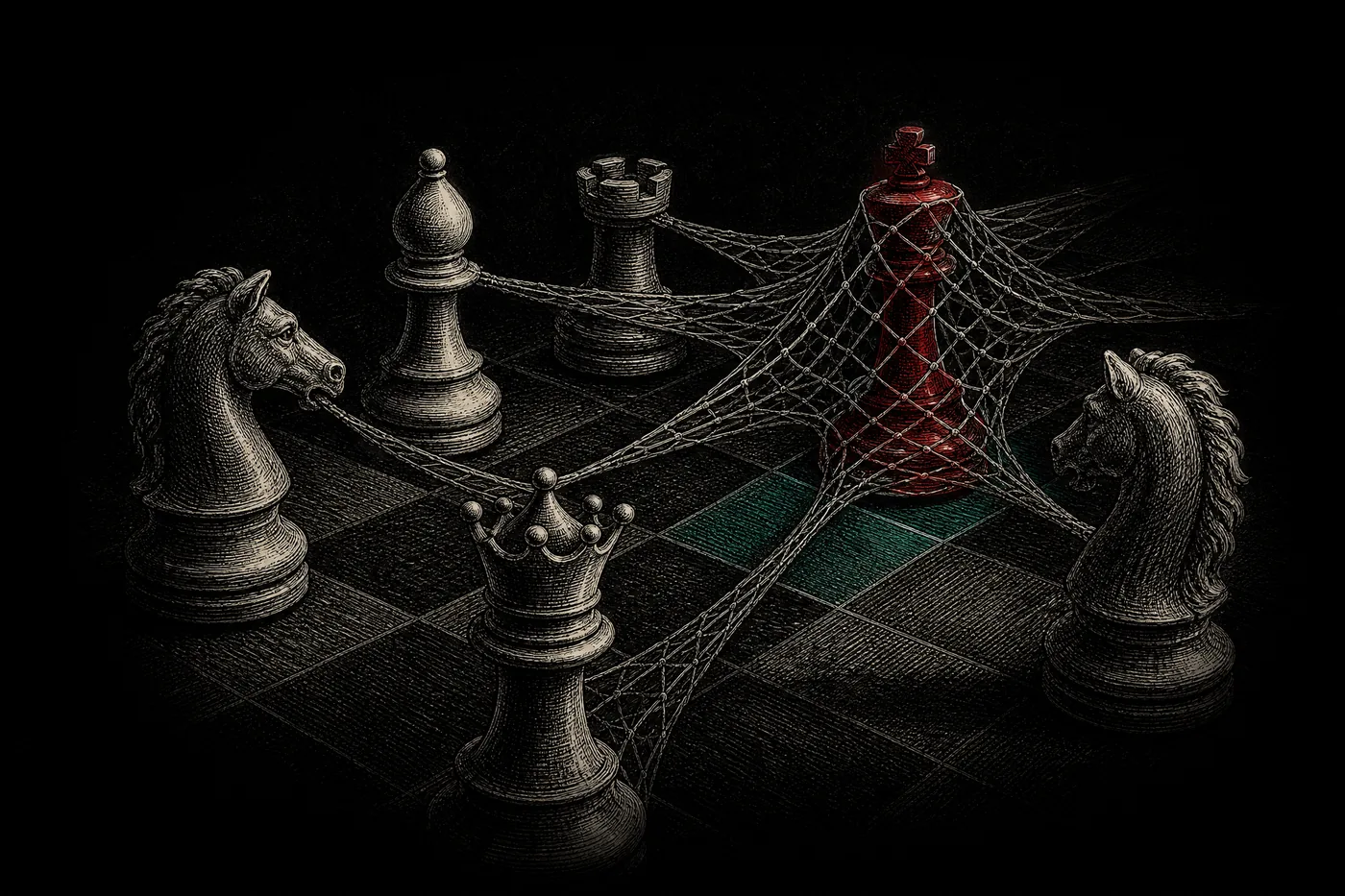
Opposition is when the two kings stand on the same line with exactly one square between them, facing off. Kings can never move next to each other (they’d be attacking each other, which is illegal), so whoever doesn’t have to move controls the standoff.
In the rook mate, opposition is your engine. When your king faces the enemy king with one square between them and you give a rook check, the enemy king has only one way to react: retreat. It can’t move toward your king (illegal), it can’t move sideways into the rook’s line, so it’s forced back a rank. That’s how the box shrinks every single time. Master opposition here and you’ve quietly learned one of the most important ideas in all of chess endgames.
How do you actually deliver the mate?
Once the enemy king is pinned to the back rank and your king is holding the opposition, the rook swings over for the check along that final rank. The king is stuck: it can’t advance (your king blocks the squares in front), it can’t move sideways (the rook covers the whole rank), and it can’t capture the rook (it’s too far away). Checkmate.
In that position the rook on h8 checks the king along the 8th rank. The enemy king on a8 wants to flee to a7 or b7 — but your king on a6 covers both. And b8 is still on the rook’s rank. Nowhere to go, nothing to capture. That’s a textbook king-and-rook mate.
How to avoid stalemate with a rook
Same warning as every basic mate: stalemate is a draw, and it’s the easiest way to throw away a winning rook endgame. Stalemate happens when the enemy king has no legal move but isn’t in check.
The danger spot is when the king is on the edge and you carelessly cut off its last escape without giving check. Suddenly it has no moves and isn’t in check — draw.
To stay safe:
- Before every rook move, check the enemy king’s escape squares. If a quiet rook move would leave the king with zero moves and no check, don’t play it.
- Use your king to take squares, the rook to check. Keep them in their lanes.
- If you accidentally box the king with no escape and it’s not check, just make a different waiting move and reset.
A fun bit of history
The rook’s name has nothing to do with birds, despite the “rook” being a type of crow. It actually comes from the Persian word rukh, meaning chariot — in the original game the corner pieces were war chariots that charged in straight lines down the board. Over centuries of travel through Persia, the Arab world, and into Europe, the chariot morphed into the castle-tower shape we know today (which is also why some people call it “the castle”). So when your rook slides across the board to deliver mate, it’s really an ancient war chariot finishing the charge.
Common mistakes to dodge
- Stalemating the king on the edge. The number-one rook-mate blunder. Always confirm the king has a legal move before any non-checking rook move.
- Trying to mate with the rook alone. Impossible — the rook needs your king’s help to trap the enemy king. Bring your king into the fight early.
- Checking aimlessly. Random rook checks just let the king wander toward the center, undoing your progress. Only check when the kings are in opposition.
- Letting the king escape past the rook. Keep the cut-off solid. If the king reaches your rook’s line, reset the wall before continuing.
- Mating toward the center. You can’t mate a king in the middle of the board. Always drive it to an edge first.
Key takeaways
- Use the rook to cut off the enemy king and shrink its space.
- March your own king up to take opposition (one square between the kings).
- Rook check when the kings face off — it forces the enemy king back a rank.
- Mate = rook check along the final rank while your king guards the escape squares.
- Avoid stalemate — never leave the king with zero moves unless it’s actual check.
Keep climbing
You’ve now got the two essential basic mates. If you haven’t tried it yet, the king-and-queen mate is a gentler version of the same teamwork — the queen does more of the heavy lifting.
Next up: How to checkmate with king and queen · Also handy: what checkmate actually is, how the rook moves, and the full basic checkmates collection.
Written and fact-checked by the Chess Lab Academy Editorial Team (AI-assisted, human-edited) · Positions verified with Stockfish 17 and checked against the FIDE Laws of Chess · Last verified 2026-06-25 · Sources · How we verify content.
