
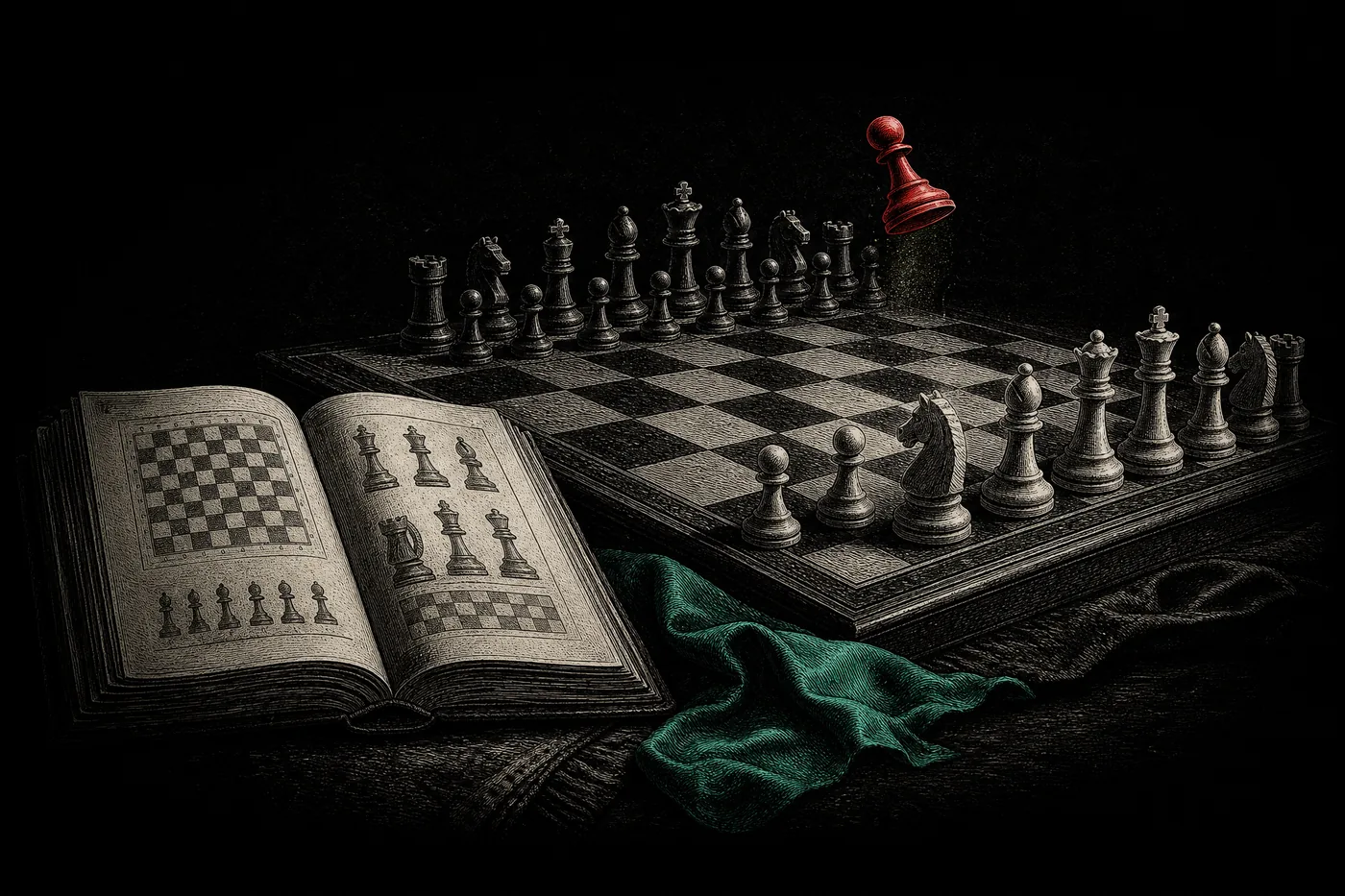
A chess clock is two timers built into one device — one for each player. Only the clock of the player whose turn it is runs down. You make your move, then press your button, which stops your timer and starts your opponent’s. If your time hits zero before the game ends, you usually lose. That’s the whole idea.
It turns chess into a race against the board and the clock. Learn how it works and you’ll never panic when someone slides a ticking timer next to your board.
The 10-second version
- Two clocks, one device. Only the mover’s clock runs.
- Move, then press your button — that stops your clock and starts your opponent’s.
- Run out of time (“flag”) and you usually lose the game.
- Increment adds time each move; delay waits before counting down.
What is a chess clock and why use one?
Without a clock, a single game could last for hours — one player could just sit and think forever. A chess clock fixes that by giving each player a time budget for the whole game. Spend it wisely.
The device has two displays and two buttons (or, in the case of an app, two timers on screen). The key concept: at any moment, only one clock is running — the one belonging to whoever has to move. When you finish your move and press your button, your clock freezes and your opponent’s starts ticking. Think of it like a relay baton: pressing the button hands the “time pressure” over to the other player.
How do you use a chess clock, step by step?
It’s a simple rhythm once you’ve done it a couple of times:
- At the start, White’s clock is running. Since White moves first, White’s time ticks down even before the first move is made.
- Make your move on the board.
- Press your clock button with the same hand you moved with. (Yes, the rules say same hand — no moving with one hand and slapping the clock with the other.) This stops your timer and starts your opponent’s.
- Wait. Your clock is frozen while your opponent thinks and moves.
- They press their button, and your clock starts again. Repeat until the game ends.
The golden habit: move, then press, every single time. Forget to press, and you’ll keep burning your own time while you sit there thinking it’s your opponent’s turn. Ouch.
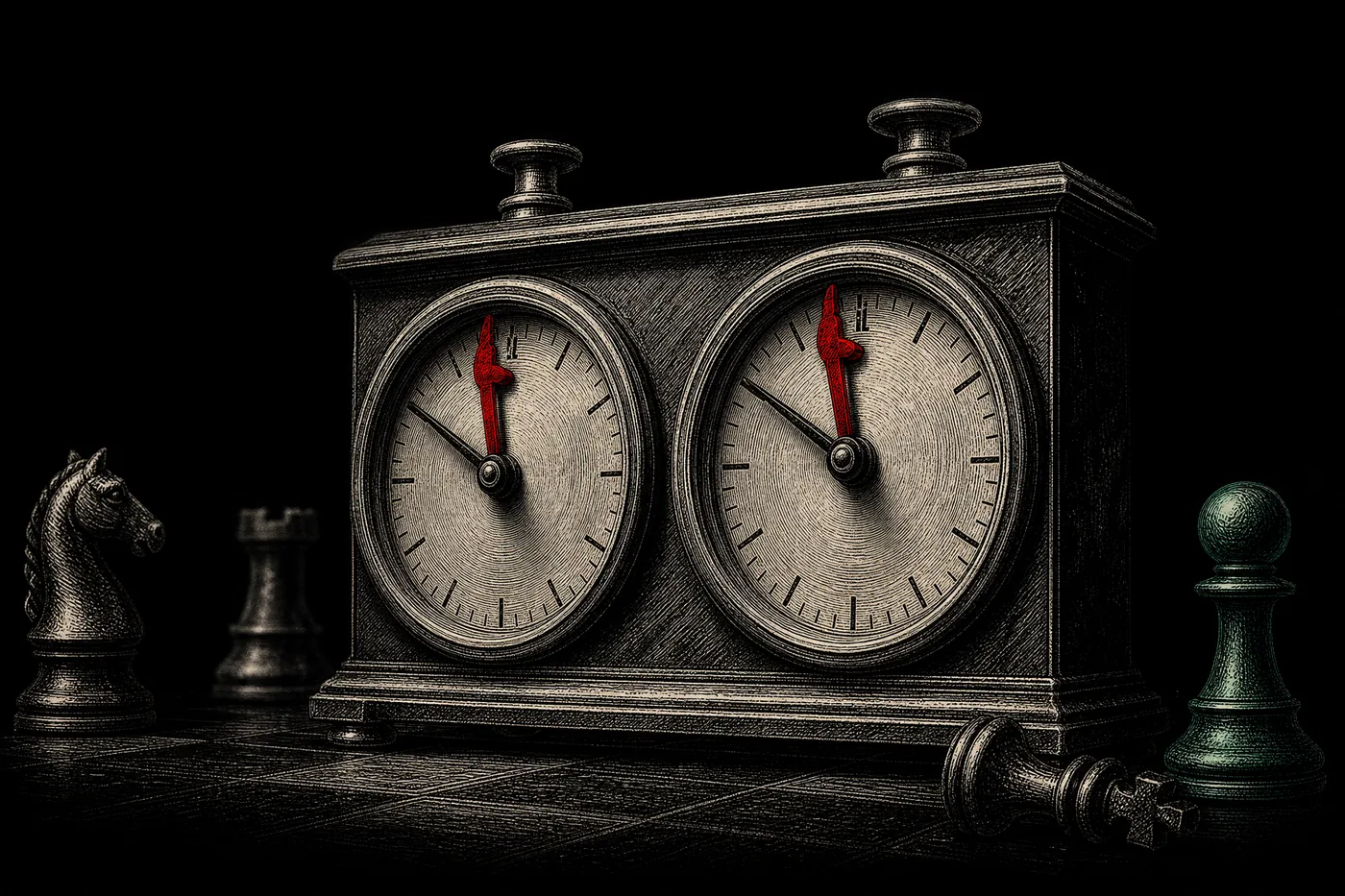
What does “flagging” mean in chess?
When a player’s time runs out, we say they’ve flagged (or “their flag fell”). The name comes from old mechanical clocks: each had a little physical flag that a clock hand would slowly lift, and the moment your time expired, the flag dropped. Watching that flag teeter on the edge was peak tension.
If you flag, you lose the game — even if you had a completely winning position on the board. Time is part of the game. The one big exception: if your opponent has insufficient material to ever checkmate you (like just a lone king), then running out of time is scored as a draw instead of a loss. You can’t lose on time to someone who couldn’t have mated you anyway.
What’s the difference between increment and delay?
Old clocks were “sudden death” — you got, say, five minutes, and when it was gone, it was gone. Modern digital clocks add two clever features that give you a little breathing room each move:
- Increment (also called bonus or Fischer): a set amount of time gets added to your clock every time you move. With a 3+2 setting, you start with 3 minutes and gain 2 seconds back each move. Play fast and your clock can actually go up.
- Delay: before your main clock starts ticking down, the clock waits a few seconds. With a 5-second delay, you get 5 free seconds to move each turn before your real time starts draining. Unused delay doesn’t carry over — it just resets each move.
Both exist to stop pointless flag-falls in winning endgames, where you’d otherwise have to make moves faster than humanly possible. Increment is the more common of the two online and in modern tournaments.
| Increment | Delay | |
|---|---|---|
| How it works | Adds time after you move | Pauses before your clock counts down |
| Can your time grow? | Yes — play fast, bank time | No — it just delays the drain |
| Notation | ”3+2” (3 min, +2 sec/move) | “5|5d” or “G/5 d5” |
Do you have to press the clock?
Yes — pressing the clock is part of completing your move in a timed game. Until you press, your move isn’t “finished” as far as the clock is concerned, and your own time keeps draining. One quirky rule worth knowing: you press the clock with the same hand you used to move the piece. And in serious games, you can’t keep your hand hovering over the button to slam it instantly — that’s frowned upon. Move cleanly, press cleanly.
A fun bit of history
Before clocks, players exploited time as a weapon — in the 1800s, some deliberately stalled for hours to frustrate opponents into mistakes (or just to wait them out). One infamous game reportedly had a player think for so long that spectators went home. The fix arrived in 1883, when mechanical chess clocks were introduced at a London tournament. Those early clocks were two pendulum timers literally tilted on a see-saw mechanism. They evolved into the spring-loaded “flag” clocks, and finally today’s digital clocks with increment and delay. So every time pressure thriller you’ve ever watched exists because Victorian players were just too slow.
Common mistakes to dodge
- Forgetting to press the clock. The classic beginner facepalm — you move, then sit there thinking, while your own time melts. Build the move-then-press reflex early.
- Pressing before completing your move. Don’t press mid-thought or before you’ve actually let go of your piece. Finish the move first.
- Ignoring increment. In a 3+2 game, you can sometimes “live on the increment” in tight spots — play instant moves to bank those 2 seconds. Beginners forget the bonus exists.
- Panicking in time trouble and hanging pieces. Low on time? Keep your moves safe and simple. A blunder loses just as fast as the flag.
- Wrong hand. In rated play, moving with one hand and pressing with the other can be penalized. Same hand for both.
Key takeaways
- A chess clock is two timers in one; only the mover’s clock runs.
- Move, then press your button with the same hand — it stops your clock and starts your opponent’s.
- Flagging (running out of time) usually means you lose — unless your opponent has insufficient material to mate, then it’s a draw.
- Increment adds time each move; delay pauses before your clock counts down.
- The clock is part of the game — manage it like you manage your pieces.
Keep climbing
Now that you know how the clock works, the next question is how much time you actually get — that’s where time controls come in.
Next up: Chess time controls explained · Also handy: the full rules of chess and the touch-move rule.
Written and fact-checked by the Chess Lab Academy Editorial Team (AI-assisted, human-edited) · Rules verified against the FIDE Laws of Chess (Article 6) and every position checked with Stockfish 17 · Last verified 2026-06-25 · Sources · How we verify content.
