
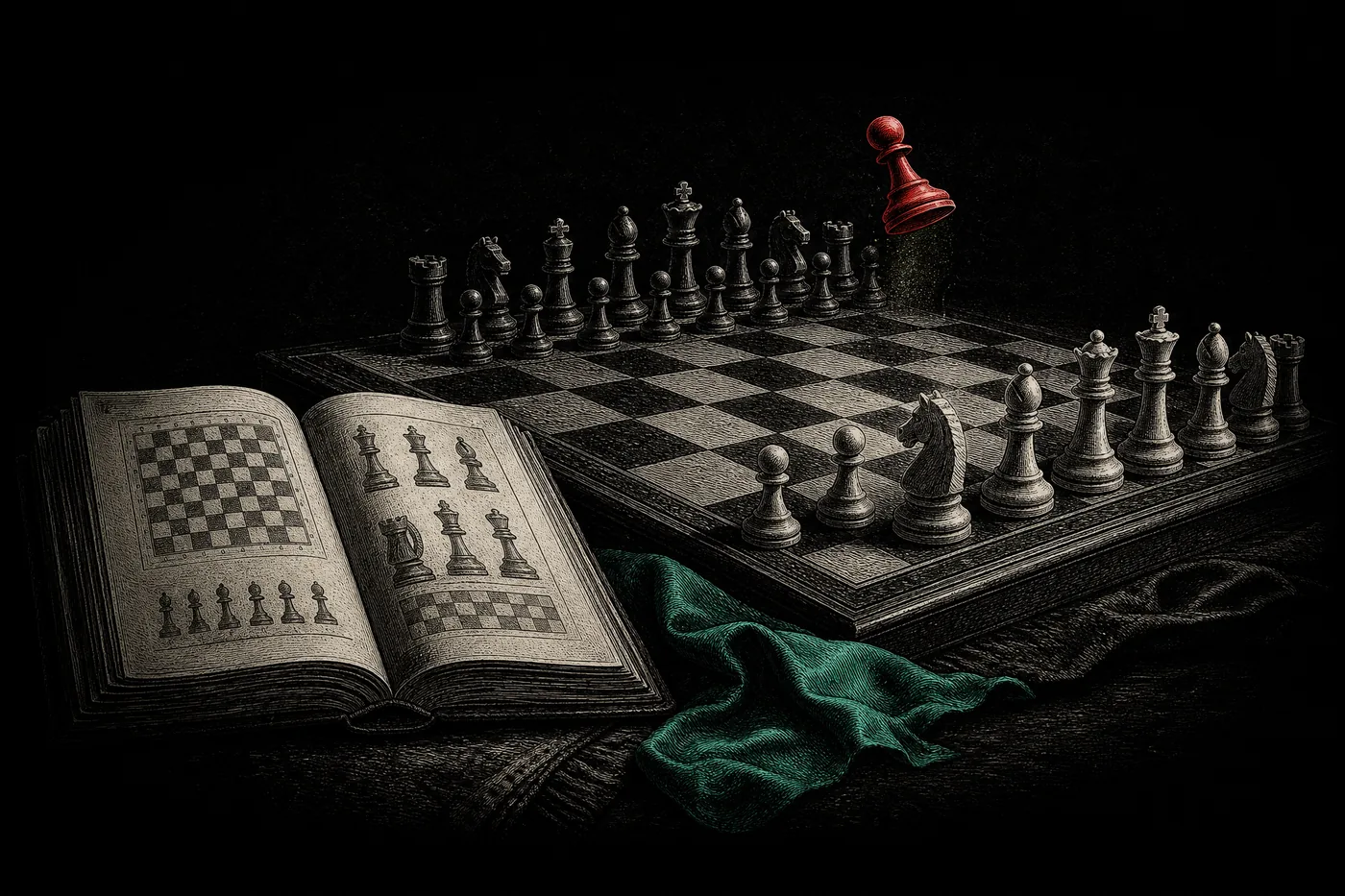
The touch-move rule is chess’s “no take-backs” law: if you deliberately touch one of your pieces, you must move it (if it has a legal move). Touch an enemy piece you can capture, and you must capture it. Let go of a piece on a new square, and that move is final. It keeps games honest and decisive.
It sounds harsh, but it’s one of the fairest rules in the game — it stops players from “test-driving” moves by sliding pieces around to see what looks good. Once you understand it, you’ll never fumble a game away to it.
The 10-second version
- Touch your piece you must move it (if any legal move exists).
- Touch an enemy piece you must capture it (if a legal capture exists).
- Release a piece on a square the move is locked in.
- Want to straighten a piece? Say “j’adoube” (“I adjust”) first.
What is the touch-move rule, exactly?
The rule, straight from the FIDE Laws of Chess, breaks into three clean parts:
- If you intentionally touch your own piece, you must move that piece — as long as it has at least one legal move. You don’t get to touch your knight, change your mind, and move your bishop instead.
- If you intentionally touch an opponent’s piece, you must capture it — if you have a legal way to capture it. Reaching out and tapping the enemy queen? You’d better be able to take it.
- Your move becomes final the moment you let go of your piece on a new, legal square. Hand off the piece, and there’s no undo.
The magic word is intentional. Brushing a piece by accident, or knocking one over while reaching across the board, doesn’t count. But once you purposefully grab a piece — commit.
What does “j’adoube” mean?
Sometimes a piece is sitting crooked, half-off its square, looking messy. You’re allowed to straighten it — but only if you announce it first. The traditional word is the French “j’adoube” (pronounced zhah-DOOB), which means “I adjust.” Plain English — “I adjust” or “adjusting” — works just as well.
Say it before you touch the piece, and you can nudge it back to the center of its square without any obligation to move it. Forget to say it first, then touch the piece? Touch-move kicks in, and now you have to move the thing you only wanted to tidy up. Order matters: announce, then adjust. And you can only adjust on your own turn.
Does touch-move apply to castling?
It does, and this is where the rule gets sneaky. Castling moves two pieces at once — your king and a rook — so which one you touch first really matters.
Always touch the king first. Under the rules, castling is considered a “king move,” so grabbing the king two squares toward the rook signals your intent to castle. The rook then tags along.
If you touch the rook first, a strict opponent can hold you to it — you may be forced to move only that rook, and castling could be off the table for that turn. It’s a classic over-the-board trap, and it’s easily avoided: king first, every time.
Does touch-move apply in casual or online games?
Here’s the nuance:
- Online chess: there’s basically no touch-move. You drag a piece and only the release commits it — and most sites even offer “take-back” requests in friendly games. The act of “touching” doesn’t exist when you’re clicking.
- Casual over-the-board games: technically the rule still applies, but it’s often relaxed among friends. Plenty of kitchen-table games allow take-backs. That said, it’s a fantastic habit to play touch-move even casually — it sharpens your discipline and trains you to calculate before you reach for a piece.
- Tournaments and rated play: touch-move is strictly enforced. No exceptions. This is where it really bites.
The bottom line: in any serious game, treat touch-move as gospel.
What if the touched piece has no legal move?
Reasonable worry — what if you touch your knight but it’s pinned or boxed in and literally can’t go anywhere legally? Then there’s no penalty. The rule only obligates you to move a touched piece if a legal move for it exists. If the piece is frozen with no legal options, you’re free to play something else entirely. Same logic for an enemy piece: if you touch one you can’t legally capture, no harm done.
A fun bit of history
Touch-move feels ancient because it basically is — chess etiquette has demanded “you touch it, you move it” for centuries, long before the rules were formally written down. It exists to kill the temptation to physically slide pieces around the board “just to see.” That’s also why analysis and calculation in chess happen in your head: the touch-move rule quietly forced players to become mental calculators. Even at the very top, super-grandmasters occasionally get burned by it — accidentally brushing a piece and having to play a move they never intended. Nobody’s immune.
Common mistakes to dodge
- Reaching before you’ve decided. The classic blunder: you grab a piece while still thinking, realize it’s a mistake, but now you’re committed. Calculate first, then reach.
- Touching the rook to castle. Always the king first. This one catches beginners in their first tournament every time.
- Forgetting “j’adoube.” If a piece looks crooked, announce “I adjust” before you touch it — never after.
- Assuming online habits transfer. Dragging pieces around online builds a lazy “I’ll just try it” reflex. Over the board, that reflex costs you games.
- Hovering. Letting your hand hover over a piece is fine; the obligation starts only when you actually touch it. But once you make contact — that’s it.
Key takeaways
- Touch your piece you must move it. Touch an enemy piece you must capture it. Release on a square final.
- The obligation only applies if a legal move/capture exists for the touched piece.
- Say “j’adoube” (or “I adjust”) before touching a piece you only want to straighten.
- When castling, touch the king first — never the rook.
- Strictly enforced in tournaments; relaxed (and nonexistent) online — but it’s a great discipline habit anyway.
Keep climbing
Touch-move is part of the bigger picture of chess etiquette and rules. Lock those in next.
Next up: The full rules of chess · Also handy: how to castle (king first!) and how the chess clock works.
Written and fact-checked by the Chess Lab Academy Editorial Team (AI-assisted, human-edited) · Rules verified against the FIDE Laws of Chess (Article 4) and every position checked with Stockfish 17 · Last verified 2026-06-25 · Sources · How we verify content.
