To calculate in chess, follow a three-step loop: list your candidate moves (2–4 moves worth considering), calculate the forcing ones first (checks, captures, threats — they limit your opponent’s replies), and visualize the resulting position before you trust it. Calculation isn’t about seeing twenty moves ahead. It’s about seeing the right few moves clearly. Depth is overrated; accuracy is everything.
The myth that good players calculate dozens of moves ahead scares beginners off. The truth is calmer: strong players look at fewer lines than you’d think, but they look at the useful ones and they don’t make stuff up. Let’s learn the method.
The calculation loop
- Candidate moves — pick 2–4 worth checking. Don’t calculate everything; calculate the contenders.
- Forcing first — checks, captures, threats. They limit your opponent’s replies, so they’re shortest to calculate.
- Opponent’s best reply — assume they find the toughest defense, not the one you hope for.
- Visualize the end position — picture the board after the line. Is it actually good for you?
- Compare and choose — pick the line that ends best.
What does “calculating” actually mean?
Calculating is reading a specific sequence of moves in your head — “I go here, they go there, I go here” — and judging where it lands. It’s the difference between guessing a move feels right and knowing what happens after it.
It rests on three pillars: picking good candidate moves (so you’re not calculating junk), following forcing lines (so the tree of replies stays small), and accurate visualization (so the imagined board is the real one). Get those three working together and your calculation gets sharp fast.
How do you find candidate moves?
You can’t calculate every legal move — that’s a recipe for a headache and a flag fall. Instead, narrow to a shortlist:
- Look at all forcing moves first. Every check, every capture, every direct threat. These are the moves that do something, and they’re the cheapest to calculate because they restrict the reply.
- Add 1–2 strong positional moves. A move that grabs a key square, improves your worst piece, or builds a threat.
- Stop at 2–4 candidates. More than that and you’re drowning. Pick the most promising contenders and dig into those.
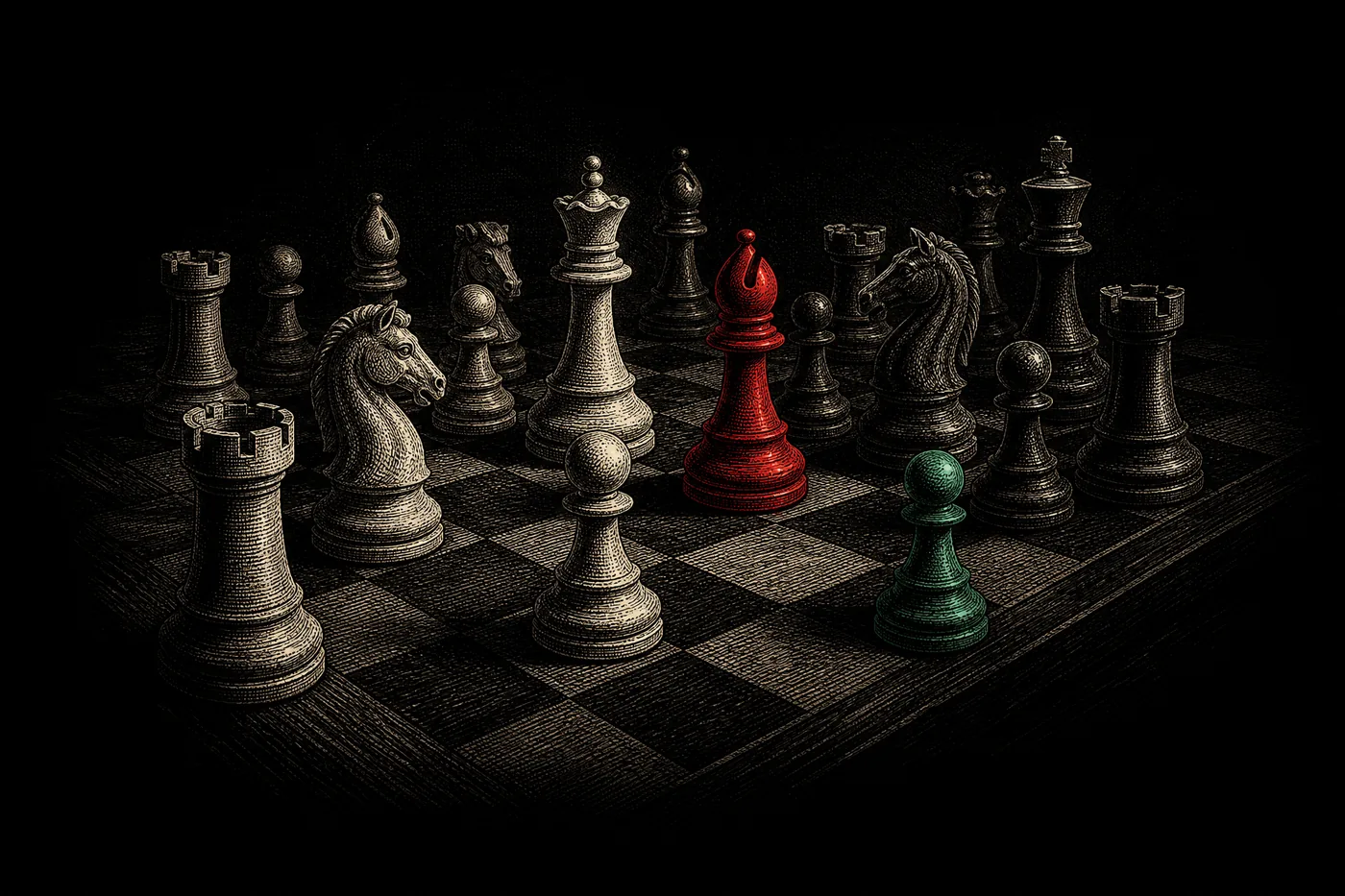
In a position like this, resist the urge to play the first natural move. List two or three candidates, check the forcing options, and only commit once you’ve seen where each one lands.
Why calculate forcing moves first?
Because forcing moves shrink the tree. When you give a check, your opponent has only a handful of legal replies — block, capture, or move the king. A quiet move, by contrast, lets them answer in a dozen ways, and now you’ve got a sprawling mess to track.
So the order is always: checks, then captures, then threats, then quiet moves. Forcing lines are short and concrete, which means you can calculate them deeply and accurately. It’s like exploring a hallway with three doors instead of an open field — far easier to map.
This also feeds your blunder check: scanning the opponent’s forcing replies is exactly how you avoid walking into a tactic.
How many moves ahead should you calculate?
Far fewer than you fear. Most winning tactics are 2–4 moves deep. Quiet positions often need only one or two moves of calculation plus good judgment. You almost never need to see ten moves ahead — and when a line is that long, it’s usually forcing the whole way (a string of checks and captures), which makes it easier, not harder.
The real skill isn’t depth, it’s honesty. A two-move line you’ve calculated correctly beats a six-move line where you assumed your opponent would cooperate. Always give the opponent their best, toughest defense — not the move that makes your idea work.
How do you train calculation?
Calculation is a muscle, and it grows with reps:
- Solve tactics puzzles daily. They’re calculation in a bottle: a position, a hidden forcing sequence, a clear answer. (Curious how many to do? See how many puzzles per day.)
- Calculate fully before you move the pieces. When solving, see the whole line in your head first, then check. Moving pieces to “test” lines trains your hands, not your calculation.
- Do the “what’s forcing?” drill. In any position, name every check and capture out loud before doing anything else. Builds the forcing-first reflex.
- Review your games and ask “what did I miss?” Most missed tactics trace back to a candidate move you never considered or an opponent reply you waved away.
A note on engines and human calculation
Engines calculate millions of positions per second — humans obviously can’t, and chasing that is pointless. But here’s the encouraging twist: the world’s best players reach near-engine decisions by calculating only a tiny fraction of the lines, because they pick brilliant candidate moves and prune ruthlessly. You’re not competing with the engine’s brute force. You’re training the human superpower: looking at the right three moves instead of all forty. That’s a skill, and it’s very learnable.
Common calculation mistakes
- Calculating the first move you see. Almost always a mistake. List candidates before you dive in, or you’ll go deep on a mediocre idea.
- Assuming the opponent plays your dream reply. This is the #1 calculation error. Give them their best defense, every time, or your “winning” line is a fantasy.
- Going deep instead of going accurate. A correct 3-move line beats a fuzzy 7-move one. Stop when the position is clear, not when you’re exhausted.
- Forgetting the position changed. After a few imagined moves, pieces have moved — a square that was defended might now be open. Re-picture the board at each step.
- Skipping the “is this actually good?” check. You calculated a forced line perfectly… into a worse position. Always judge the end position, not just the cool moves.
Key takeaways
- Calculation = candidate moves forcing lines first opponent’s best reply visualize the end choose.
- Narrow to 2–4 candidate moves; don’t try to calculate everything.
- Calculate checks, captures, and threats first — they shrink the tree and are easiest to read.
- Most tactics are only 2–4 moves deep. Accuracy beats depth, always.
- Train with daily puzzles, calculating the full line in your head before moving.
FAQ
How many moves ahead should you calculate in chess? Usually just 2–4. Most tactics are that shallow, and quiet positions need even less calculation plus good judgment. Seeing the right few moves accurately matters far more than seeing many moves vaguely.
What are candidate moves? Candidate moves are the shortlist of 2–4 moves worth seriously considering in a position. You generate them first — prioritizing forcing moves — so you calculate only the promising options instead of every legal move.
Why calculate forcing moves first? Forcing moves (checks, captures, threats) limit your opponent’s possible replies, so the lines are short and concrete. That makes them faster and more accurate to calculate than quiet moves, which allow many responses.
How do I improve my calculation in chess? Solve tactics puzzles daily and calculate the entire solution in your head before moving any pieces. Always give your opponent their best defense, and review your games to find candidate moves you overlooked.
Should I move pieces around to calculate? Not when training. Moving pieces to test lines builds your hands, not your mind’s eye. Calculate the full sequence in your head first, then verify — that’s how you strengthen real calculation.
Why do I calculate well in puzzles but blunder in games? Puzzles tell you a tactic exists; games don’t. In real games you also have to notice the moment to calculate and run your safety check. Pair calculation practice with a consistent blunder check.
Is calculation the same as visualization? They’re partners, not twins. Visualization is your ability to see the imagined board clearly; calculation is choosing and sequencing the moves. Weak visualization caps your calculation — that’s why training both pays off.
Keep climbing
Calculation runs on a clear mental board. If your imagined positions get blurry after two or three moves, that’s a visualization gap — and it’s very trainable.
Next up: Chess visualization training · Also handy: forks, pins, and the improvement hub.
Written and fact-checked by the Chess Lab Academy Editorial Team (AI-assisted, human-edited) · Positions checked with Stockfish 17, rules per the FIDE Laws of Chess · Last verified 2026-06-25 · Sources · How we verify content.