
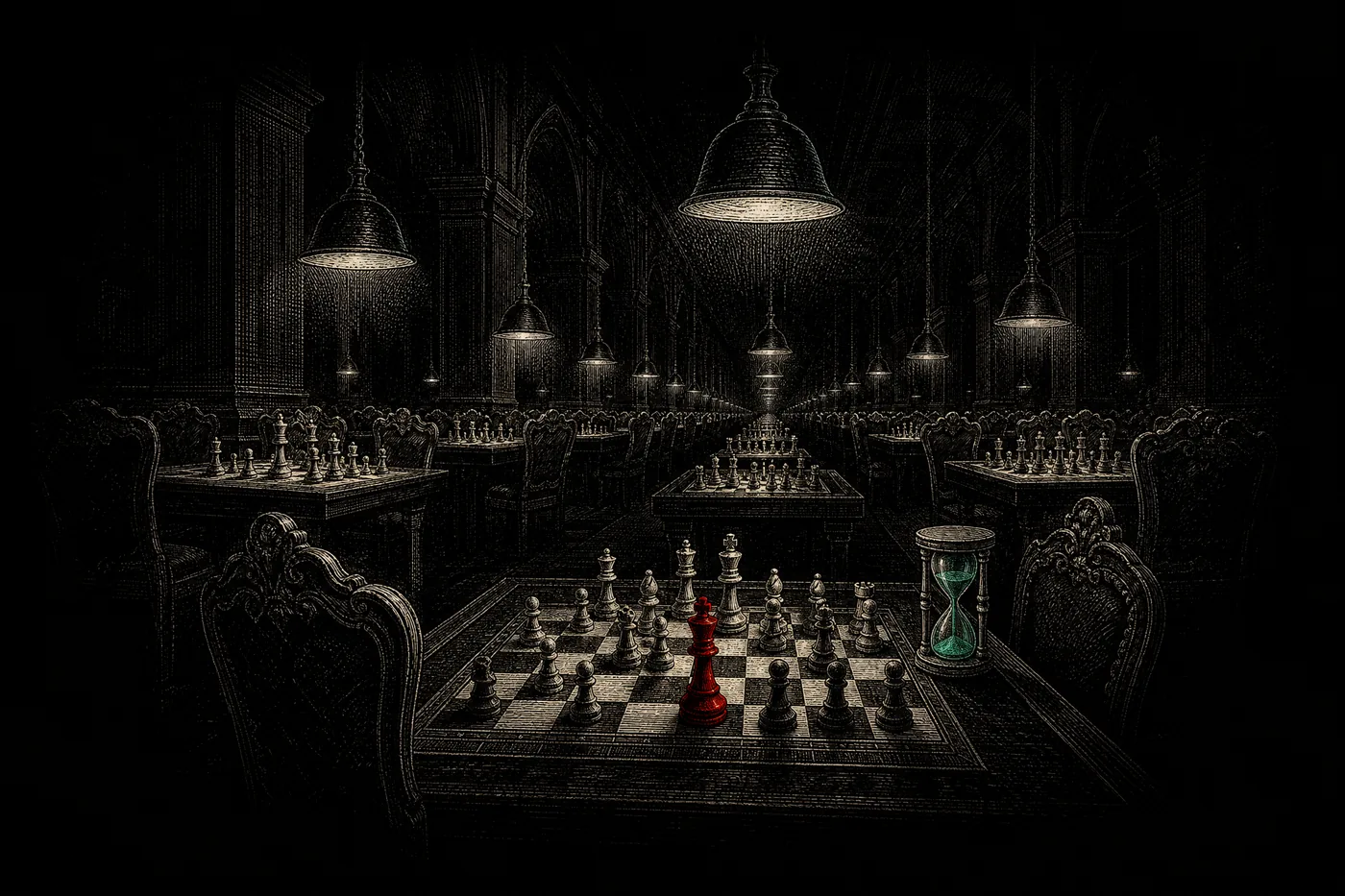
The FIDE World Cup is the wildest, most nerve-shredding event on the chess calendar: a giant single-elimination knockout where one bad day sends you home. Up to 206 players enter, only one walks away champion, and there’s no safety net — no round-robin standings to hide behind, just win-or-go-home mini-matches. As of July 2026 the reigning champion is Javokhir Sindarov of Uzbekistan, who won the 2025 edition in Goa, India. Two years earlier, in 2023, Magnus Carlsen finally lifted the one big trophy that had always eluded him.
Quick facts
- Governing body: FIDE · Format: single-elimination knockout, 128–206 players
- First held (modern format): 2005 (Khanty-Mansiysk) · Frequency: every two years (odd years)
- Reigning champion: Javokhir Sindarov (won 2025) — as of July 2026
- Why it matters: the top finishers qualify for the Candidates Tournament — a direct route toward the world title
What is the FIDE World Cup?
Think of it as chess’s version of a tennis Grand Slam bracket, or the FA Cup: a massive knockout where grandmasters, prodigies, and continental qualifiers all get thrown into the same draw. Everyone starts on level ground, the pairings are seeded by rating, and every round is a duel — lose your mini-match and you’re out, no matter how famous you are.
The stakes go way beyond the (very real) prize money. The World Cup is a qualifier for the Candidates Tournament, the event that decides who challenges for the World Chess Championship. In recent editions the top three finishers book their seats in the next Candidates, which turns the semifinals into some of the tensest chess you’ll ever watch — players are literally fighting for a shot at the crown.
How does the format work?
The World Cup runs as a classic bracket, and here’s the rhythm of it:
- Two-game mini-matches. Each round is a best-of-two classical games, one with White and one with Black. Score 1½–½ or 2–0 and you advance.
- Tiebreaks if level. Tied 1–1 after the classical games? You go to faster chess the next day: two rapid games (25 minutes + 10 seconds), then, if still tied, quicker rapid games, then blitz (5 minutes + 3 seconds), and — in the nightmare scenario — a single sudden-death Armageddon game to force a result. Nobody leaves until someone wins.
- A huge field. The modern World Cup began in 2005 as a 128-player knockout. From the 2021 edition onward FIDE expanded the open field to 206 players, seeding the top names straight into later rounds while everyone else fights through the early gauntlet.
- The long climb. Winning it means surviving seven or eight rounds over roughly a month — a marathon of pressure where the tiebreak days can be more decisive than the classical games.
That format is exactly why the World Cup produces so much chaos: even the world’s best can be dragged into a blitz shootout by a hungry underdog, and in fast chess, anything can happen.
A short history
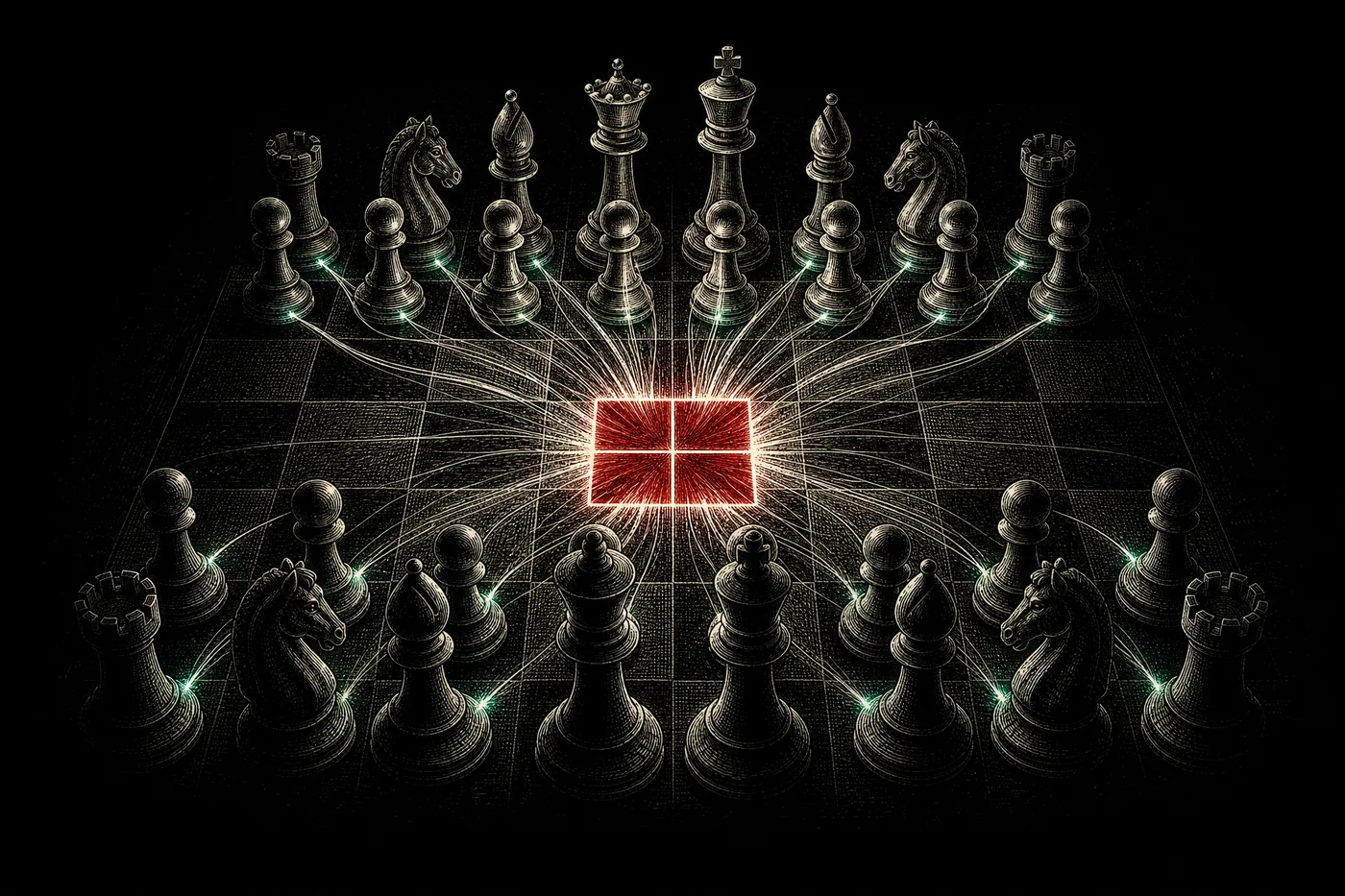
The World Cup name has floated around chess for decades, but the modern knockout began in 2005 in Khanty-Mansiysk, Russia, when Levon Aronian won the first edition. (Earlier one-off “FIDE World Cup” events existed — Viswanathan Anand won versions in 2000 and 2002 — but the biennial knockout we know today dates from 2005.)
From there the roll of champions reads like a tour of elite chess: Gata Kamsky (2007), Boris Gelfand (2009), Peter Svidler (2011), Vladimir Kramnik (2013), Sergey Karjakin (2015), Aronian again (2017 — still the only two-time winner), and Teimour Radjabov (2019). Khanty-Mansiysk hosted so many editions it practically became the event’s home, before it started touring the chess world — Tromsø, Tbilisi, Sochi, Baku, and most recently Goa.
The latest edition: 2025 (Goa, India)
The 2025 FIDE World Cup was held in Goa, India, from 31 October to 27 November 2025 — the first time the event landed on Indian soil, in front of a chess-mad home crowd. The winner was Javokhir Sindarov of Uzbekistan, who edged Wei Yi of China in a tense two-game tiebreak final. At just 19 years old, Sindarov became the youngest World Cup winner in the event’s modern history.
The top three finishers — Sindarov, Wei Yi, and Andrey Esipenko — all qualified for the 2026 Candidates Tournament. Sindarov didn’t stop there: he went on to win that Candidates and earn a shot at Gukesh Dommaraju in the 2026 World Championship — the perfect illustration of why the World Cup matters so much.
Famous upsets and moments
Knockout chess is a factory for Cinderella stories:
- 2023 — Carlsen’s white whale. In Baku, Magnus Carlsen finally won the World Cup, beating 18-year-old Praggnanandhaa in the final. It was the last major title missing from his résumé — and Pragg’s fairy-tale run (knocking out Hikaru Nakamura and Fabiano Caruana along the way) made him a global star.
- 2021 — Duda topples the king. On his way to the title in Sochi, Jan-Krzysztof Duda knocked out world champion Magnus Carlsen in the semifinals and never lost a single game all event — classical or tiebreak.
- 2019 — blitz drama. Teimour Radjabov and Ding Liren drew all four rapid games in the final before Radjabov broke through in the blitz tiebreaks to take the trophy.
- The home hero. Baku 2023 also gave us Nijat Abasov, an unheralded Azeri who rode the home crowd all the way to the semifinals — pure World Cup magic.
How to follow it
The World Cup is broadcast live with commentary on the official FIDE channels, Chess.com, and various YouTube streams, usually with move-by-move analysis and engine evaluations. The best days to tune in are the tiebreak days, when eliminations come thick and fast and the rapid-to-blitz-to-Armageddon pressure cooker delivers the drama. Because the classical games are long, savvy fans often check in for the opening and then come back for the tense final hour.
FAQ
Who won the 2023 FIDE World Cup? Magnus Carlsen, who beat Praggnanandhaa in the final in Baku — his first-ever World Cup title.
Who is the current FIDE World Cup champion? Javokhir Sindarov of Uzbekistan, who won the 2025 edition in Goa, India (as of July 2026).
How does the chess World Cup work? It’s a single-elimination knockout of up to 206 players. Each round is a two-game classical mini-match; if it’s tied, players settle it in rapid, then blitz, then Armageddon tiebreaks.
Why is the World Cup a big deal? Beyond the prize money, the top finishers (recently the top three) qualify for the Candidates Tournament — a direct step toward challenging for the World Championship.
How many players are in the FIDE World Cup? The modern event started with 128 players in 2005 and expanded to 206 from 2021 onward.
Explore more
See every champion in the full list of FIDE World Cup winners · Learn where the qualifiers go next at the Candidates Tournament · Follow the road to the World Chess Championship · Meet the players who’ve survived the bracket.
Researched and fact-checked by the Chess Lab Academy Editorial Team · Verified against FIDE and Wikipedia · Latest edition and 2025 details current as of July 2026 · Last verified 2026-07-11 · How we verify content.
