
To deliver the king and rook checkmate, use the rook to wall off the lone king on a rank or file, then walk your own king up until the two kings stand face to face — and finally check with the rook along the edge. The rook builds the cage, but your king does the heavy lifting. It’s the second mate every beginner should learn cold.
Here’s the staircase method, plus the face-to-face mating picture you’re aiming for.
The rook mate in 3 ideas
- The rook cuts off a rank (or file), trapping the king on one side.
- Your king marches up to face the enemy king with one square between them (the “opposition”).
- Check with the rook along the edge — the king can’t escape forward, sideways, or toward your king.
How do you checkmate with a king and rook?
Same big idea as the queen mate: you can’t mate a lone king in the open, so you drive it to the edge. The difference is the rook is less powerful than the queen — it controls a straight line but can’t fence the king diagonally — so your king has to do more work. The two pieces cooperate: the rook holds a wall, the king pushes.
In the position above, the rook sits on the 6th rank like a fence, so the Black king is stuck in the top two ranks. It can’t cross the rook’s line (it’d be captured). Your plan now is to walk your king up the board and use it to squeeze the enemy king toward the very edge.
What is the staircase (ladder) method?
The staircase — sometimes called the ladder or lawnmower technique — is the cleanest way to push the king back:
- Cut off the king with your rook on a rank or file, one line beyond where the enemy king stands.
- Bring your king up until it stands directly opposite the enemy king with exactly one square between them. (This face-off is called the opposition — see the opposition.)
- When the kings face off, check with the rook to push the enemy king back one rank. The rook hops to the far side of the board to stay safe and the wall moves one line closer to the edge.
- Repeat. Each cycle the king gets shoved one rank toward the edge. Like climbing a staircase.
- On the final edge, check delivers mate — because now the king has no rank to retreat to.
A handy tip: if the enemy king ever sits directly opposite yours and it’s your move, that’s the moment to check and push it back. If the kings aren’t yet opposed, spend a move walking your king into the face-off first.
What does the king and rook mate look like?
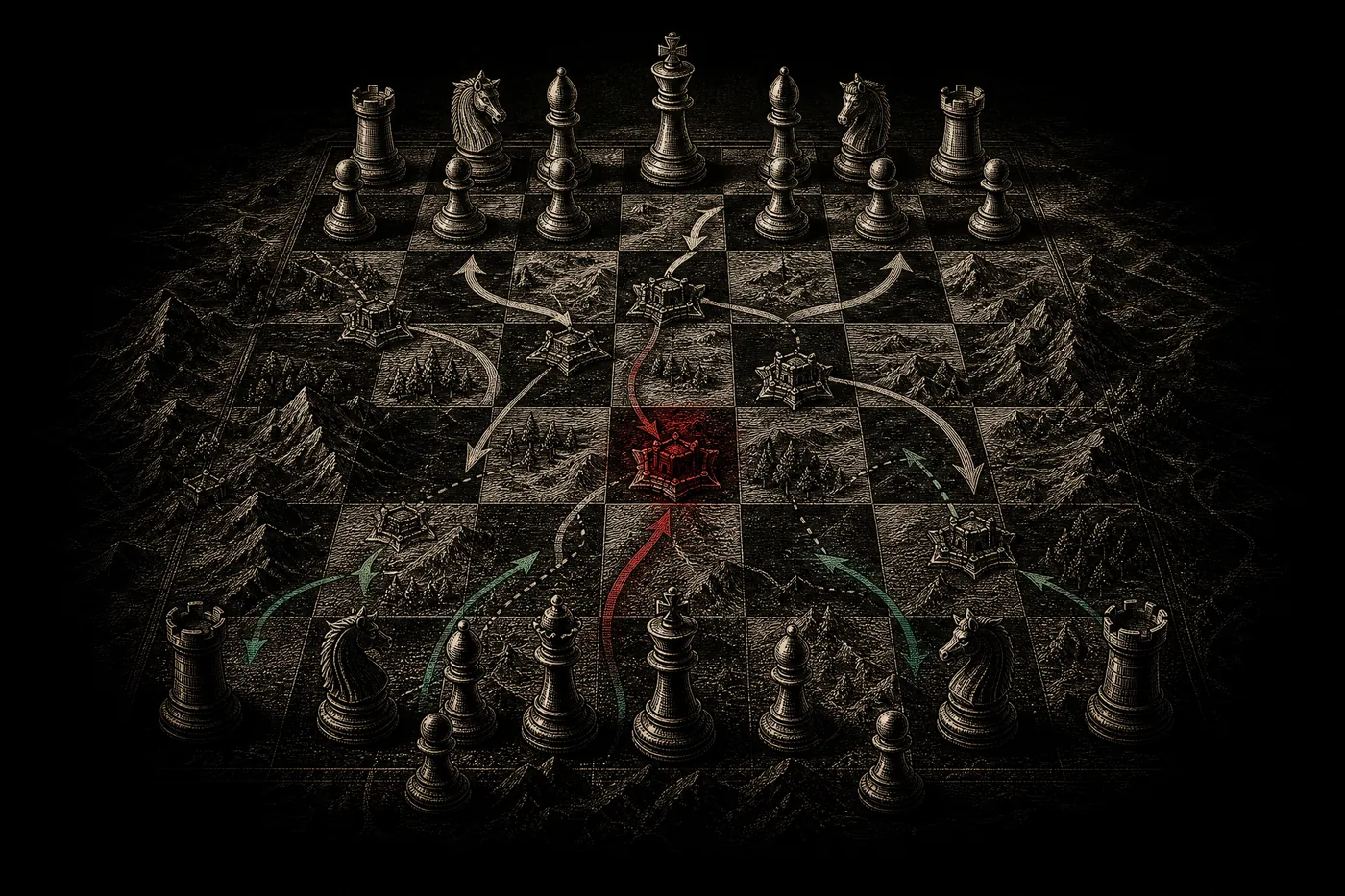
The finishing picture is iconic: the two kings stand face to face, one square apart, and the rook checks along the edge.
Look at why the Black king is stuck. The rook on a8 checks along the whole 8th rank, so d8 and f8 are off-limits. The 7th-rank squares (d7, e7, f7) are all guarded by White’s king on e6. And the kings can never touch, so the Black king can’t capture or approach. Every square is covered — that’s checkmate.
How do you avoid stalemate with a rook?
Stalemate is rarer with a rook than a queen (the rook controls fewer squares), but it can still happen — usually when you check the king into a corner and accidentally leave it no legal move while it’s not in check. The fix is the same discipline as always:
- Before each move, check the enemy king still has a square, unless you’re delivering actual mate.
- Don’t waste time with aimless checks. If your king isn’t yet opposing the enemy king, walk your king up instead of checking — a check before the kings are opposed just lets the lone king slide sideways and gain ground. Patience beats spam. (More on the trap: what is stalemate.)
How long does the rook mate take?
With perfect play, king and rook vs king is mate in at most 16 moves from any legal starting position (confirmed by endgame tablebases). In practice you’ll take a few more while you learn — that’s fine. You have a big buffer before the 50-move draw rule becomes a worry, so prioritize safe and steady over fast.
A fun bit of history
The rook is one of the oldest pieces in chess, descended from the ratha — a war chariot — in ancient Indian chaturanga, over 1,500 years ago. The name “rook” comes from the Persian rukh, meaning chariot (not the bird, despite the castle-tower shape we use today). That straight-line, battering-ram movement has barely changed in all that time, which is why the king-and-rook mate is one of the most ancient techniques in the game — players have been driving lone kings to the edge with a rook for over a millennium.
Common mistakes to dodge
- Checking before your king is in position. A premature rook check just shoves the king sideways and it escapes the squeeze. Walk your king up first.
- Letting the lone king attack your rook. If the enemy king gets close, slide the rook far down its line to safety — it still holds the wall from a distance.
- Stalemating in the corner. Always confirm the king has a legal square unless it’s mate.
- Forgetting the opposition. The mate hinges on the kings facing off. If they’re not opposed, you’re not ready to push yet.
Key takeaways
- The king and rook checkmate drives the lone king to the edge using the rook as a wall and the king as the pusher.
- Use the staircase/ladder: cut off, oppose with your king, check to push back, repeat.
- The mating picture: kings face to face, rook checking along the edge.
- Mate in 16 or fewer with perfect play — go for safe and steady, and avoid stalemate.
Keep climbing
You now know the two essential mates. The next idea — the opposition — is the king face-off you just used, and it’s the master key to pawn endings.
Next up: The opposition · Also see the rook mate walkthrough and the king & queen mate.
Written and fact-checked by the Chess Lab Academy Editorial Team (AI-assisted, human-edited) · Positions verified with Stockfish 17 and rules checked against the FIDE Laws of Chess · Last verified 2026-06-25 · Sources · How we verify content.
