
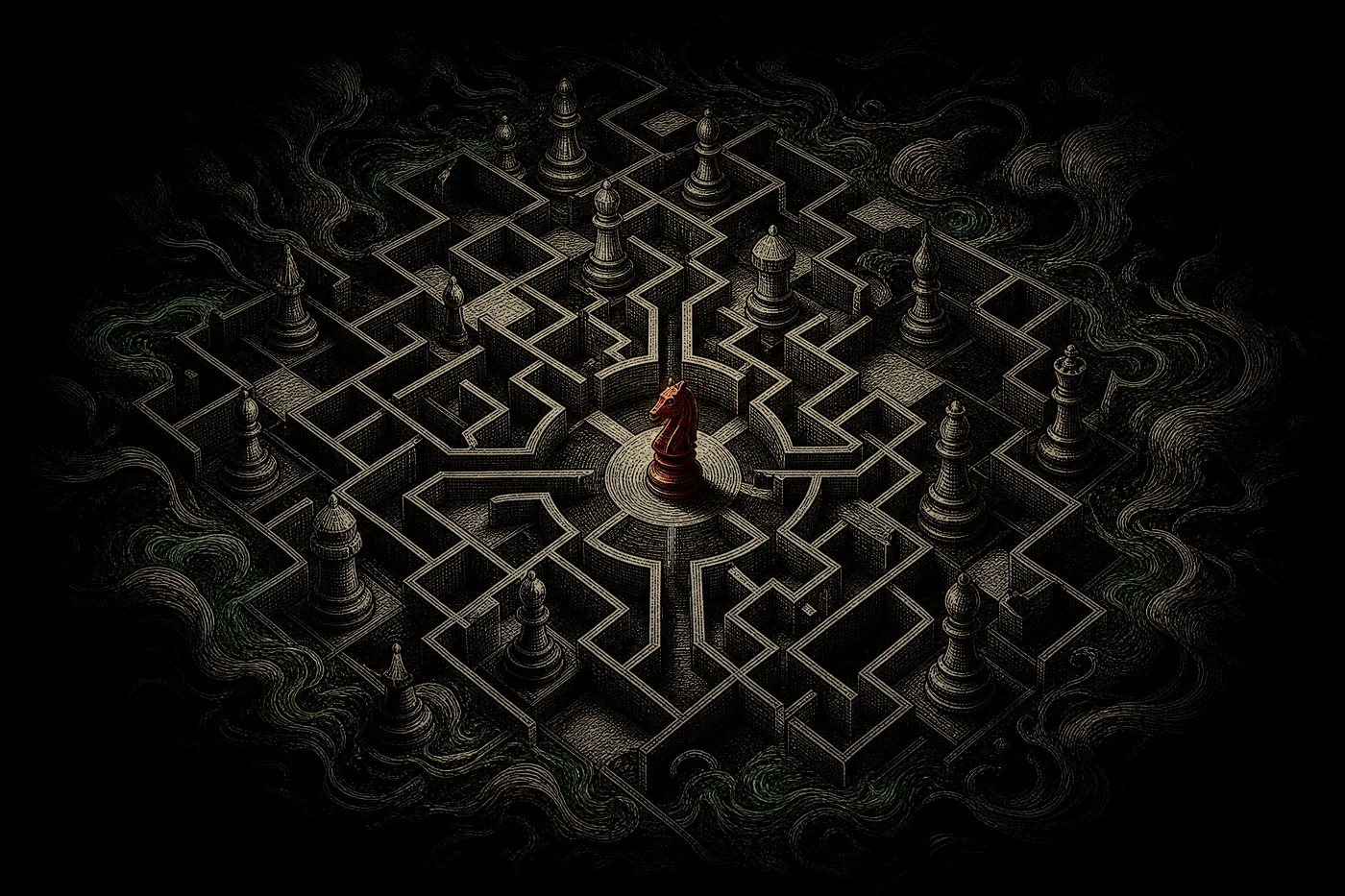
A smothered mate is the flashiest checkmate in chess: the enemy king is so hemmed in by its own pieces that it can’t move a muscle, and a lone knight hops in to deliver mate no one can block or capture. It’s the ultimate “the call is coming from inside the house” finish — the king is smothered by its own defenders. These puzzles train you to spot the pattern and pull off its famous setup. Meet the horse and try the trainer.
Your move — solve the position
Real positions from real games. Solve one, and the next appears.
Take that instinct to a live board — 3D chess with character skins & rewards.
What the smothered mate is
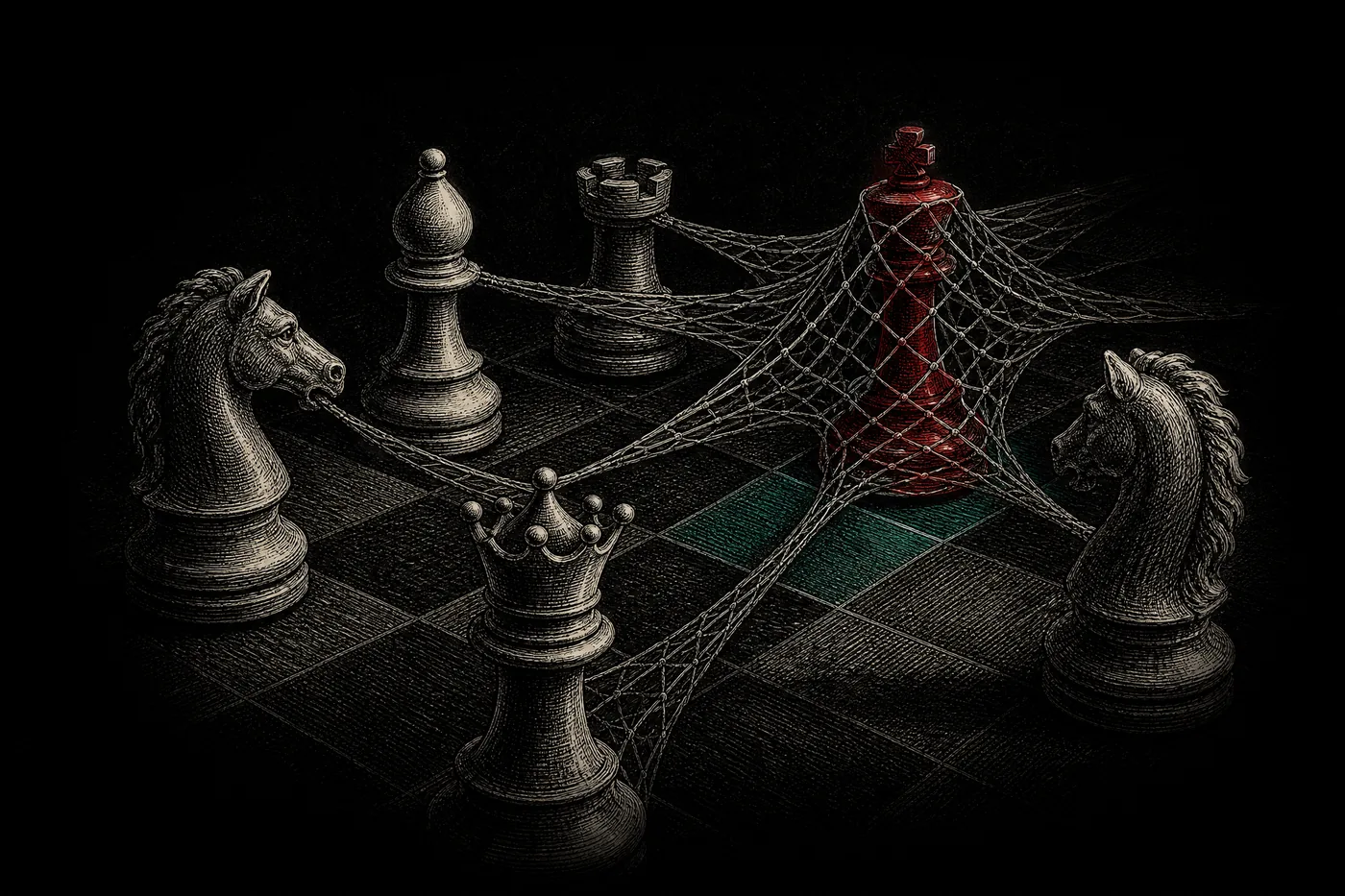
A knight is the only piece that can jump over other pieces, so it’s the only one that can check a king walled in on every side. In a smothered mate, the target king — usually tucked in a corner after castling — is surrounded by its own rook and pawns. Every escape square is occupied by a friendly piece. The knight lands next to the king with check, and because you can’t capture a knight you can’t reach and you can’t block a knight’s jump, it’s checkmate. The whole trick lives and dies on how the knight moves — no other piece can do this.
The classic version has a name — Philidor’s Legacy — and it’s one of the crown jewels of the checkmate patterns collection.
How to spot it — and set it up
The textbook smothered mate is a short, forcing combination. Learn the shape and you’ll recognize it instantly:
- Look for a cornered king with its own pieces crowding it. A king on g8 (or h8) with a rook on f8 and pawns on g7/h7 is the prime candidate — its escape squares are already blocked by friends.
- Get your knight within hopping range. The finish needs a knight that can reach the square right next to the king. Often the combination begins with a knight check that forces the king into the corner.
- Force the last escape square shut. The famous setup uses a queen sacrifice: you plunk the queen down next to the king with check, the enemy is forced to block with its own rook (jamming its last escape square), and now the knight delivers smothered mate. Giving up the queen looks insane until you see it forces mate.
- Watch for the double check. Many smothered combinations run through a knight double check — a check the king can only answer by moving, which herds it exactly where you want it. Double checks are unblockable, which is what makes the whole net forcing.
Because the pattern often runs queen sac into knight mate, it’s a beautiful cousin of the fork family — the knight doing impossible-looking work.
Common mistakes to dodge
- Refusing the queen sacrifice. The sac is the whole point. Hesitate to give up the queen and the smothered mate never happens. If it forces mate, the queen is a bargain.
- Bringing the wrong piece. Only a knight can jump into a fully walled-in king. Trying to finish with a rook or bishop against a smothered king just bounces off the wall.
- Missing that the king’s squares are self-blocked. The pattern only works because the enemy’s own pieces trap the king. If there’s a real escape square, it’s not a smothered mate — recount the king’s exits.
- Playing the checks out of order. The setup is a precise sequence — knight check, king to the corner, queen sac, forced block, knight mate. Shuffle the order and the net leaks. Calculate the whole line before you start.
Keep climbing
The smothered mate is the showpiece of pattern recognition. Add its neighbors to your toolkit.
Next up: the other everyday killer — back rank mate puzzles · Practice the setup length with mate in two · See the knight fork elsewhere: fork puzzles · Nail the fundamentals: how the knight moves and the checkmate patterns library · Back to the hub: all chess puzzles.
Frequently asked questions
Why does a smothered mate need a knight? Because the king is walled in by its own pieces on every side, the checking piece has to jump over that wall — and the knight is the only piece that can. No rook, bishop, or queen can reach a fully smothered king.
What is the queen sacrifice in a smothered mate? In the classic setup, you give check with your queen right next to the king, forcing the enemy to block with its own rook. That block jams the king’s final escape square shut, and then the knight delivers checkmate. The queen is sacrificed to complete the cage.
Is the smothered mate rare? The full textbook version is rarer than a back rank mate, but the pattern shows up often enough — especially in sharp, tactical games — that knowing it wins games and, just as usefully, helps you avoid crowding your own king.
Are the puzzles real positions? Yes — every one is a genuine, engine-verified position from the Lichess open database (CC0).
Written and fact-checked by the Chess Lab Academy Editorial Team (AI-assisted, human-edited) · Puzzles from the Lichess open database (CC0), engine-verified · Last verified 2026-07-13 · Sources · How we verify content.
