If you had to sum up Shakhriyar Mamedyarov in one word, it would be “attack.” Among a generation of elite players who often play it safe, Shak stands out as a flamboyant, ultra-aggressive fighter who reaches for the sharpest, most dangerous path in almost every game. Watching his best chess feels less like watching careful engineering and more like watching a controlled demolition.
The attacker’s mindset
Mamedyarov’s whole approach is organized around one goal: get at the enemy king. Where some elite players are content to accumulate tiny positional edges and grind, Shak wants initiative, threats, and momentum — and he’ll take real risks to get them. His style has been described as sitting on the tactical end of the modern “universal” player: comfortable in any structure, but always looking for the punch rather than the squeeze.
This makes him one of the most entertaining players to follow. A Mamedyarov game rarely fizzles into a dry, careful draw; more often it becomes a knife-fight where both players are calculating like mad and one wrong step is fatal. That’s exactly how he likes it.
Daring with material: activity over stuff
A defining Mamedyarov trait is his willingness to mess with the material balance. He’s famous for accepting strange, unbalanced trades — giving up a pawn, or even the exchange (a rook for a minor piece), in return for active pieces and attacking chances. Most players instinctively cling to material; Shak treats it as a currency he’ll happily spend to buy the initiative.
It takes enormous confidence and calculation to play this way at the top level, because if the attack doesn’t land, you’re just down material. But Mamedyarov trusts his tactical eye, and over a long career he’s shown that, in the right hands, activity really can be worth more than a pawn or two.
The “octopus knight”
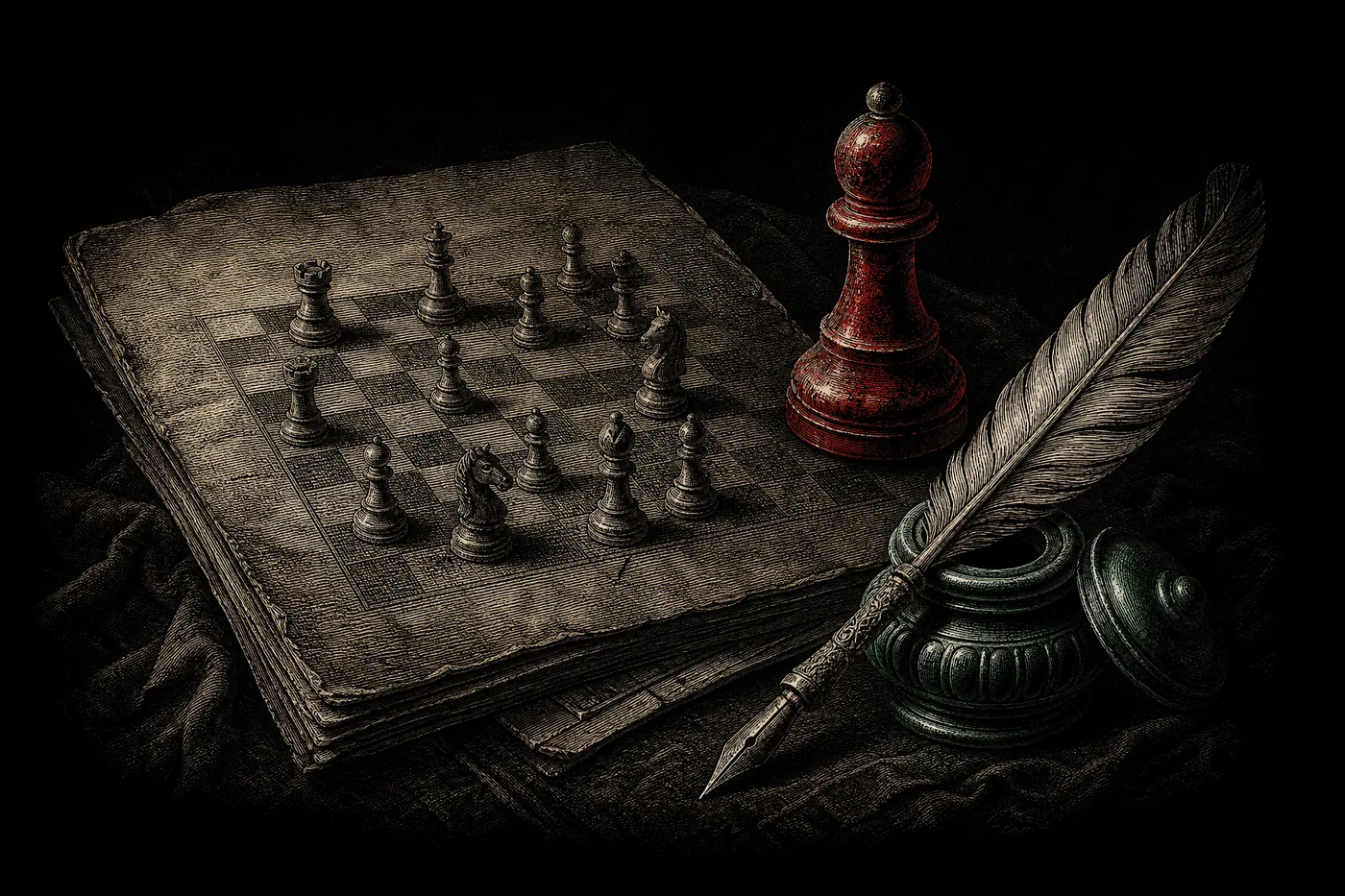
If there’s one signature image in Mamedyarov’s games, it’s the “octopus knight.” He loves to plant a knight deep in the enemy position — often on a dream outpost the opponent can’t easily challenge — where it sits like an octopus, its “tentacles” reaching across the board to control key squares and strangle the defense. A well-placed knight like this can be worth far more than its nominal value, cramping the opponent and supporting the attack at the same time. Spotting and creating these monster knights is one of the most instructive things to study in his games.
A sharp, fighting repertoire
Mamedyarov’s aggression starts in the opening. As Black he’s one of the modern champions of the King’s Indian Defense — a system where Black deliberately concedes the center to White, then launches a furious pawn storm at the enemy king. He’s equally at home in the Najdorf Sicilian, one of the sharpest, most heavily-analyzed battlegrounds in all of chess.
He’s also known for reaching for offbeat, unorthodox opening lines — surprising choices designed to drag opponents out of their memorized preparation and into a raw fight where his creativity and tactical vision can shine. See the full picture in his opening repertoire.
The rapid-chess weapon
There’s a reason Mamedyarov became World Rapid Champion in 2013: fast chess suits his gifts perfectly. When the clock is short, deep preparation matters less and quick, confident decision-making matters more — and that’s Shak’s home turf. His sharp tactical vision and willingness to complicate put constant pressure on opponents who don’t have time to untangle the mess. Take away the luxury of long calculation, and the natural attacker thrives.
The flip side: risk cuts both ways
Mamedyarov’s fearless, risk-taking approach is thrilling, but it’s double-edged. Playing for the attack and accepting material imbalances means that when things go wrong, they can go very wrong — an attack that doesn’t break through can leave him simply worse. That’s the trade a creative attacker makes: the same fearlessness that produces brilliant wins occasionally produces painful losses. Shak has never been interested in grinding out safe half-points when there’s a more ambitious, more exciting game to be played, and his fans love him for it.
How his style compares to his rivals
It’s useful to place Mamedyarov next to the players he’s battled his whole career. Magnus Carlsen wins with relentless technique and endgame grinding; Fabiano Caruana wins with the deepest opening preparation in the game; Levon Aronian wins with creative intuition. Mamedyarov attacks from a different direction entirely — he wins with raw aggression and tactical firepower, dragging opponents into sharp, chaotic positions and out-calculating them there. In an era where the top is increasingly cautious, he’s a throwback to the swashbuckling, attacking soul of chess.
What casual players can learn from Mamedyarov
You don’t need world-class calculation to borrow ideas from Shak. A few of his habits scale down beautifully to club and casual chess:
- Play for the attack. Look for ways to target the enemy king rather than drifting. Attacking chess wins a huge share of games at the casual level.
- Value activity. Active, well-placed pieces often matter more than a small material edge — especially at fast time controls. Don’t be a pawn-grabber.
- Hunt for outposts. A knight planted on a strong square deep in enemy territory can dominate a game. Learn to spot those squares — it’s one of the highest-value skills in chess.
- Commit to your plan. Shak backs his calculation and plays with confidence. At the casual level, hesitation and second-guessing lose more games than bold, committal decisions do.
Style in one line
Flamboyant, ultra-aggressive, and gloriously fearless — one of the great attackers of the modern elite, who wins by hunting the king and trusting his tactics rather than playing it safe. It’s a style that made him a World Rapid Champion and a world No. 2.
Keep exploring
See the approach in action in his best games, get the full opening repertoire, follow his rating history, or head back to the Shakhriyar Mamedyarov profile.
Written and fact-checked by the Chess Lab Academy Editorial Team · Facts verified against Wikipedia, his FIDE profile, and Chess.com, as of July 2026 · Last verified 2026-07-10 · How we verify content.