

Shakhriyar Mamedyarov has played thousands of high-level games, but a handful of results and masterpieces capture exactly who he is at the board: a fearless attacker who is never happier than when the position catches fire. We’re keeping this in prose and pointing you to reliable databases for the full move-by-move, so nothing here is a made-up score.
Beating the World Champion: Biel 2018
The headline result of Mamedyarov’s career highlight reel came at the 2018 Biel Chess Festival, one of his best tournaments ever. Along the way to winning the event, he did something very few players manage: he beat the reigning World Champion, Magnus Carlsen, in a full-blooded classical game. Fittingly for a King’s Indian specialist, this one came in a King’s Indian, Fianchetto Variation — except Shak was on the White side this time, showing he understands the opening’s ideas from both directions.
Beating Carlsen in a serious classical game is one of the hardest things to do in chess — the Norwegian went years at a time without losing. That Mamedyarov did it in 2018, the same year he peaked at world No. 2, tells you he was operating at the absolute summit of the sport. You can replay the full game on Chess.com and other databases to see how the attack unfolded. (Curious about the man on the losing end? Meet Magnus Carlsen.)
The 2013 World Rapid Championship
If you want proof that Mamedyarov’s aggression is a weapon and not a liability, look at the 2013 World Rapid Championship. In a brutal, fast-paced event against the strongest players in the world, Shak came out on top, scoring 11½ out of 15 to become World Rapid Champion. Rapid chess rewards exactly his strengths: quick, confident decision-making, sharp tactical vision, and a willingness to complicate when there’s no time to calculate everything to the end. It remains one of the crown jewels of his career — a genuine world title.
The Candidates near-miss (2018)
Not every great result ends in a trophy. In 2018, Mamedyarov played the Candidates Tournament — the eight-player event that decides who challenges for the World Championship — and finished second, just one point behind the winner. It was the closest he’d come to a title shot, and he got there by fighting: the Candidates is a grueling test of nerve and stamina, and Shak’s aggressive, uncompromising style produced a string of hard-fought games. Falling a single point short of a World Championship match is heartbreak, but it’s also confirmation that, at his best, he belonged in the tiny handful of players contending for the crown.
The World Junior double (2003 & 2005)
Long before the super-tournaments, Mamedyarov made his name as a junior. He won the World Junior Championship in 2003, and then did something no one had done before: he won it again in 2005, becoming the only two-time World Junior Champion in the event’s history. Winning a global age-group title once marks you as a rising star; winning it twice signaled that Azerbaijan had produced a future world top-tier player. Those two titles are the foundation stone of everything that followed.
The style behind the results: the attacker’s calling card
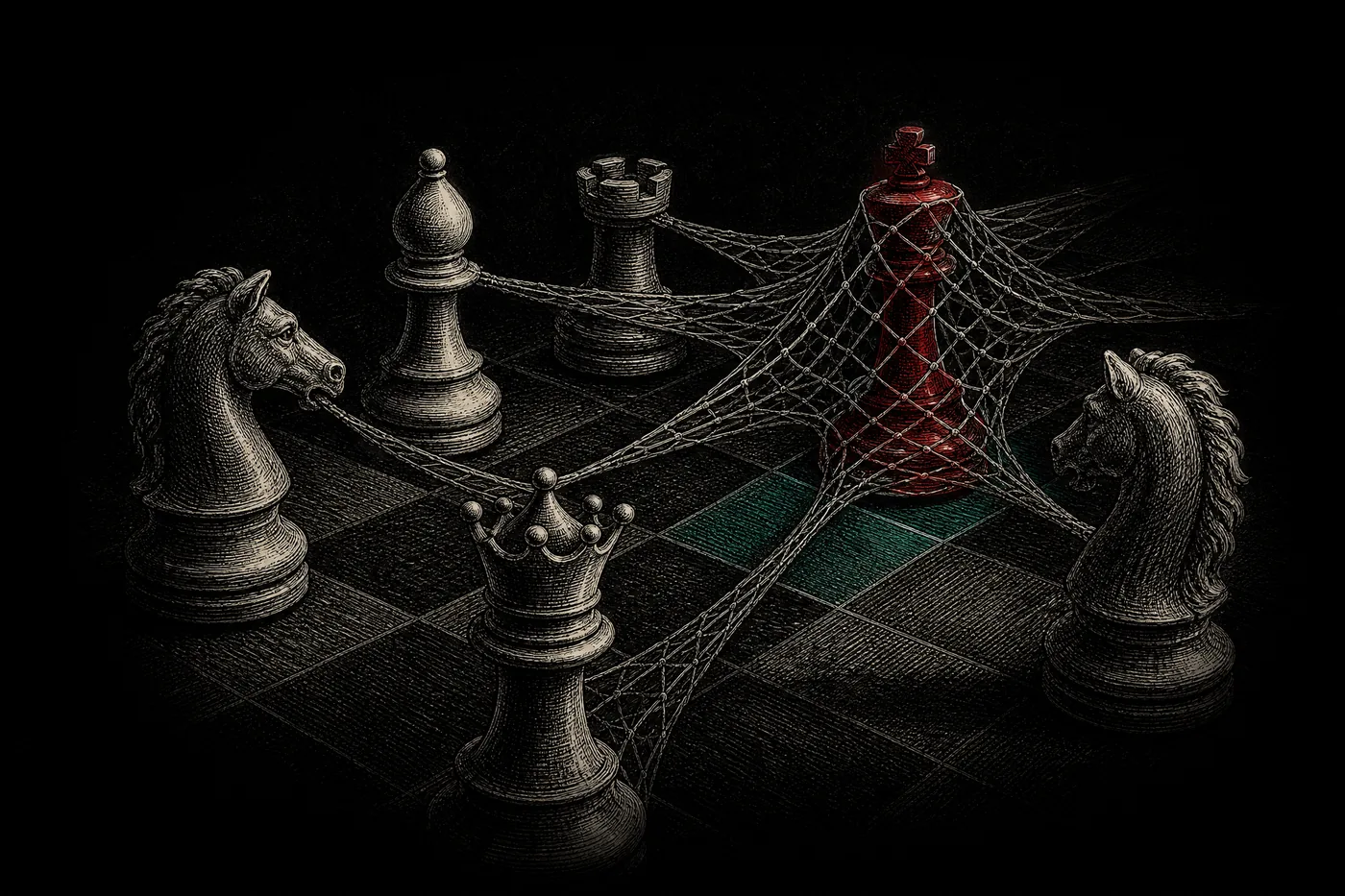
What ties Mamedyarov’s best games together isn’t a single opening or a single opponent — it’s an attitude. He plays for the initiative and the attack almost every game, often accepting strange material imbalances (a pawn or an exchange given up for activity) that most players wouldn’t touch. His trademark is the “octopus knight”: a knight planted deep in the enemy camp, its tentacles reaching across the board and paralyzing the defense. When you scroll through his games in a database, you’ll see the same story again and again — pieces flung forward, the enemy king dragged into the open, and Shak calculating a path through the chaos that his opponent couldn’t. See how it works in his playing style.
Why his games are worth studying
Even if you’re nowhere near grandmaster level, Mamedyarov’s games are some of the most fun and instructive material out there — for a few concrete reasons:
- Attack the king. More than almost any elite player, Shak shows how to build and execute a kingside attack. His games are a practical clinic in throwing pawns and pieces at the enemy king.
- Activity over material. He’ll happily give up a pawn — or more — for active pieces and the initiative. Learning when material is worth sacrificing is a genuine skill, and his games are full of examples.
- The dominant knight. His “octopus knight” games teach a lesson every improving player needs: a single perfectly-placed piece can be worth more than a fistful of material.
- Play with confidence. Shak commits to his plans and backs his calculation. That fearless, positive attitude is something casual players can borrow immediately — hesitation loses more games than bad moves.
Keep exploring
Want to see how the pieces of his game fit together? Read about his playing style, tour his opening repertoire, trace his rating history, or head back to the full Mamedyarov profile.
Written and fact-checked by the Chess Lab Academy Editorial Team · Facts verified against Wikipedia, his FIDE profile, and Chess.com, as of July 2026 · Game moves should be replayed from those databases · Last verified 2026-07-10 · How we verify content.
