

Rustam Kasimdzhanov has played thousands of serious games, but his legacy at the board rests overwhelmingly on one extraordinary fortnight in Tripoli in 2004, when he strung together the run of his life to become FIDE World Champion. We’re keeping this in prose and pointing you to reliable databases for the full move-by-move, so nothing here is a made-up score.
The 2004 Tripoli knockout: an underdog’s masterpiece
If you only know one thing about Kasimdzhanov’s chess, make it this. The FIDE World Chess Championship 2004 was a giant single-elimination knockout — win your two-game mini-match (plus tiebreaks if needed) or go home. Kasimdzhanov arrived as a strong grandmaster but nobody’s favorite, seeded well down a field packed with the world’s elite. Then he simply refused to lose.
Match after match, he knocked out bigger names. On his way to the final he defeated a genuinely frightening list of opponents — including Vasyl Ivanchuk, Zoltán Almási, Alexander Grischuk, and, in the semifinal, the ferocious attacker Veselin Topalov. Beating even one of those players in a short match is an achievement; doing it four times on the trot, in the pressure-cooker of a knockout world championship, is the stuff of legend. What made it work was exactly the toolkit he’d go on to sell as a coach: airtight opening preparation, cool nerves in the fast tiebreak games, and a knack for reaching positions he simply understood better than the man across the board.
You can replay the full games from the event on Chess.com and other databases — they’re a masterclass in match play under maximum pressure.
The final vs Michael Adams: holding the nerve
The final pitted Kasimdzhanov against England’s Michael Adams, one of the most respected positional players in the world and a heavy favorite on paper. The match was a six-game affair, and it was tight all the way: the two traded blows and the classical games ended level, with neither man able to pull decisively ahead.
That sent the title into a rapid tiebreak — faster chess, higher stakes, one slip from disaster. This was where Kasimdzhanov’s knockout temperament shone. He struck first, then steered the rest of the tiebreak home to clinch the match and the crown. It’s a finish that captures who he is at the board: unflappable when the clock speeds up, and lethal when he gets a position he’s prepared. When people say a “surprise” World Champion, they sometimes mean a fluke — this wasn’t one. To beat Ivanchuk, Grischuk, Topalov, and Adams back-to-back, you have to be genuinely world class.
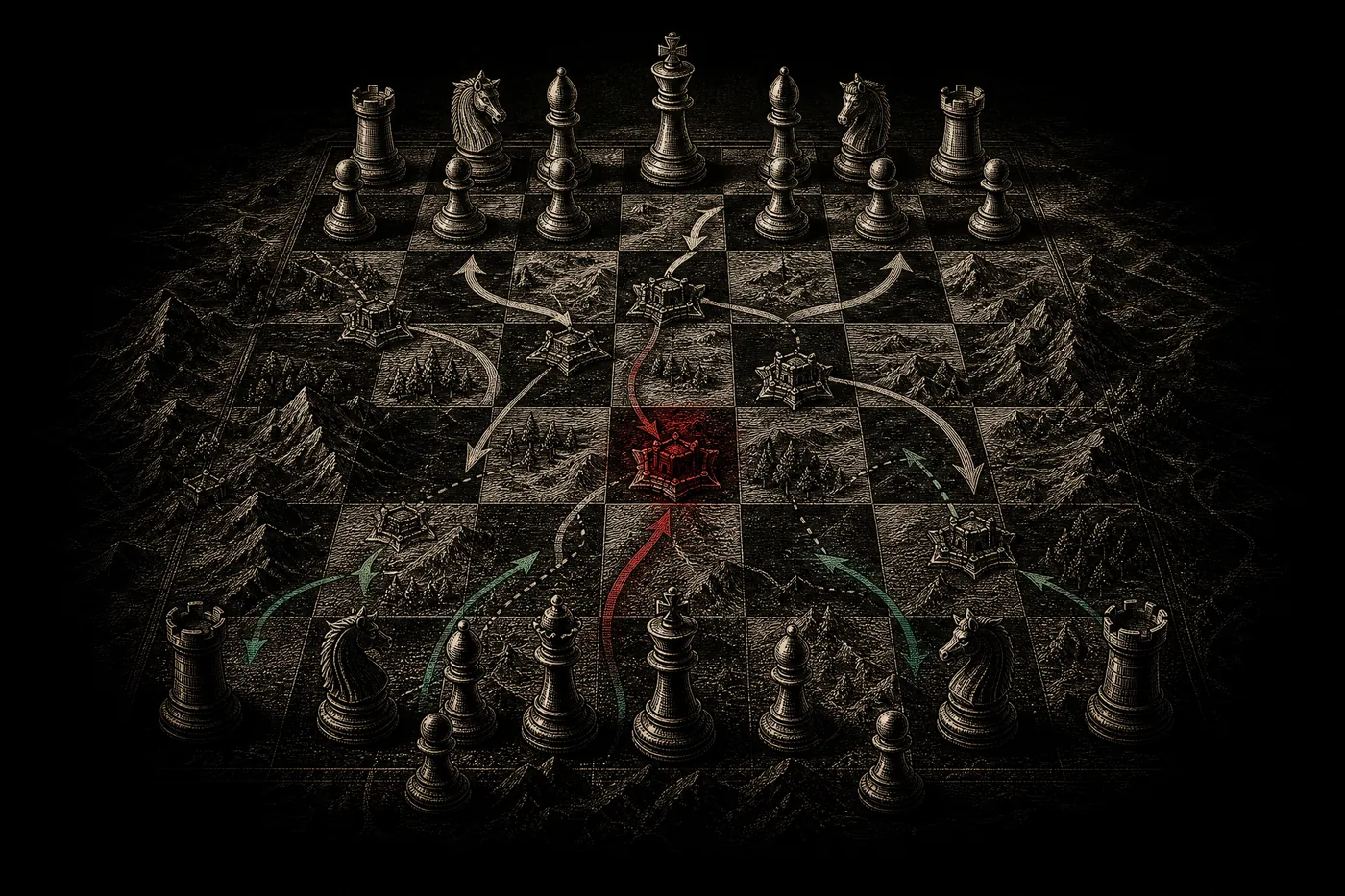
Why the Sicilian was his weapon
A lot of Kasimdzhanov’s sharpest wins came out of 1.e4 and the Sicilian Defense — the most combative answer to 1.e4 and a favorite proving ground for deeply prepared players. The Sicilian rewards exactly what Kasimdzhanov brings: concrete calculation, fearlessness in double-edged positions, and reams of home analysis ready to spring at the right moment. When he wanted a real fight, this was the arena.
More than one great run
Tripoli is the headline, but it isn’t the whole story. Kasimdzhanov had already shown his big-match pedigree two years earlier by reaching the 2002 World Cup final, where he finished runner-up to Viswanathan Anand — no small feat against one of the greatest players of the era. He also racked up strong tournament wins across Europe, including Essen 2001 and Pamplona 2002, and stayed a dangerous, respected competitor for years after his title run. Consistency at open events and knockouts alike is the mark of a real professional, not a one-tournament wonder.
The 2002 World Cup deserves a moment of its own, because reaching that final meant surviving round after round of elimination chess against a stacked field before finally running into Anand — then and now one of the greatest match players who ever lived. Losing a final to a legend is no disgrace; getting there in the first place is the achievement, and it foreshadowed the deeper run he’d complete two years later in Tripoli.
And here’s a twist that makes his games doubly worth studying: the same brain that produced those wins later went to work for other champions. As a second to Anand and then to Fabiano Caruana, Kasimdzhanov spent years finding the very ideas that decided world-championship-level games. When you study his best play, you’re studying the mind behind more than one champion’s preparation — a rare case where a player’s greatest hits and his greatest assists are both worth your time.
Why his games are worth studying
Even if you’re nowhere near grandmaster level, Kasimdzhanov’s games are terrific learning material — for a few concrete reasons:
- Match play under pressure. His 2004 run is a clinic in how to handle short matches and tiebreaks: stay solid, take your chances, and don’t crack when the clock speeds up.
- Preparation as a weapon. Time and again he reached comfortable, familiar positions while his opponents had to solve problems over the board. That’s “winning the opening” in action.
- The theoretician’s eye. Kasimdzhanov is famous for explaining why moves work. His games pair beautifully with his instructional courses if you want to actually understand a line, not just memorize it.
- Fearless but sound. He plays sharp openings like the Sicilian, but his aggression is always backed by calculation. It’s a great model for playing bold chess without playing reckless chess.
Keep exploring
Want to see how the pieces of his game fit together? Read about his playing style, dig into his opening repertoire, trace his rating history, or head back to the full Kasimdzhanov profile. You can also read about the champion he spent years seconding — Fabiano Caruana.
Written and fact-checked by the Chess Lab Academy Editorial Team · Facts verified against Wikipedia, the 2004 FIDE World Championship record, and Chess.com, as of July 2026 · Game moves should be replayed from those databases · Last verified 2026-07-10 · How we verify content.
