Here’s an honesty note right up front: Paul Morphy never had a chess rating, and it would be dishonest to invent one. The Elo rating system wasn’t created until the 20th century — roughly a hundred years after Morphy played — so any specific “2700-something” number you see attached to him is a modern guess, not a historical fact. What we can do is look at the evidence we actually have, and it paints a picture of total dominance. So instead of a rating graph, here’s an honest look at his strength and legacy.
The headline: In 1858, Morphy beat essentially every top player he could find, usually by lopsided margins, and was widely recognized as the strongest player in the world — the unofficial World Champion of his era. No rating needed to see that.
The prodigy years (1840s–1850s)
Morphy’s talent showed absurdly early. By around age nine he was already reckoned one of the best players in New Orleans — a city that took its chess seriously. He didn’t grind through lessons or theory books; he learned mostly by watching family members play and simply absorbing the game. That kind of natural aptitude is exactly what people mean when they call someone a prodigy.
The takeaway from these years isn’t a number — it’s a trajectory. Morphy went from talented child to the best player in a chess-loving city while still a boy, and he kept climbing from there.
Conquering America (1857)
The first hard evidence of his class came at the First American Chess Congress in New York in 1857. Morphy didn’t just win — he swept the field, beating strong masters by wide margins and defeating Louis Paulsen in the final. At 20 years old, he was the undisputed champion of American chess. For most players that would be a career peak. For Morphy it was a warm-up.
Conquering Europe (1858)
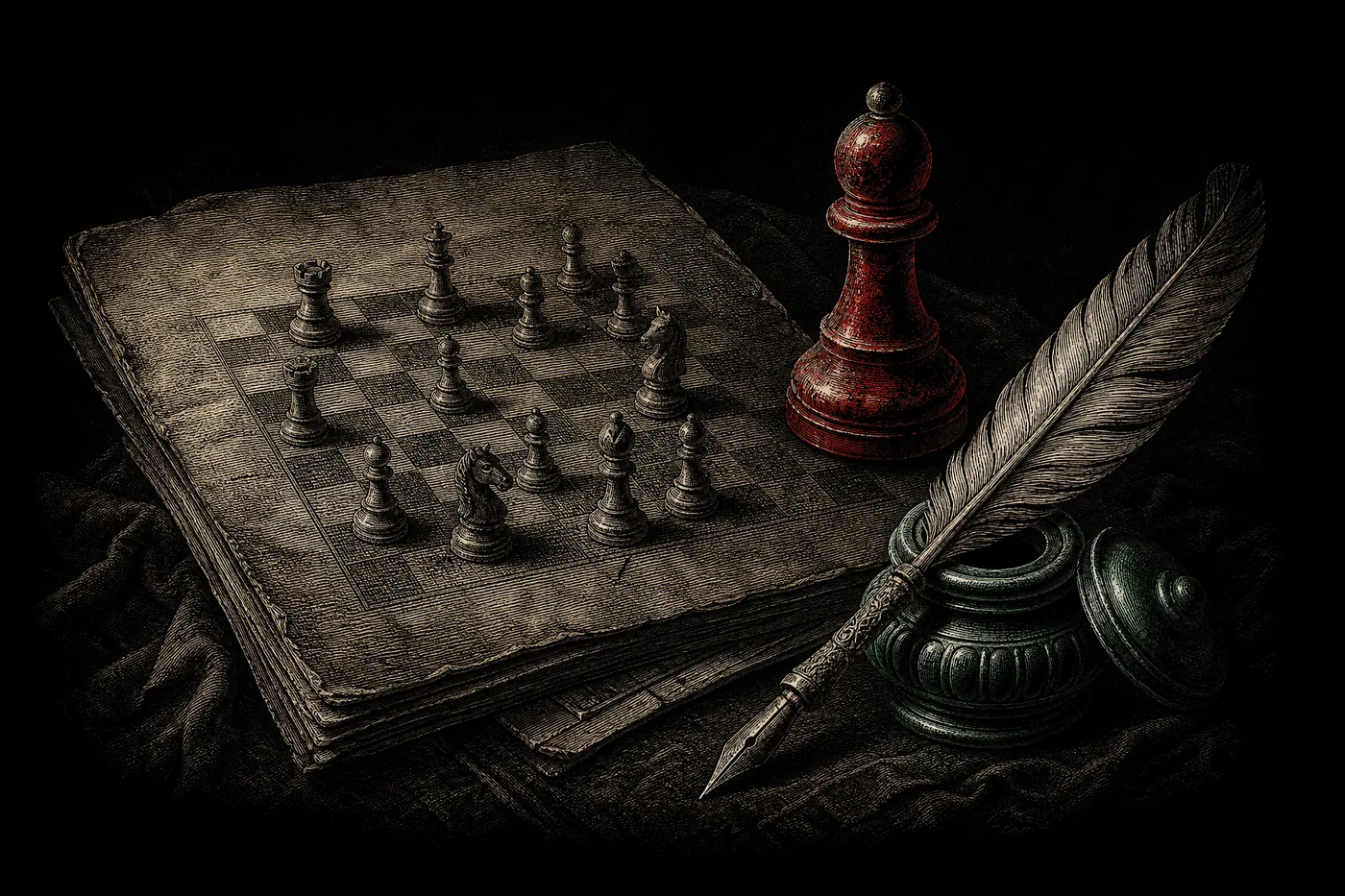
Then came the tour that made him immortal. In 1858 Morphy crossed the Atlantic and challenged Europe’s finest, and the results are the closest thing to a “rating” he’ll ever have:
- He beat Johann Löwenthal in a match.
- He beat Daniel Harrwitz in a match.
- And, decisively, he beat Adolf Anderssen — the man widely considered Europe’s best — by seven wins to two, with two draws.
He never lost a serious match on the tour. He also gave stunning blindfold exhibitions, playing several strong opponents at once without sight of the boards. By the time he sailed home in 1859, the chess world had a clear answer to “who’s the best?” — even without a title or a number to hand him. The board below shows the King’s Gambit Accepted, the kind of open, swashbuckling battleground where Morphy simply outclassed the competition.
Why there’s no rating (and that’s okay)
Modern ratings work because thousands of players play thousands of rated games in a connected pool. In the 1850s, none of that existed — no FIDE, no Elo, no international rating list. Morphy played a relatively small number of documented serious games against a small circle of elite opponents, then retired young. So instead of a curve, historians judge him by his results and the quality of his games — and on both counts, he grades out as one of the greats.
The legacy: a benchmark for genius
Morphy’s real “rating” is his influence. He showed the chess world how the game should be played — fast development, central control, open lines — principles later formalized by Wilhelm Steinitz. Generations of champions have paid tribute: Bobby Fischer ranked Morphy among the greatest ever and called him “perhaps the most accurate player who ever lived,” and Garry Kasparov credited him with understanding ideas far ahead of his time.
It’s worth being honest that not everyone agrees on exactly how to rank him. Some historians, like Reuben Fine, have cautioned against a “Morphy myth,” pointing out that he played few games against a small field. That’s a fair debate — but even the skeptics acknowledge he was the dominant player of his era. When you retire undefeated in serious matches as the world’s clear #1, the missing rating number doesn’t really matter.
FAQ
What was Paul Morphy’s rating? He didn’t have one — chess ratings weren’t invented until the 20th century. Any specific number attached to him today is a modern estimate, not a historical fact.
How good was Paul Morphy, really? Good enough to beat essentially every top player of his day, often by large margins, and to be recognized as the strongest player in the world around 1858 — the unofficial World Champion of his era.
Was Morphy officially World Champion? No official title existed then. But historians frequently list him as a de facto (unofficial) World Champion based on his dominance.
Why did such a strong player stop? Morphy viewed chess as a recreation, not a profession, and struggled to find opponents willing to play him on even terms. He withdrew from competitive chess in the early 1860s, still in his twenties.
Keep exploring
Back to Paul Morphy’s profile · his best games · his playing style · his openings · fun facts · or browse all chess players.
Written and fact-checked by the Chess Lab Academy Editorial Team · Facts verified against Wikipedia, Chess.com, and Britannica, as of July 2026 · Last verified 2026-07-10 · How we verify content.