
Ask why Paul Morphy still matters, more than 160 years after he stopped playing, and the answer is simple: he understood how chess actually works decades before anyone put it into words. His style looks almost modern — get your pieces out, take the center, castle, and attack — while his opponents were still playing slow, grabby, disorganized chess. So what exactly did Morphy do differently? Let’s break it down.
The short version: Morphy won with rapid, harmonious development, control of the center, and open lines pointed straight at the enemy king. He treated a lead in activity as more valuable than a lead in material — and he was almost always right.
Develop everything, and fast
Morphy’s number-one rule, if you had to pick one, was don’t waste moves. Every move, he brought a new piece into the game. He didn’t chase pawns, he didn’t shuffle the same knight back and forth, and he didn’t fall in love with early attacks by a single piece. By the time a middlegame arrived, his whole army was out, coordinated, and ready — while his opponents were often still half-asleep on the back rank.
That sounds obvious today because Morphy (and the theorists who followed him) made it obvious. In the 1850s it was revolutionary. The Opera Game is the perfect illustration: he developed with almost every move, castled, and had a fully mobilized position while his opponents fiddled around — and then the attack basically played itself. You can see that game in Paul Morphy’s best games.
Own the center
Alongside fast development, Morphy fought hard for the center of the board. Central pawns and well-placed central pieces give you space, mobility, and lines of attack in every direction. Morphy understood that a strong center is the launchpad for everything else — it’s what turns “my pieces are developed” into “my pieces are developed and pointed at your king.”
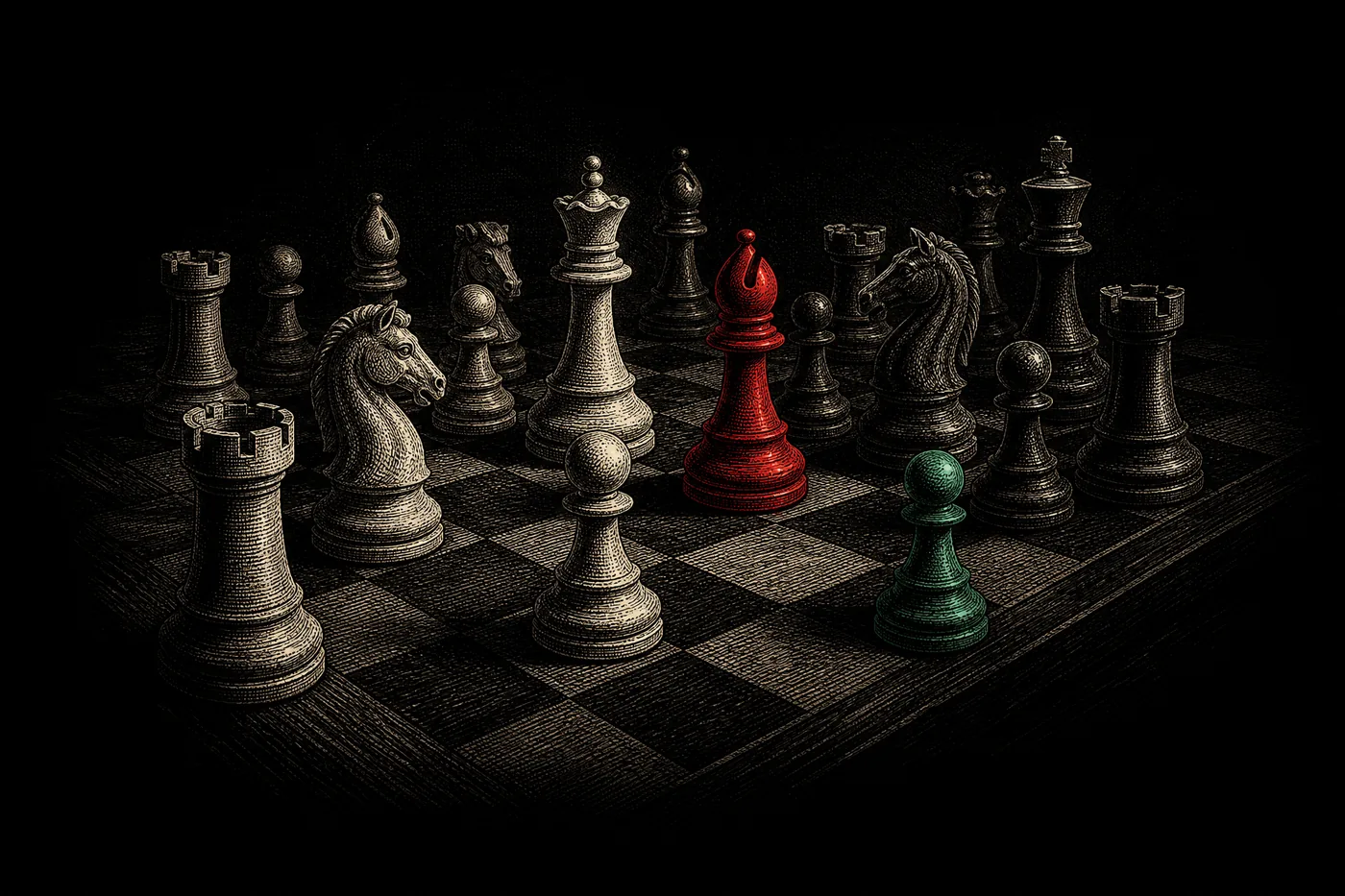
The board below is a classic open Italian Game setup — exactly the kind of position where Morphy thrived. White’s pieces are active, the center is contested, and the path to a kingside attack is wide open.
Open lines and attack the king
Once Morphy was developed and controlled the center, he went hunting. He loved to open files and diagonals — often with a well-timed pawn break or a small sacrifice — to create highways straight to the enemy king. His gambits, like the Evans Gambit and the King’s Gambit, were tools for exactly this: give up a pawn, rip the position open, and use your development lead before the opponent can catch up.
Crucially, his attacks weren’t reckless. They were the logical result of everything he’d built. Because his pieces were already active and coordinated, sacrifices that would be pure hope in another player’s hands were, for Morphy, simple arithmetic: more attackers than defenders, therefore mate.
A generation ahead of the theory
Here’s the part that cements Morphy’s reputation. The principles he played by — rapid development, central control, open lines, initiative over material — were later formalized into modern chess theory by Wilhelm Steinitz, roughly a quarter of a century afterward. Morphy didn’t write a treatise; he just played the right way, intuitively, before anyone had explained it. Garry Kasparov, among others, has credited him with grasping ideas that only became “official” much later.
Bobby Fischer went even further, calling Morphy “perhaps the most accurate player who ever lived.” Whether or not you take that literally, it captures how clean and correct Morphy’s chess looks — even to a modern grandmaster.
What you can steal from Morphy’s style
- Develop a new piece every move in the opening. Don’t move the same piece twice without a reason.
- Fight for the center with pawns and pieces — it fuels everything else.
- Castle early and get your king safe before you go attacking.
- Value activity over material. A pawn or two is a fair price for a raging initiative.
- Let your attacks grow out of good development, not wishful thinking.
Honestly, if you internalize just those five ideas, you’ll play better chess than most of Morphy’s actual opponents did.
FAQ
How would you describe Paul Morphy’s style in one line? Fast, principled, and attacking — develop everything, seize the center, open lines, and go for the king.
Was Morphy a tactical or positional player? Both, in a sense. His tactics were brilliant, but they grew out of superior positional understanding — great development and central control that made his attacks work.
Why is Morphy considered ahead of his time? Because he intuitively played by principles — rapid development, central control, initiative — that weren’t formally explained until Steinitz did so a generation later.
Did Morphy ever calculate deeply, or was it all instinct? Both. He was famous for blindfold play and clearly calculated well, but his big edge was strategic: he understood which positions were good, so his calculations pointed in the right direction.
Keep exploring
Back to Paul Morphy’s profile · his best games · his openings · his strength & legacy · fun facts · or browse all chess players.
Written and fact-checked by the Chess Lab Academy Editorial Team · Facts verified against Wikipedia, Chess.com, and Britannica, as of July 2026 · Last verified 2026-07-10 · How we verify content.
