

So you’ve heard the Pirc Defense is a cool, flexible way to fight 1.e4 as Black — but you’ve also heard it’s “hypermodern” and a bit subtle. Good news: you don’t need any fancy theory to start. The Pirc is really just a simple setup plus one big idea, and you can play it well by remembering a handful of things. Let’s keep this friendly.
The beginner’s cheat sheet
- Play: 1…d6, 2…Nf6, 3…g6, 4…Bg7 (the setup).
- The big idea: let White build a big center, then counterattack it with …e5 or …c5.
- Then: castle fast, finish developing, and look for the central break.
- Remember: your fianchettoed g7-bishop is your best piece — protect it.
Step through the line
Move by move — press Next to advance, Back to rewind.
A clean, beginner-friendly Pirc — set up the fianchetto, castle, then prepare the center break.
The 4 ideas to remember
You don’t need 20 moves of memorization. You need these four ideas.
1. Set up the same way almost every time
The beauty of the Pirc for beginners: you play nearly the same first few moves no matter what White does. The setup is …d6, …Nf6, …g6, …Bg7, and …0-0. That’s a system you can play on autopilot while you learn the deeper stuff.
2. Let White build the center — on purpose
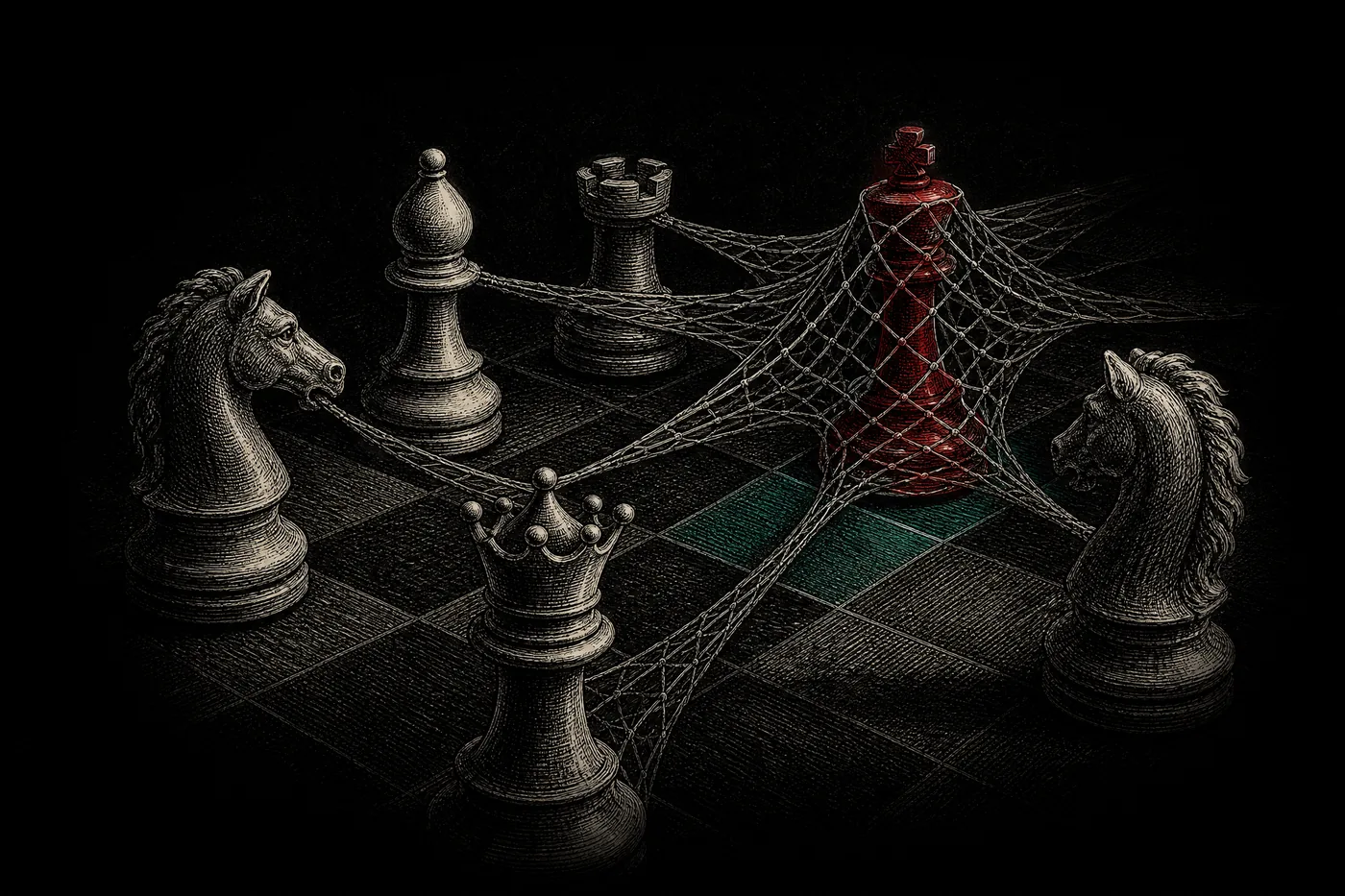
This is the one idea that makes the Pirc special, and it feels weird at first. Most openings tell you to fight for the center right away. The Pirc says: let White have a big center for now, because a big center is also a big target. You’ll attack it later.
So don’t panic when White has pawns on d4 and e4 (and maybe f4). That’s the plan working — you’re going to undermine those pawns.
3. Your g7-bishop is the star
The bishop you fianchetto to g7 points down the long diagonal at White’s center and queenside. It’s your most important piece. Two rules:
- Don’t block it with your own pawns if you can help it.
- Don’t trade it cheaply — especially watch for White’s Bh6 trying to swap it off (the 150 Attack does this on purpose).
4. Strike the center with …e5 or …c5
Once you’re developed and castled, it’s counterpunch time. Your two big breaks:
- …e5 — the classic strike at d4 (usually after …c6 and …Nbd7 to support it).
- …c5 — a more aggressive hit on d4, great against White’s big Austrian center.
This is the moment the Pirc lives for. Build the setup, get safe, then break.
The simplest move order to play
Here’s a beginner-proof sequence as Black against the calm Classical. You can play this almost on autopilot:
- 1…d6 — flexible, restrains e4.
- 2…Nf6 — pressure e4.
- 3…g6 — prepare the fianchetto.
- 4…Bg7 — get the star bishop out.
- …0-0 — king safe, fast.
- …c6 then …Nbd7 — support the center break.
- …e5 — strike! (the whole point)
That’s it. Solid setup, safe king, then the counterpunch. You’re playing real Pirc chess. For the full reasoning behind each move, see our move-by-move guide.
Common beginner mistakes (and how to fix them)
Mistake #1: Never breaking the center. The Pirc isn’t a fortress you hide in forever. If you set up and then just shuffle pieces, White’s space slowly crushes you. Fix: plan for …e5 (or …c5) — that break is the whole reason you played the Pirc.
Mistake #2: Grabbing free pawns too early. Snatching White’s e4-pawn (after Bc4) or the b2-pawn with your queen usually backfires badly — see the traps page. Fix: be patient. Develop and castle first; the “free” pawn is usually poisoned.
Mistake #3: Letting your g7-bishop get traded for nothing. If White plays Bh6 and you carelessly allow the swap, you lose your best piece and your king gets drafty. Fix: know it’s coming; sometimes you re-route or accept the trade only on good terms.
Mistake #4: Forgetting to castle. The Pirc is a counterattacking opening, and you can’t counterattack with your king stuck in the center. Fix: castle early — it’s usually move 5 or 6.
Should beginners even play the Pirc?
Honest answer: it’s a good, fun choice for combative beginners — with one caveat. The setup is easy (same moves most games), it teaches you about counterattacking and pawn breaks, and it dodges a ton of White’s mainline 1.e4 prep. The caveat: you start cramped, so you have to be willing to defend patiently before you strike. If you’d rather have a rock-solid, low-stress defense, something more classical might suit you. And if you like the fianchetto, you’ll love its 1.d4 cousin, the King’s Indian Defense.
FAQ
Is the Pirc Defense too hard for beginners? Not really — the setup is one of the easiest to learn because you play almost the same moves against everything. The tricky part is the timing of the …e5/…c5 break, which comes with practice.
What’s the easiest way to remember the Pirc? The setup spells itself out: …d6, …Nf6, …g6, …Bg7, castle. Then look for the …e5 or …c5 break. Five setup moves, one big idea.
Why do I let White build a big center? Because a big center is also a target. The Pirc is hypermodern: you control the center from a distance with the g7-bishop, then attack White’s pawns with a timely break.
Pirc or King’s Indian for a beginner? They’re cousins with the same fianchetto idea. The Pirc answers 1.e4; the King’s Indian answers 1.d4. Learn both and you have a matching counterattacking system against the two main first moves.
Keep climbing
Make sure the fundamentals are rock-solid first — read the opening principles, then come back and the Pirc’s “let them build it, then break it” logic will click. From here, level up with the move-by-move main line, peek at the traps, or head back to the Pirc overview and the openings hub.
Written and fact-checked by the Chess Lab Academy Editorial Team (AI-assisted, human-edited) · Lines checked against mainstream opening theory and verified with Stockfish 17 · ECO B07–B09 · Last verified 2026-06-25 · Sources · How we verify content.
