
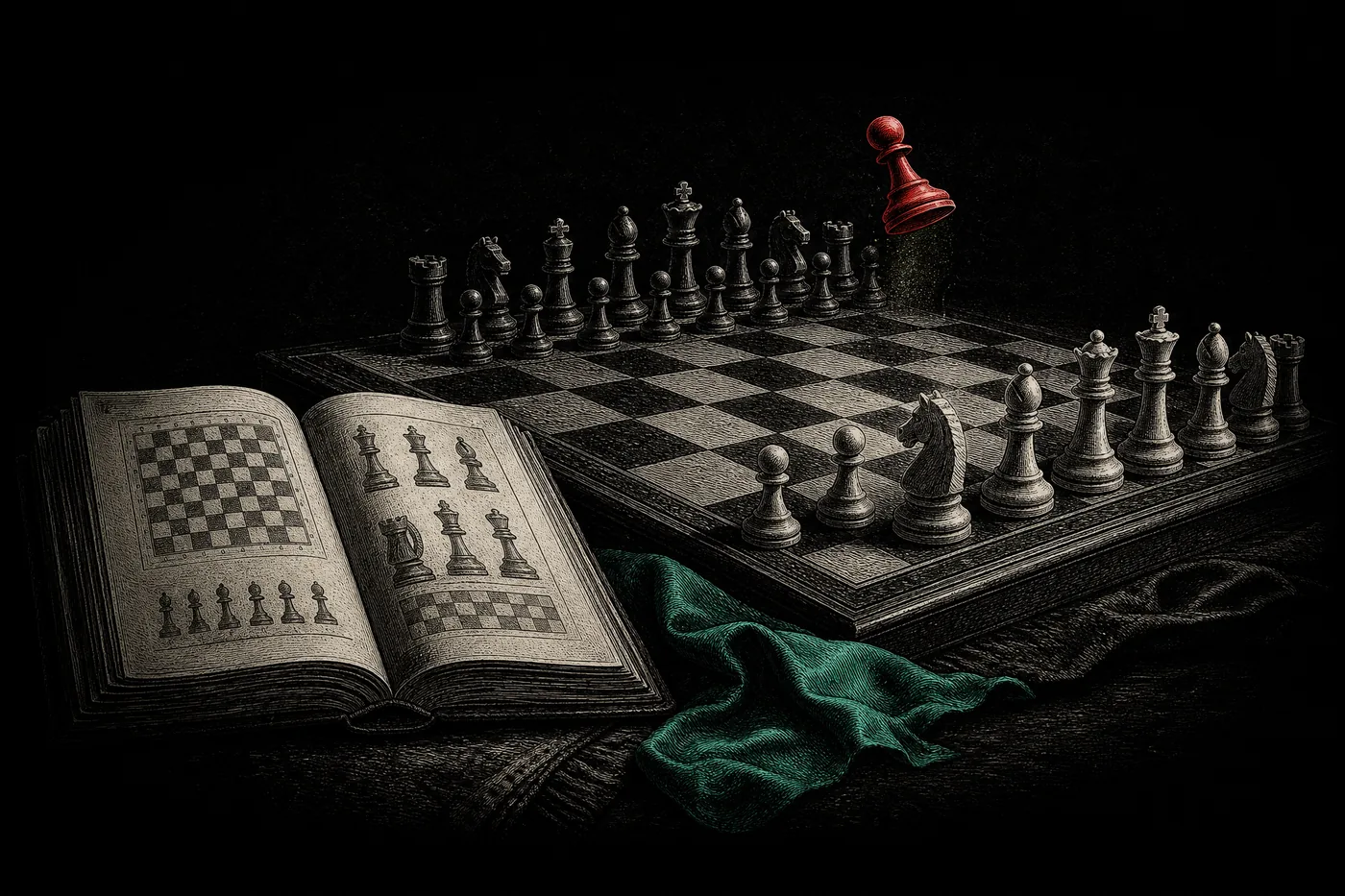
An open position has had its central pawns traded off, leaving files and diagonals wide open — fast, tactical, bishop-friendly chess. A closed position is the opposite: locked, interlocking pawn chains clog the center, the game slows to a strategic crawl, and knights become the stars. Knowing which one you’re in tells you how to play.
That last part is the whole point, so let’s unpack it.
The 10-second version
- Open = pawns traded off, lines open fast, tactical, bishops and rooks thrive.
- Closed = locked pawn chains, blocked center slow, strategic, knights thrive.
- In open games, develop fast and grab open lines. In closed games, maneuver patiently and break with a well-timed pawn push.
What is an open position in chess?
An open position is one where the central pawns have largely been traded or pushed past each other, so there are open files (no pawns on them) and clear diagonals. The board feels spacious. Pieces zoom across it.
Open positions reward fast development and initiative — getting your pieces out quickly and pointing them at the enemy king. Because lines are open, tactics fly: pins, forks, and sudden attacks down a file. If you fall behind in development here, you can get punished fast. Open games are where the phrase “castle early or get cooked” really earns its keep.
The pieces that love open positions:
- Bishops — long open diagonals are exactly what they crave.
- Rooks — open files are their highways; a rook on an open file is a monster.
- The queen — same idea, range is everything.
What is a closed position in chess?
A closed position has locked pawn chains in the center — pawns that block each other and can’t be easily traded. The lines are jammed. Nobody’s zooming anywhere.
Closed positions are slow and strategic. There’s less immediate danger, so you’ve got time to maneuver, reposition pieces to perfect squares, and plan a long-term break. The game is decided by who improves their pieces best and who breaks the structure open at the right moment — usually with a pawn lever (a pawn push that challenges the locked chain and cracks it open on your terms).
The piece that loves closed positions:
- Knights — they hop over the traffic jam. While the bishops are stuck staring at pawn walls, a knight calmly leaps to a juicy outpost in the middle of the board.
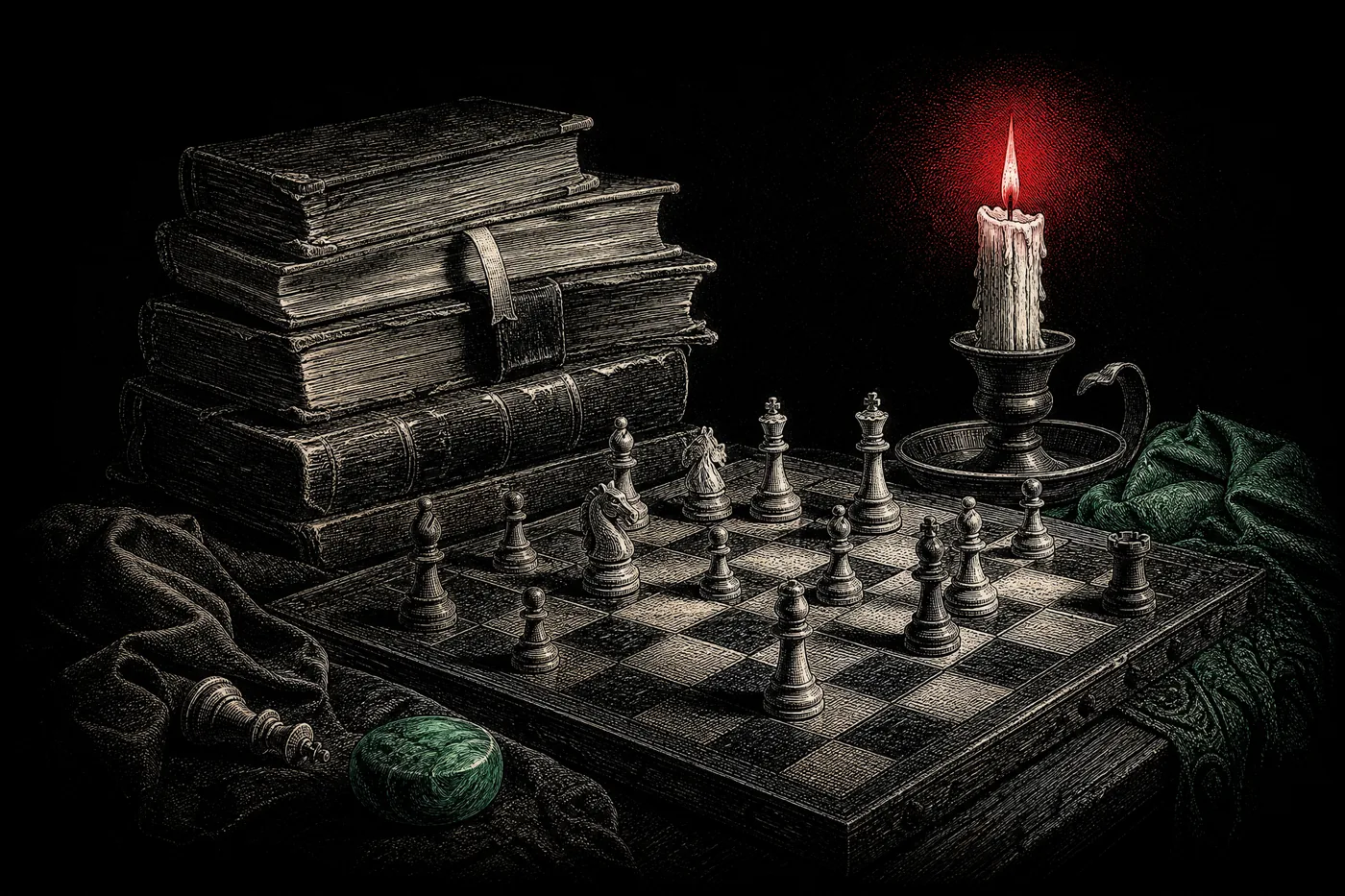
Knights or bishops — which is better here?
This is the classic trade-off, and it ties straight into good bishop vs bad bishop:
| Open position | Closed position | |
|---|---|---|
| Best minor piece | Bishops (open diagonals) | Knights (hop over the jam) |
| Pace | Fast, tactical | Slow, strategic |
| What wins | Development & initiative | Maneuvering & well-timed breaks |
| Key skill | Calculating tactics | Patience & planning |
The practical takeaway: if you have the bishops, try to open the position. If you have the knights, try to keep it closed. Steer the structure toward your pieces. A huge amount of high-level strategy is just this tug-of-war over whether the position opens up or stays clogged.
How do I play each type well?
In an open position:
- Develop every piece fast — don’t waste moves.
- Castle early; open lines cut both ways.
- Fight for open files with your rooks and good diagonals with your bishops.
- Stay alert for tactics — they’re everywhere.
In a closed position:
- Slow down. There’s no rush, so take time to put pieces on their best squares.
- Look for outposts — protected squares the enemy can’t kick your knight off of.
- Plan a pawn break to open the position when it favors you, not your opponent.
- Don’t open lines blindly — only crack the center when it helps your pieces more than theirs.
Common mistakes to dodge
- Playing every position the same way. Charging in with all-out aggression works in open games and flops in closed ones, where it just bumps into pawn walls. Read the board first.
- Opening the position when it helps the opponent. If they’ve got the bishops and you’ve got the knights, prying the center open hands them the advantage. Ask who benefits before you trade pawns.
- Sitting passively in an open game. Open positions punish slowness. If you maneuver lazily while lines are open, you’ll get blown off the board.
- Trading your good knight in a closed game. In a locked position your well-placed knight may be your best piece. Don’t swap it for the opponent’s bishop that’s biting on granite.
Frequently asked questions
What is an open position in chess? A position where central pawns have been traded or pushed past each other, leaving open files and clear diagonals. The game becomes fast and tactical, and long-range pieces like bishops and rooks thrive.
What is a closed position in chess? A position with locked, interlocking pawn chains jamming the center. Lines are blocked, the game is slow and strategic, and knights shine because they can hop over the traffic.
Are knights or bishops better? It depends on the structure. Bishops excel in open positions with clear diagonals; knights excel in closed positions where they leap over pawn walls. Steer the position toward whichever pieces you have.
How do you open a closed position? With a well-timed pawn break — pushing a pawn to challenge and trade off the enemy’s locked chain, prying open files and diagonals when it favors your pieces, not theirs.
Is an open or closed game better for beginners? Open games are more forgiving to learn from because tactics are visible and the cause-and-effect is clear. Closed games reward patience and planning, which tend to come with experience.
A fun bit of history
Two of the most famous “schools” of chess thought were basically an argument about open vs closed. The Romantic era of the 1800s adored wide-open positions, gambits, and dazzling sacrifices — chess as fireworks. Then players like Wilhelm Steinitz, the first official World Champion, argued you could also win slowly by accumulating tiny advantages in quiet, closed positions. He was mocked for it at first. He was also right, and he reshaped how the whole world plays. Quiet maneuvering had its revenge.
Key takeaways
- Open positions: pawns traded off, lines open fast, tactical, bishops and rooks shine. Develop fast, castle early.
- Closed positions: locked pawn chains slow, strategic, knights shine. Maneuver patiently, break at the right moment.
- Steer the structure toward your own pieces: bishops want it open, knights want it closed.
- The right plan depends entirely on which type of position you’re in — there’s no one-size-fits-all.
Keep climbing
Both position types revolve around the same battleground: the center. Master that and the rest gets a whole lot clearer.
Next up: Control the center · Also handy: good vs bad bishop and strategy vs tactics.
Written and fact-checked by the Chess Lab Academy Editorial Team (AI-assisted, human-edited) · Positions verified with Stockfish 17 and rules checked against the FIDE Laws of Chess · Last verified 2026-06-25 · Sources · How we verify content.
