
Chess strategy vs tactics comes down to time scale. Strategy is your long-term plan — where your pieces belong, which side to attack, how to build pressure over many moves. Tactics are short, forcing sequences — forks, pins, skewers — that win material or deliver mate in just a move or two. You need both, and they feed each other.
A famous line nails it: “Tactics is knowing what to do when there’s something to do; strategy is knowing what to do when there’s nothing to do.” Let’s make that concrete.
Strategy vs tactics, side by side
- Strategy = the slow plan (center control, development, king safety, weak squares).
- Tactics = the fast combos (forks, pins, skewers, discovered attacks).
- Strategy creates the conditions; tactics cash them in.
- Beginners win most games on tactics — so study those first, but don’t skip strategy.
What is strategy in chess?
Strategy is the big-picture, long-term thinking. It’s the quiet, positional layer of the game: deciding where your pieces belong, which part of the board you want to dominate, and what your overall goal for the next ten moves is.
Strategic ideas include all the basic strategy staples:
- Control the center to give your pieces maximum reach.
- Develop your pieces quickly and toward good squares.
- Keep your king safe by castling.
- Target weaknesses — a lonely, undefended pawn or a hole in the enemy’s camp.
Strategy doesn’t win the game this move. It slowly tilts the board in your favor so that, eventually, a winning tactic appears. It’s gardening: you plant, water, and wait.
What is a tactic in chess?
A tactic is a short, sharp sequence of forcing moves — usually two to four — that wins material or checkmates. Tactics are the punches. They’re concrete and calculable: “I play this, you’re forced to play that, and now I win your rook.”
The bread-and-butter tactical patterns every beginner should know:
- Fork: one piece attacks two (or more) enemy pieces at once. The knight is the king of forks — it can hit a king and a rook at the same time, and the king has to move, so you grab the rook.
- Pin: a piece can’t move because doing so would expose a more valuable piece behind it (often the king) to capture.
- Skewer: like a pin in reverse — you attack a valuable piece, it’s forced to move, and you capture the lesser piece behind it.
- Discovered attack: you move one piece and unveil an attack from a piece behind it. Sneaky and powerful.
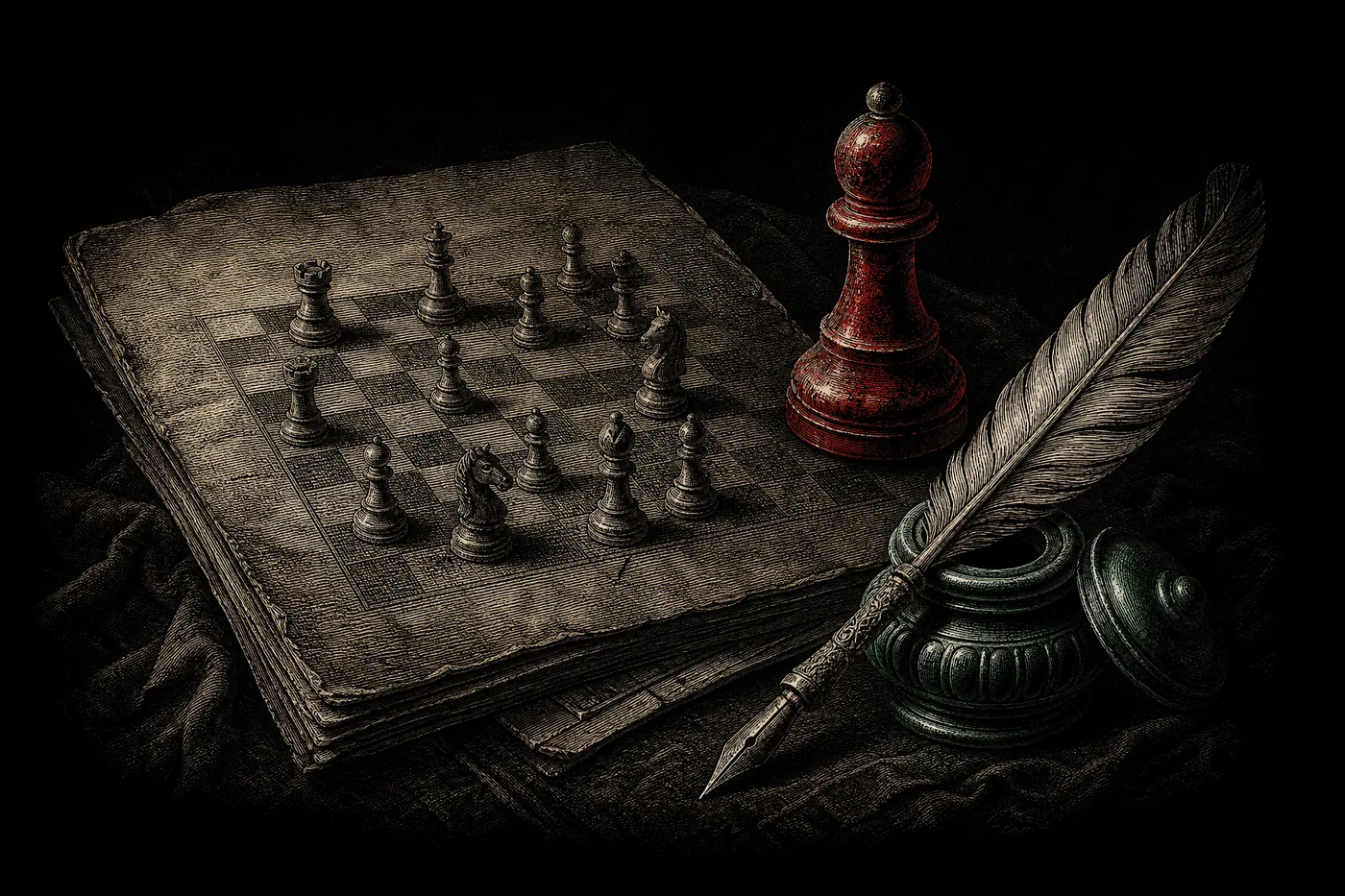
Here’s a clean skewer setup: line up the enemy king with a piece behind it on the same rank or file, and your rook forces the king to step aside, then captures the piece left exposed.
What’s the actual difference?
The simplest way to keep them straight:
| Strategy | Tactics | |
|---|---|---|
| Time scale | Long-term (many moves) | Short-term (1–4 moves) |
| Feel | Slow, planning, positional | Fast, forcing, calculating |
| Examples | Center control, development, king safety, weak pawns | Forks, pins, skewers, discovered attacks |
| What it does | Builds an advantage | Cashes the advantage in |
| Mental mode | ”What’s my plan?" | "What can I win right now?” |
Here’s the key relationship: strategy creates the conditions for tactics. When you’ve developed your pieces, grabbed the center, and your opponent’s king is exposed, tactics start appearing almost on their own. Good strategy is what makes the winning fork available in the first place.
Should beginners study strategy or tactics first?
Honest answer: tactics first, but don’t ignore strategy.
At the beginner and intermediate level, the overwhelming majority of games are decided by tactics — somebody hangs a piece, misses a fork, or walks into a pin. The legendary teacher Richard Teichmann supposedly said “chess is 99% tactics,” and while that’s an exaggeration, it points at a real truth: spotting (and avoiding) tactics is the single biggest rating-booster for newer players.
So the practical plan:
- Drill tactics patterns — forks, pins, skewers — until you spot them instantly. This stops you from hanging pieces and helps you punish your opponent when they do.
- Layer in strategy so your pieces reach the squares where tactics exist. There’s no point being a tactical wizard if your pieces never get developed.
Both matter. But if you’ve only got 20 minutes a day, spend most of it on tactics. The strategy you’ve already picked up from basic strategy and developing your pieces will carry you the rest of the way.
A fun bit of history
The idea that quiet strategy could beat wild tactics was controversial for a long time. In the 1920s, the great José Raúl Capablanca — a Cuban World Champion famous for an almost boring simplicity — would just make calm, strategically perfect moves until his opponents had no good options left, then convert with effortless little tactics. He lost only a tiny handful of games in his entire prime. His style proved that you don’t need fireworks every move; sound strategy sets up tactics that win themselves. Capablanca made “obvious” look unbeatable.
Common mistakes to dodge
- Calculating with no plan. Tactics without strategy is just flailing. If there’s no tactic available, fall back on a strategic improvement — develop a piece, improve your worst piece, grab a key square.
- Planning with no calculation. Strategy without tactical awareness means you’ll execute a beautiful plan and hang your queen on move 8. Always check for forcing moves first.
- Hoping for tactics that aren’t there. Don’t throw pieces forward “for an attack” without a concrete sequence. Verify the tactic actually works before you commit.
- Skipping tactics practice. If you only study positional ideas, you’ll keep losing to simple forks. Drill the patterns.
Key takeaways
- Strategy is the long-term plan; tactics are short forcing combinations that win material or mate.
- Tactics = forks, pins, skewers, discovered attacks. Strategy = center, development, king safety, weaknesses.
- Strategy creates the conditions; tactics cash them in — you need both.
- For beginners, drill tactics first (most games are decided by them), then layer in strategy.
- A plan with no calculation hangs pieces; calculation with no plan flails. Balance them.
Frequently asked questions
What’s the difference between strategy and tactics in chess? Strategy is long-term planning — center control, development, king safety — played out over many moves. Tactics are short forcing sequences (forks, pins, skewers) that win material in a move or two. Strategy sets the stage; tactics deliver the blow.
What is a tactic in chess? A tactic is a short, forcing sequence of moves that wins material or delivers checkmate. Common types include the fork (attacking two pieces at once), the pin, the skewer, and the discovered attack. Tactics are concrete and calculable.
What is strategy in chess? Strategy is the long-term plan behind your moves: which squares to control, where to develop, how to keep your king safe, and which enemy weaknesses to target. It builds slow advantages that eventually create tactical chances.
Should I study tactics or strategy first? Tactics first. At the beginner level, most games are decided by tactics — hung pieces, missed forks. Drilling tactical patterns is the fastest way to improve. Then layer in strategy so your pieces reach squares where tactics appear.
What are the most important tactics for beginners? Forks, pins, and skewers. The knight fork (hitting a king and rook at once) is especially common and devastating. Learn to spot these both to win material and to avoid falling for them yourself.
Can you win on strategy alone? Not entirely — almost every game ends with at least a small tactic to convert your advantage. But strong strategy makes those tactics easy and obvious. The two always work together; pure strategy with zero calculation will eventually hang something.
Keep climbing
Now that you know the two halves of chess thinking, sharpen the practical one — turning your advantages into actual wins.
Next up: How to win at chess · Also great: basic strategy, controlling the center, and what is checkmate. Back to the hub: Learn chess.
Written and fact-checked by the Chess Lab Academy Editorial Team (AI-assisted, human-edited) · Positions verified with Stockfish 17 and rules checked against the FIDE Laws of Chess · Last verified 2026-06-25 · Sources · How we verify content.
