
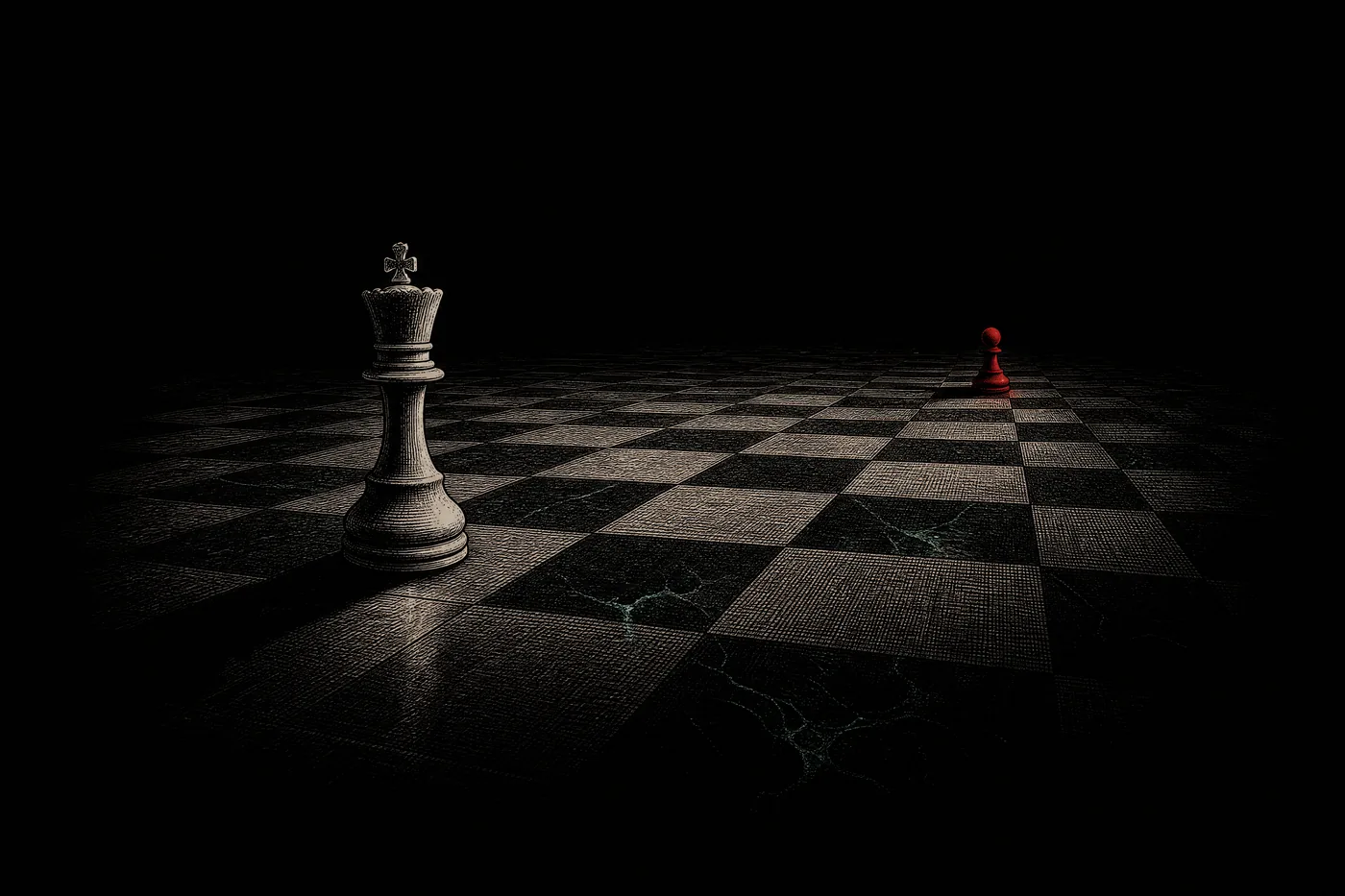
An outside passed pawn is a passed pawn sitting far away from the main cluster of pawns — out on a wing, all by itself. Why is that so deadly? Because it acts like a magnet for the enemy king: the king must run over to deal with it, and while it’s stuck way out on the edge, your king strolls in and devours all the pawns it abandoned. It’s the chess version of a decoy. One pawn does the distracting; your king does the eating.
It’s one of the most reliable winning advantages in king-and-pawn endgames — and it doesn’t even have to promote to win you the game.
The 10-second version
- Outside passed pawn: a passer far from the other pawns (a “passer” is a pawn with no enemy pawns able to stop it).
- The trick: it lures the enemy king to the edge, far from the real action.
- Then your king marches the other way and gobbles the undefended pawns.
- It often wins without even promoting — the distraction is the weapon.
What is an outside passed pawn?
Let’s unpack it. A passed pawn is a pawn with a clear path to promotion — no enemy pawns in front of it or on the files beside it to block or capture it. An outside passed pawn is one that’s also geographically distant from the rest of the pawns, usually on the opposite wing.
See White’s a-pawn way out on the queenside, while the rest of the pawns huddle on the kingside? That lonely a-pawn is the outside passer. The Black king can’t be in two places at once. If it runs to stop the a-pawn, it leaves the kingside pawns undefended. If it stays home, the a-pawn promotes. That’s the cruel fork the outside passer creates.
Why is an outside passed pawn so strong?
Because it forces the enemy king into a no-win commute. The whole power of the pawn is distraction, not promotion.
Here’s the plan in motion. Black’s king has been dragged all the way to the a-file to stop the runaway pawn. But look at the kingside — those White pawns are now defenseless, and the White king is free to march over, capture them one by one, and create a second passed pawn the Black king can’t possibly get back to in time. The outside passer didn’t need to queen; it just needed to pull the enemy king out of position. Mission accomplished.
The key insight: the farther the outside passer is from the action, the better — because the enemy king’s round trip takes longer, and your king gets more free moves to feast. This is the rule of the square working in your favor: the enemy king is always one step behind.
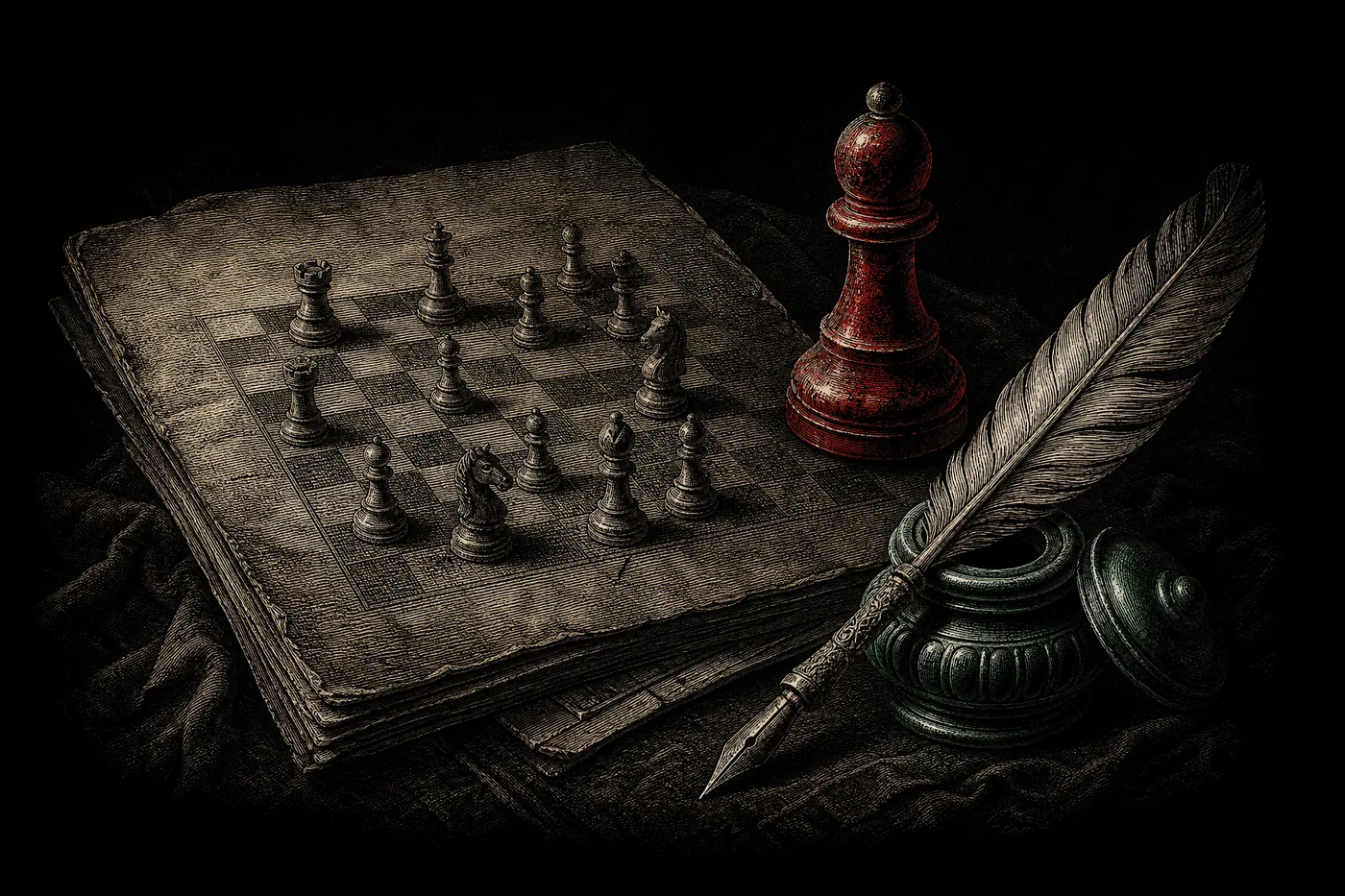
How do you use an outside passed pawn to win?
Here’s the winning recipe:
- Push the outside passer far enough that the enemy king must commit to stopping it.
- Make the king chase it. The deeper into the corner you drag the king, the more time you buy.
- March your own king the other way, toward the enemy’s now-undefended pawns.
- Munch those pawns and create a new passer on that side — one the distracted king can’t reach.
- Promote the new pawn (or the old one, if the king ever lets go). Game over.
This bare-bones version shows the engine of the whole idea: your king shoulders the enemy king to the edge while shepherding the passer, keeping the defender pinned to one side. It’s a one-two punch — pawn distracts, king conquers. (Note: a lone rook-pawn with the enemy king already in the corner can be only a draw — which is exactly why the article warns about edge-pawn quirks below.)
Outside passer vs protected passer — what’s the difference?
People lump these together, but they’re different weapons:
- An outside passed pawn wins by distraction — it’s far away and decoys the enemy king.
- A protected passed pawn wins by security — it’s defended by one of your own pawns, so the enemy king can never capture it, and that frees your king to roam.
Both tie down the enemy king, but for different reasons: distance versus protection. The dream, of course, is a passer that’s both outside and protected — that’s nearly always a winning endgame on its own.
Common mistakes to dodge
- Pushing the passer too far, too fast. If your pawn races ahead and just gets captured for free, the decoy fizzles. Advance it only as far as needed to commit the enemy king, then switch to your king plan.
- Forgetting to use your king. The pawn is the bait, not the hero. The win comes from your king feasting on the other wing while the enemy is distracted. Don’t just shove the pawn and forget the rest of the board.
- Miscounting the round trip. Use the rule of the square to confirm the enemy king genuinely can’t both stop your passer and defend its pawns. Sometimes it can — count it.
- Trading into the wrong ending. An outside passer is a reason to simplify into a king-and-pawn endgame, where its power shines. Don’t trade it away or keep too many pieces on that blunt its effect.
- Ignoring a rook pawn’s quirks. If your outside passer is an a- or h-pawn, double-check it can actually promote — edge pawns have their own draw traps.
A fun bit of history
The outside passed pawn is one of those strategic truths that masters have prized for centuries, captured in the old maxim that “a passed pawn is a criminal that should be kept under lock and key” — and an outside passer is the most dangerous escapee of all. Endgame legends built entire winning plans around the simple geometry of dragging the enemy king to one rim while the real fight happened on the other. It’s a beautifully human idea: win by misdirection, like a magician pointing one way while the trick happens elsewhere. Engines confirm it’s not just elegant — it’s often mathematically decisive.
Key takeaways
- An outside passed pawn is a passer far from the other pawns — it decoys the enemy king to the edge.
- Its power is distraction, not promotion: it pulls the king away so your king can feast.
- Push it, make the king chase, then march your king the other way and create a second passer.
- The farther the passer, the stronger — the enemy king’s round trip is longer.
- It’s different from a protected passer (which wins by being uncapturable), and both-in-one is near-unbeatable.
Keep climbing
The outside passed pawn lives or dies by the same geometry as everything in pawn endings — distance, tempo, and the race to promote. Sharpen those with the square rule and pawn-race counting.
Next up: The rule of the square · Then: pawn promotion races · Foundation: king and pawn endgames · Hub: all endgames.
Written and fact-checked by the Chess Lab Academy Editorial Team (AI-assisted, human-edited) · Positions verified with Stockfish 17 and rules checked against the FIDE Laws of Chess · Last verified 2026-06-25 · Sources · How we verify content.
