

If you had to sum up Nana Dzagnidze in one word, it would be aggressive. Among elite women’s players she’s long stood out as one of the game’s most committed attackers — a natural tactician who plays for the initiative, steers toward complications, and goes looking for the knockout rather than settling for a slow squeeze. Her chess is a great watch precisely because she’s trying to win, not just avoid losing.
An attacker by instinct
Dzagnidze doesn’t wait for the game to come to her — she pushes. Give her a half-open file, a lead in development, or an exposed enemy king and she’ll pile pieces toward it. That attacking instinct is the through-line of her whole career, from her junior world titles as a teenager to her championship results as a mature grandmaster. Where a “grinder” is content to nurse a tiny edge for fifty moves, Dzagnidze prefers to force the issue: create threats, keep the pressure mounting, and make her opponent solve problem after problem until one of them cracks.
That doesn’t mean reckless. Good attacking chess is calculated chess, and her results — a full Grandmaster title, a peak rating of 2573, wins over the world’s best — are proof that the aggression is backed by real precision.
Tactics are her language
Attacking players live and die by tactics, and this is where Dzagnidze is strongest. She has a sharp eye for the combination — the well-timed sacrifice, the tactical shot that turns pressure into a decisive material or mating advantage. In her best games the attack doesn’t fizzle; it resolves into a concrete tactic that ends the discussion.
This tactical sharpness is also why she thrives in the Sicilian as Black. Openings like the Najdorf and the Taimanov deliberately create unbalanced, tactic-rich positions where both sides have chances — the opposite of a dry, symmetrical game. Playing them well requires exactly the calculation-under-fire that is her strength.
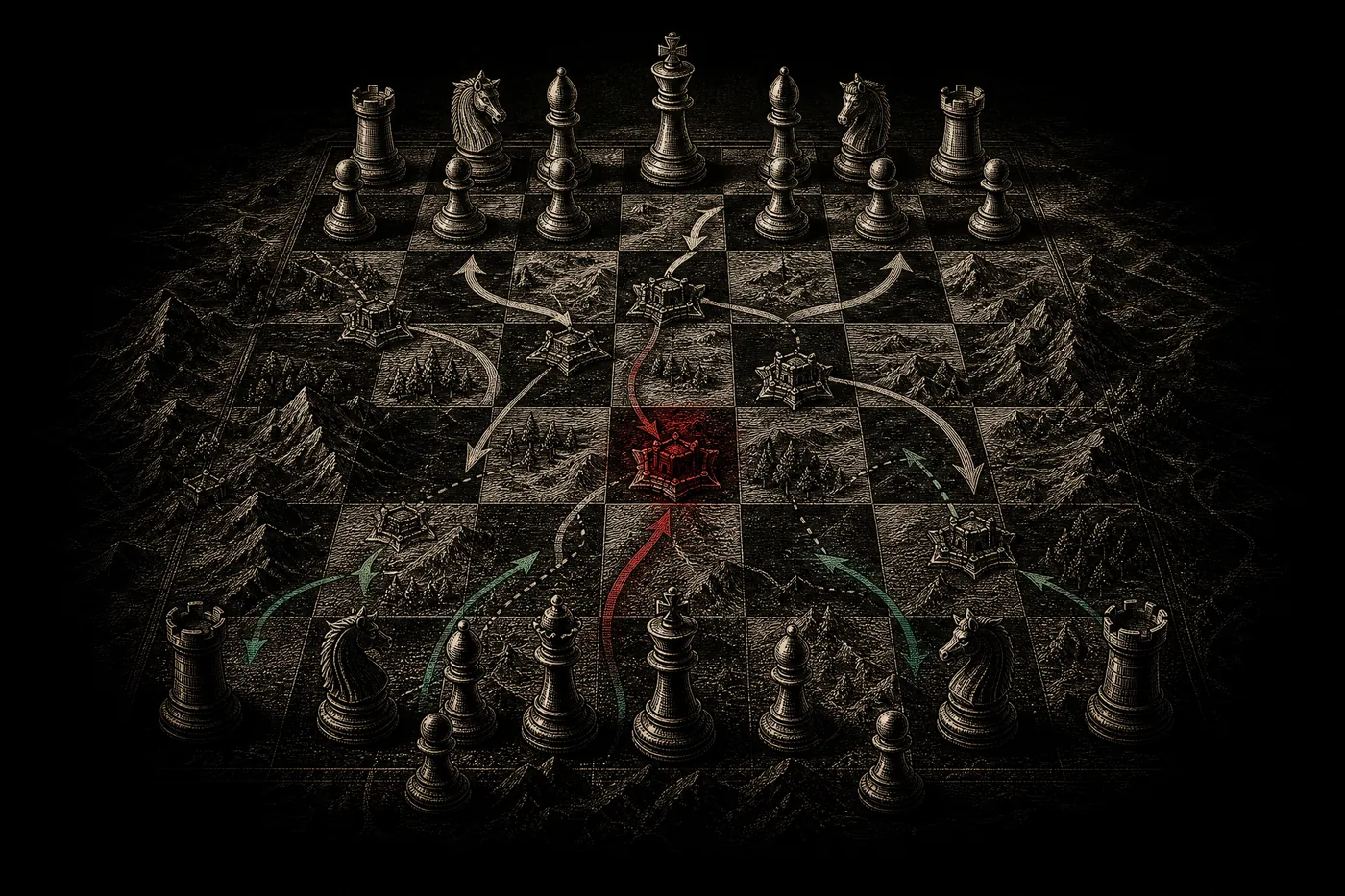
The blitz connection
Here’s a tell about any player’s true nature: how do they do when there’s no time to think? Dzagnidze became Women’s World Blitz Champion in 2017, and that’s no accident. Blitz strips away deep preparation and rewards the player whose instincts are best — whoever sees the tactics fastest and trusts their attacking judgment under a ticking clock.
That’s home turf for an attacker. When you’re already looking for active, forcing moves by default, you don’t need much time to find them. Her blitz crown is really a certificate of pure chess instinct — the ability to generate strong, aggressive ideas on the fly, again and again, faster than world-class opposition. We tell the story of that title in her best games.
Fighting from both sides of the board
A lot of players are ambitious with White and cautious with Black. Dzagnidze isn’t. She plays the Sicilian as Black specifically because it fights for the win from move one — it’s an opening that says “I’m playing to beat you,” not “I’m playing to hold.” As White she favors the flexible English Opening and classical 1.d4 structures, guiding the game into rich middlegames where her feel for the initiative can do its work.
That two-way ambition is a big reason she’s been so consistent at the top. She’s not waiting to be handed chances; she manufactures them regardless of color. See the whole repertoire in her openings.
The trade-off every attacker makes
Aggressive, risk-taking chess is thrilling, but it isn’t free. Playing for the initiative means occasionally overextending, or spending time on an attack that the opponent defends. Every committed attacker accepts the odd sharp loss as the price of the many sharp wins — and the alternative, safe half-points and quiet maneuvering, was never really Dzagnidze’s game. Her whole career is a bet that pressure and activity win more points than caution does, and the trophy cabinet says the bet paid off.
How her style compares
It helps to place her among the greats. Where Magnus Carlsen is the ultimate “grinder” who wins microscopic endgame edges, and a preparation-first player wins with deep opening files, Dzagnidze belongs to the older, romantic tradition of the attacker — closer in spirit to a Mikhail Tal than to a technical, risk-averse champion. She wins by making the game complicated and then out-fighting you in the chaos. In the modern era, where the safe path is often to memorize and neutralize, choosing to attack is both riskier and more fun to watch — which is exactly why fans love her games.
What casual players can learn from Dzagnidze
You don’t need a grandmaster title to borrow from her approach. A few of her habits scale beautifully to club and casual chess:
- Play for the initiative. Look for active, forcing moves before passive ones. Making threats forces your opponent to react to you — and reacting players make more mistakes.
- Train your tactics. Attacking chess is powered by pattern recognition. Regular tactics practice is the single fastest way to start winning more games at the casual level.
- Don’t fear complications. When the board gets sharp, slow down and calculate concrete lines instead of panicking. Chaos favors whoever keeps their head — and does the work.
- Be ambitious with Black, too. You don’t have to just “hold” with the black pieces. Picking a fighting defense like the Sicilian trains you to play for a win from both colors.
- Trust your instincts in fast games. In blitz, an active, threat-first mindset saves time and creates problems. Play the move that asks a question.
Style in one line
Sharp, aggressive, and tactical — a fearless attacker who plays for the initiative and the knockout, the style that carried her to a World Blitz crown and a place among the world’s best women players for years.
Keep exploring
See the style in action in her best games, get the full opening repertoire, follow her rating history, browse her key facts, or head back to the Nana Dzagnidze profile.
Written and fact-checked by the Chess Lab Academy Editorial Team · Facts verified against Wikipedia, her FIDE profile, and Chess.com, as of July 2026 · Last verified 2026-07-10 · How we verify content.
