

Garry Kasparov’s opening repertoire tells you everything about the kind of player he was. He didn’t pick safe, drawish systems — he chose the sharpest, most double-edged openings on the board and then out-prepared everyone in them. Whether he had the white or black pieces, the goal was the same: reach a fighting position where his calculation and home analysis could take over. Here’s a tour of the openings he made famous.
As Black against 1.e4: the Najdorf Sicilian
When opponents opened with the king’s pawn, Kasparov reached for the Sicilian Defense — and specifically its most respected, most combative variation, the Najdorf. The Najdorf gives Black a flexible, resilient position with loads of counter-attacking potential. It’s the choice of players who want to fight for a win with the black pieces, not just hold a draw, which made it a natural fit for Kasparov.
The Najdorf begins 1.e4 c5 2.Nf3 d6 3.d4 cxd4 4.Nxd4 Nf6 5.Nc3 a6, reaching the tabiya below. That modest little move …a6 quietly prepares expansion and keeps White’s pieces off the b5 square — small, precise, and full of poison, just like Kasparov’s chess.
As Black against 1.d4: the King’s Indian and the Grünfeld
Against queen’s-pawn openings, Kasparov had two razor-sharp answers, and both are attacking weapons rather than solid ones.
The King’s Indian Defense was arguably his signature Black opening. Here Black calmly lets White build a big pawn center, then counterattacks — often by throwing the entire kingside pawn mass forward in a direct assault on White’s king. It’s thrilling, risky, and exactly the kind of do-or-die chess Kasparov loved. The main tabiya arises after 1.d4 Nf6 2.c4 g6 3.Nc3 Bg7 4.e4 d6.
His second string against 1.d4 was the Grünfeld Defense, which takes the opposite approach. Instead of blockading White’s center, Black challenges it immediately with an early …d5, then chips away at it with pieces from a distance. It’s dynamic, concrete, and demands precise calculation — again, right up Kasparov’s street. It appears after 1.d4 Nf6 2.c4 g6 3.Nc3 d5.
As White: 1.e4, the Scotch, and the Ruy Lopez
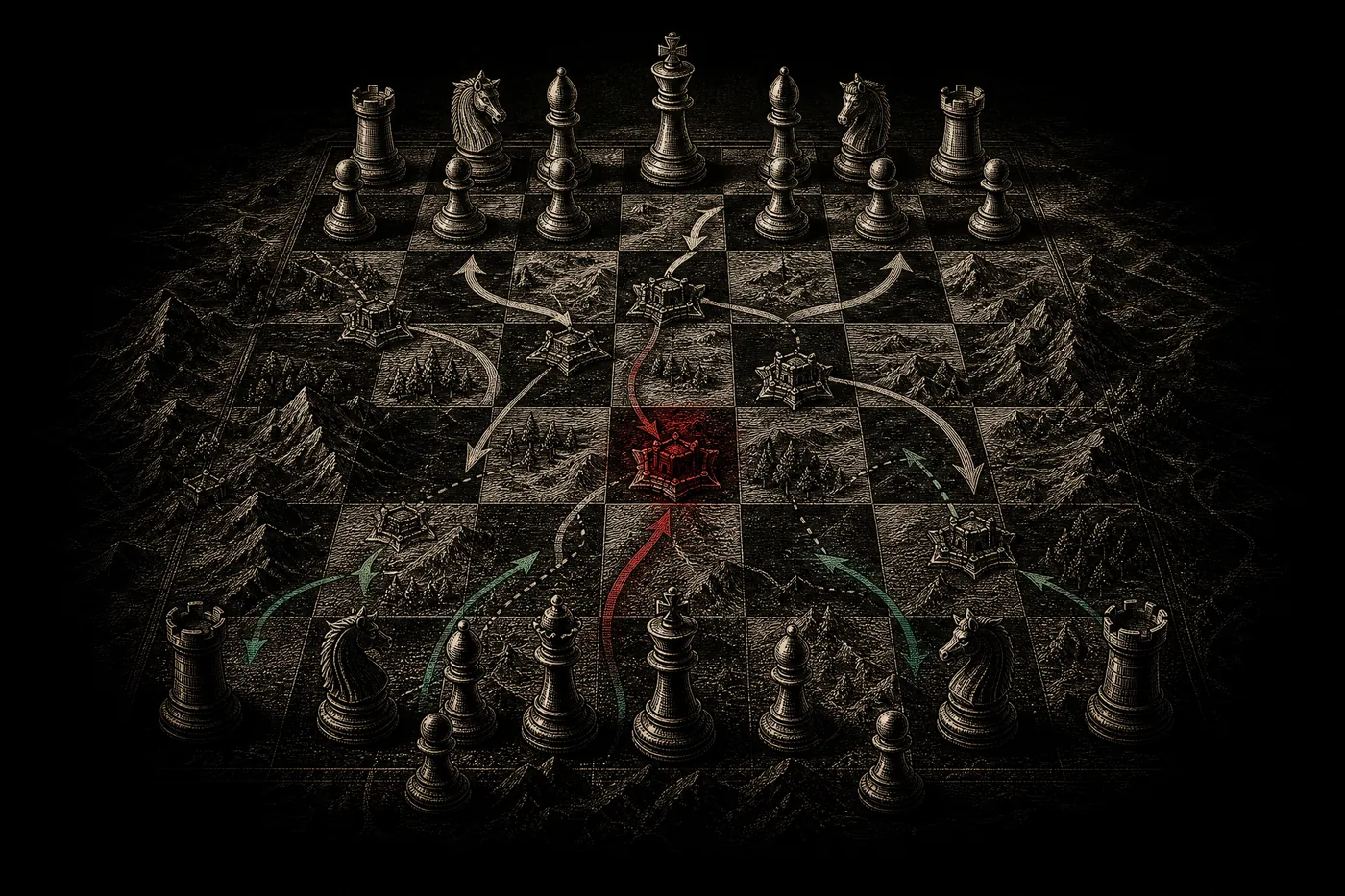
With the white pieces Kasparov was a committed 1.e4 player who wanted an open, tactical fight. One of his most famous contributions to opening theory was reviving the Scotch Game at the top level. The Scotch — 1.e4 e5 2.Nf3 Nc6 3.d4 — had been considered slightly old-fashioned, but Kasparov used it to drag opponents out of their deeply memorized Ruy Lopez lines and into fresher territory where his preparation gave him an edge. When one of the best players in history starts playing your favorite offbeat opening, the whole chess world takes notice, and the Scotch surged back into fashion.
Of course, Kasparov was also a world-class practitioner of the Ruy Lopez, the grand main line of 1.e4 e5, where he produced some of his finest positional and attacking games with White.
The thread running through it all
Notice the pattern: Najdorf, King’s Indian, Grünfeld, Scotch, Ruy Lopez. These aren’t the choices of a player looking to make a quick draw. Every one of them is an opening built to create imbalance and a real fight — exactly the environment where Kasparov’s deep preparation and sharp calculation could do the most damage. His repertoire was a mirror of his whole approach to chess: seek the initiative, embrace complexity, and out-work everyone before the game even begins.
Playing his openings today
The great thing about Kasparov’s repertoire is that most of it is still completely playable — and beginner-friendly enough to start learning right now. If you want a taste of his style, pick one weapon and stick with it:
- As Black against 1.e4: try the Sicilian Defense. You don’t need to memorize deep Najdorf theory to enjoy its counter-attacking spirit.
- As Black against 1.d4: the King’s Indian Defense is a fantastic system for players who love to attack the king, and its setup is easy to remember.
- As White: open with 1.e4 and consider the Scotch Game — it leads to clear, open positions that are great for learning tactics.
The key isn’t copying his exact moves; it’s absorbing the mindset. Kasparov chose openings that gave him something to fight for. Do the same, and you’ll already be thinking a little more like a champion.
Want to see these openings turn into masterpieces? Check out Kasparov’s best games, or read more about the mindset behind them in his playing style.
FAQ
What was Garry Kasparov’s main opening as Black? Against 1.e4 he was a lifelong Najdorf Sicilian expert, and against 1.d4 he leaned on the King’s Indian Defense and the Grünfeld — all sharp, counter-attacking systems.
Did Kasparov play the Scotch Game? Yes. He’s widely credited with reviving the Scotch Game at the elite level as White, using it to steer opponents away from heavily analyzed Ruy Lopez theory.
Why did Kasparov choose such sharp openings? They matched his dynamic, attacking style. Fighting openings created the complex, imbalanced positions where his deep home preparation and superior calculation gave him the biggest edge.
Keep exploring
More Kasparov: his best games · his playing style · his rating history · fun facts & records · or the full Garry Kasparov profile.
Written and fact-checked by the Chess Lab Academy Editorial Team · Facts verified against Wikipedia, his FIDE profile, and Chess.com, as of July 2026 · Last verified 2026-07-10 · How we verify content.
