

If you had to sum up Dmitry Andreikin in one phrase, it would be “fearless and practical.” He’s not a player who wins by memorizing more theory than everyone else, and he’s not a positional robot who squeezes tiny edges for 80 moves. He’s an intuitive fighter — someone who trusts his feel for a position, poses awkward practical problems, and keeps his nerve when the board (and the clock) get chaotic. That combination makes him one of the most dangerous players in the world, and it’s at its scariest in fast chess.
Intuition over calculation-by-brute-force
Andreikin’s core strength is intuition — the ability to sense the right plan or the most dangerous move without exhaustively calculating every line. Top players describe him as someone who plays “strong chess” naturally, relying on a deep, instinctive understanding of where the pieces belong rather than pure memorized preparation.
The practical upshot is that he’s comfortable in a huge range of positions. He doesn’t need the game to follow a script he studied at home; he’s happy to reach an unfamiliar, roughly balanced middlegame and simply out-think his opponent from there. For a professional in the engine era — when so much of elite chess has become a memory contest — that self-reliance is both unusual and genuinely dangerous.
Fearless against anyone
A defining Andreikin trait is that he doesn’t play scared. Reputations don’t rattle him. This is the player who marched to the final of the 2013 World Cup through a single-elimination gauntlet, who beat former World Champion Vladimir Kramnik in a classical game the same year, and who handed Magnus Carlsen his only loss at the 2019 World Blitz Championship.
That fearlessness shows up in his decisions at the board: he’ll accept an unbalanced position, grab a pawn, or steer into complications when a more cautious player would bail out to a safe draw. He backs his own judgment, and against elite opposition that willingness to fight is worth a lot of points.
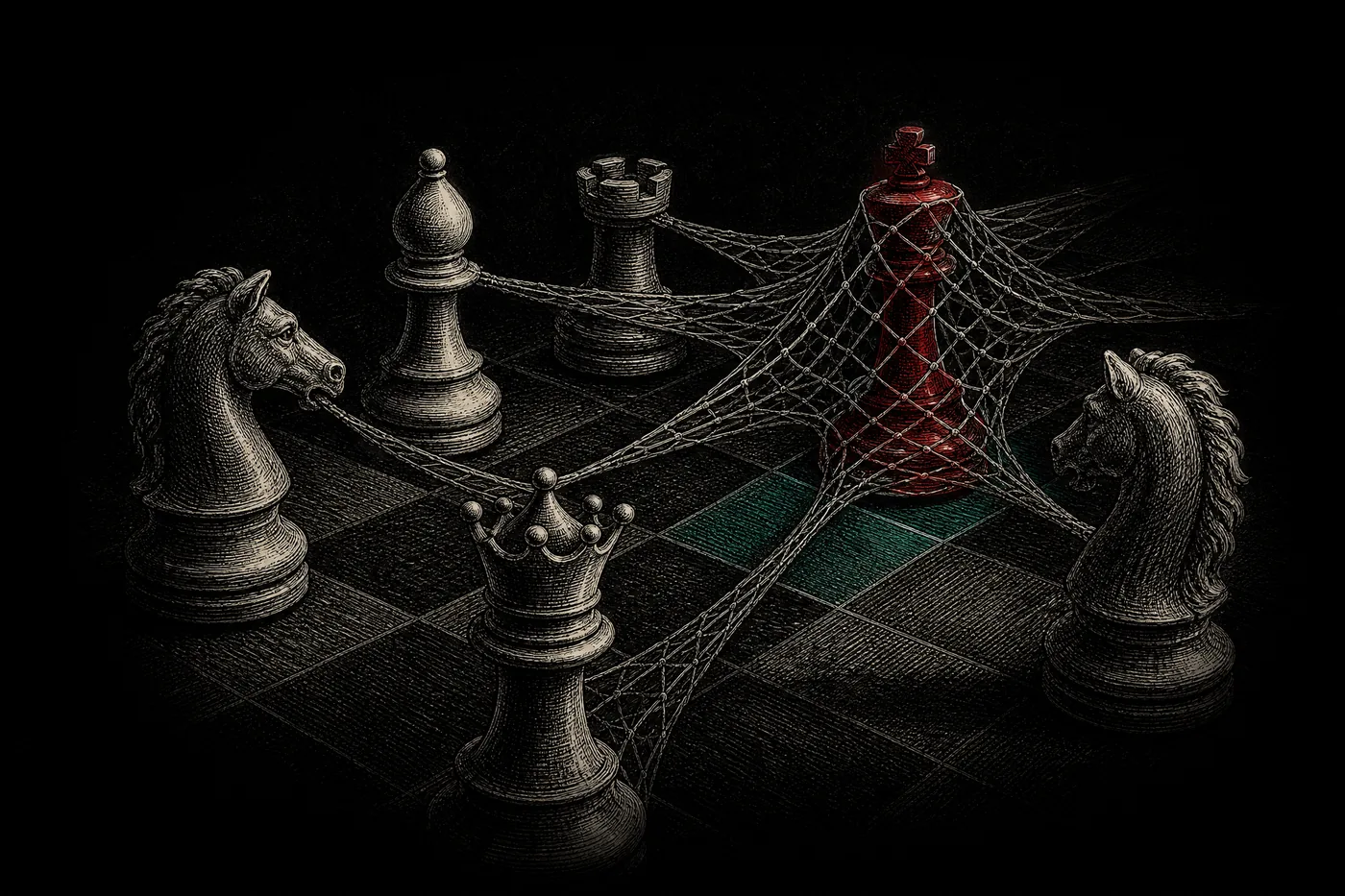
The speed-chess assassin
Here’s where Andreikin is genuinely elite-of-the-elite: rapid and blitz. His intuitive style is tailor-made for fast chess. When there’s no time for deep calculation, the player who instinctively finds good moves — and who stays calm in a scramble — has an enormous edge, and that’s Andreikin to a tee.
The résumé backs it up. He’s a European Blitz Champion (2016), and his blitz rating has climbed into the world’s top handful of players (peaking above 2780 and reaching the top 15 in the world in blitz, as of the FIDE rating lists around 2020). His most famous fast-chess moment — beating Carlsen at the 2019 World Blitz while nobody else could — is the perfect illustration of why opponents dread seeing his name across the board when the clock is short.
Practical, low-drama openings
Andreikin’s opening choices reflect his whole philosophy: reliability over fireworks. As White he’s a 1.d4 player who’s happy in classical Queen’s Gambit structures, and he’ll cheerfully mix in offbeat, low-theory systems (like the Trompowsky) to drag opponents out of their preparation and into a fair fight. As Black he trusts battle-tested defenses — the flexible Sicilian when he wants to unbalance the game, and the ultra-solid Berlin Defense when he wants a safe, no-nonsense reply to 1.e4.
The through-line is that he’d rather reach a position he understands than one that’s theoretically critical but requires memorizing forty moves of engine analysis. See the full picture in his opening repertoire.
Resourceful when things go wrong
One underrated part of Andreikin’s game is his resourcefulness in defense. Because he’s not afraid of messy positions, he’s often the one setting traps and finding practical chances when he’s worse — refusing to fold, and making his opponent prove they can convert. That toughness is a big reason he’s survived so many single-elimination matches and tiebreak scrambles over his career.
How his style compares to his rivals
It’s useful to place Andreikin next to the players he’s spent his career battling. Fabiano Caruana wins through the sheer depth of his home preparation; Levon Aronian is a creative, imaginative attacker; his fellow Russian Ian Nepomniachtchi is famous for lightning-fast, aggressive intuition. Andreikin shares Nepomniachtchi’s trust in instinct, but channels it into a more flexible, practical, and defensively resilient package — a player who’s just as happy grinding a safe Berlin as he is swinging in a blitz scramble. Where some elites look for a theoretical knockout, Andreikin looks for a fair fight he can out-play you in.
What casual players can learn from Andreikin
You don’t need grandmaster intuition to borrow ideas from Andreikin. A few of his habits scale down beautifully to club and casual chess:
- Don’t fear reputations. Play the board, not the name across from you. Andreikin’s fearlessness against former World Champions is proof that respect shouldn’t tip into fear.
- Trust your intuition in fast games. In blitz and rapid, the player who makes good decisions quickly wins. Practice trusting your first instinct instead of freezing.
- Pick openings you understand. A reliable, well-understood setup beats a fashionable line you’ve only half-memorized. Reach positions you know how to play.
- Never give up a worse position. Being resourceful and tough when things go wrong is a genuine skill — and it wins games your opponents think they’ve already won.
Style in one line
Practical, intuitive, and fearless — an unorthodox fighter who trusts his instincts, refuses to be intimidated, and turns into an outright assassin when the clock speeds up. It’s a style that’s kept him among the world’s best for over a decade.
Keep exploring
See the approach in action in his best games, get the full opening repertoire, follow his rating history, or head back to the Dmitry Andreikin profile.
Written and fact-checked by the Chess Lab Academy Editorial Team · Facts verified against Wikipedia, his FIDE profile, and Chess.com, as of July 2026 · Current status stamped “as of July 2026” · Last verified 2026-07-10 · How we verify content.
