

Boris Spassky’s best games are a highlight reel of elegant, fearless chess. He wasn’t a one-note attacker or a dry technician — he could do it all, and his greatest games show off that range. A couple of them are so famous they’ve escaped the chess world entirely and turned up in pop culture. Here are the ones worth knowing.
A quick note on how we present these: we describe each game in prose from verified sources rather than reprinting a full move list, so you’re never getting a garbled transcript. Where you’d like to play through the moves yourself, we point you to reliable databases. Every result and detail below is documented in the sources at the foot of this page.
Spassky vs. Bronstein, 1960 — the “James Bond” King’s Gambit
This is the one most people mean when they talk about Spassky’s brilliancies. Played at the 1960 Soviet Championship in Leningrad, Spassky had White against David Bronstein — himself a former World Championship challenger — and chose the swashbuckling King’s Gambit, sacrificing a pawn on move two to rip open the position.
The game built to a stunning knight leap, 15.Nd6, offering a piece to open lines against the black king. It wasn’t necessarily the computer’s top choice, but over the board it was devastating: the threats piled up faster than Bronstein could meet them, and he resigned soon after. The game was so cinematic that it was recreated on screen in the 1963 James Bond film “From Russia with Love,” which is why casual fans sometimes know it without knowing whose game it was. It’s a perfect example of Spassky’s attacking imagination.
Spassky vs. Fischer, Mar del Plata 1960 — beating a young Bobby with the King’s Gambit
The same year, at the strong Mar del Plata tournament in Argentina, Spassky met a teenage Bobby Fischer for the first time — and again reached for the King’s Gambit. Fischer, ever combative, threw everything at a mating attack, but pressed too hard and came unstuck; Spassky won a clean, memorable game.
The result stung the young American enough that he soon published his famous article “A Bust to the King’s Gambit,” claiming to refute the whole opening. The two men tied for first at Mar del Plata, well clear of the field — the opening act of a rivalry that would define both their lives.
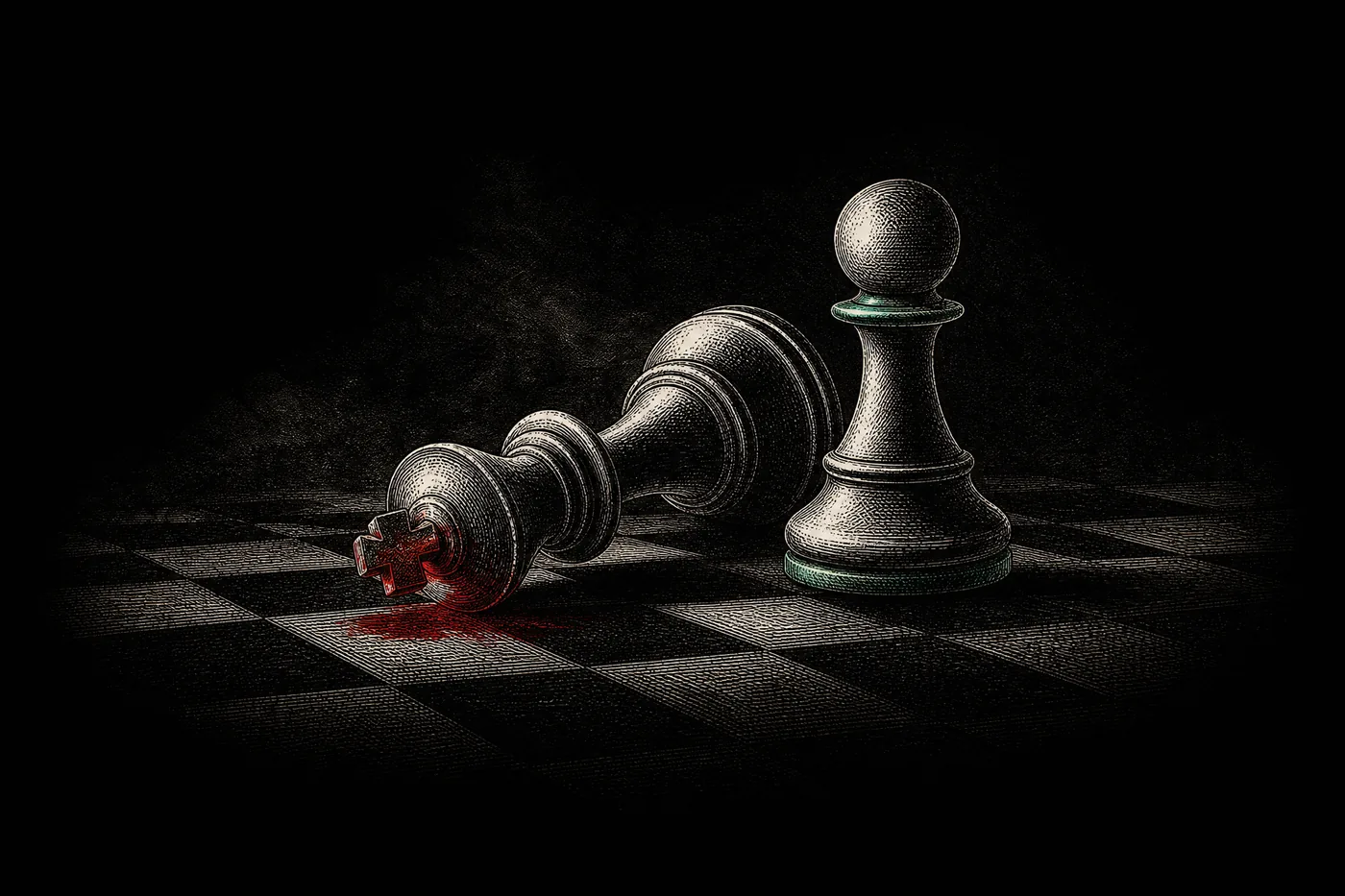
Larsen vs. Spassky, 1970 — a 17-move knockout
Some brilliancies take fifty moves. This one took seventeen. At the celebrated USSR vs. Rest of the World match in Belgrade, 1970, Spassky had the black pieces against Denmark’s Bent Larsen, one of the strongest non-Soviet players alive. Larsen opened with the offbeat 1.b3 (his beloved Nimzo-Larsen Attack), and Spassky pounced.
Spassky pushed his kingside pawns like battering rams straight at Larsen’s king. The attack crashed through with breathtaking speed, and Larsen was forced to resign after just 17 moves — a shockingly short game between two elite grandmasters on the world’s biggest stage. It’s one of the most replayed miniatures in chess history and a showcase of Spassky’s killer instinct when he smelled blood.
The 1969 World Championship — Spassky vs. Petrosian
Spassky’s greatest achievement wasn’t a single game but a whole match. Having narrowly lost to Tigran Petrosian in 1966, he came back in 1969 and won their rematch 12½–10½ to become the 10th World Chess Champion. Beating “Iron Tigran” — famous as the hardest man in the world to beat — took exactly the kind of patient, universal chess Spassky had spent years refining under his coach Igor Bondarevsky. The individual games are a masterclass in how to break down a great defender without overreaching.
The 1972 “Match of the Century” — Spassky vs. Fischer
No collection of Spassky games is complete without the match he lost. In 1972, defending his title against Bobby Fischer in Reykjavík, Spassky went down 12½–8½ in the most-watched chess event ever staged. It was Cold War theatre as much as chess.
But there’s a reason Spassky comes out of that story with his reputation enhanced. After Fischer’s flawless Game 6 — a positional gem — Spassky stood and applauded along with the audience, a champion saluting the brilliance of the man dethroning him. It’s remembered as one of the great acts of sportsmanship in the history of the game, and it tells you as much about Spassky as any of his wins.
Why these games still matter
Spassky’s best games teach a rare lesson: you don’t have to specialize. He could win with a romantic gambit, a lightning attack, a grinding endgame, or sheer defensive resilience. That completeness — and the grace with which he carried both victory and defeat — is exactly why he’s still studied and admired decades later.
FAQ
What is Boris Spassky’s most famous game? Probably his 1960 King’s Gambit win over David Bronstein, which was so striking it was recreated in the James Bond film “From Russia with Love.”
Did Spassky really beat Larsen in 17 moves? Yes — at the 1970 USSR vs. Rest of the World match in Belgrade, playing Black, Spassky crashed through Larsen’s king in just 17 moves.
How did the 1972 Fischer match go? Spassky lost 12½–8½, but he’s fondly remembered for his sportsmanship — including applauding Fischer’s brilliant Game 6.
Where can I play through Spassky’s games move by move? Reliable, well-annotated versions live in the major online databases and on Chess.com and Wikipedia’s game pages, which we’ve cited below.
Keep exploring
Back to Boris Spassky’s profile · his playing style · his openings · his rating history · fun facts · or browse all chess players.
Written and fact-checked by the Chess Lab Academy Editorial Team · Facts verified against Wikipedia, Chess.com, and the 1972 World Championship record, as of July 2026 · Last verified 2026-07-10 · How we verify content.
