
If you had to describe Anatoly Karpov’s chess in one word, it would be control. Where his great rival Garry Kasparov won by making the game as violent and complicated as possible, Karpov did the opposite: he made the game calm, clear, and completely one-sided — in his favor. His nickname, the “boa constrictor,” says it all. He didn’t knock opponents out; he wrapped around them and squeezed until they couldn’t breathe. Let’s break down what actually made him so impossible to beat.
Positional understanding above everything
Karpov’s superpower was his feel for where the pieces belong. Give him a quiet, roughly equal position and he’d find the perfect square for every knight, bishop, and rook — often squares nobody else even considered. He understood the flow of a game so deeply that he could nurse a tiny structural advantage for 40 moves without ever letting it slip.
This is very different from how most club players think. Beginners look for tactics and immediate threats; Karpov looked for long-term pressure. A slightly better pawn structure, a slightly more active piece, a weak square in the enemy camp — he’d collect these little edges and patiently stack them up until they added up to a winning position. By then his opponent was usually so tied down that resistance was pointless.
Prophylaxis: stopping you before you start
Here’s the idea that really defined Karpov’s chess: prophylaxis. It’s a fancy word for a simple concept — preventing your opponent’s plans before they can happen. Instead of asking only “what do I want to do?”, Karpov constantly asked “what does my opponent want to do?” — and then quietly made sure they never got to do it.
Play through his games and you’ll notice something eerie: his opponents never seem to get any counterplay. Every promising idea gets snuffed out a move before it arrives. That’s prophylaxis in action. It’s frustrating and demoralizing to play against, because you can feel your position getting worse without ever getting a chance to fight back. Karpov was arguably the greatest prophylactic player who ever lived.
The art of the squeeze
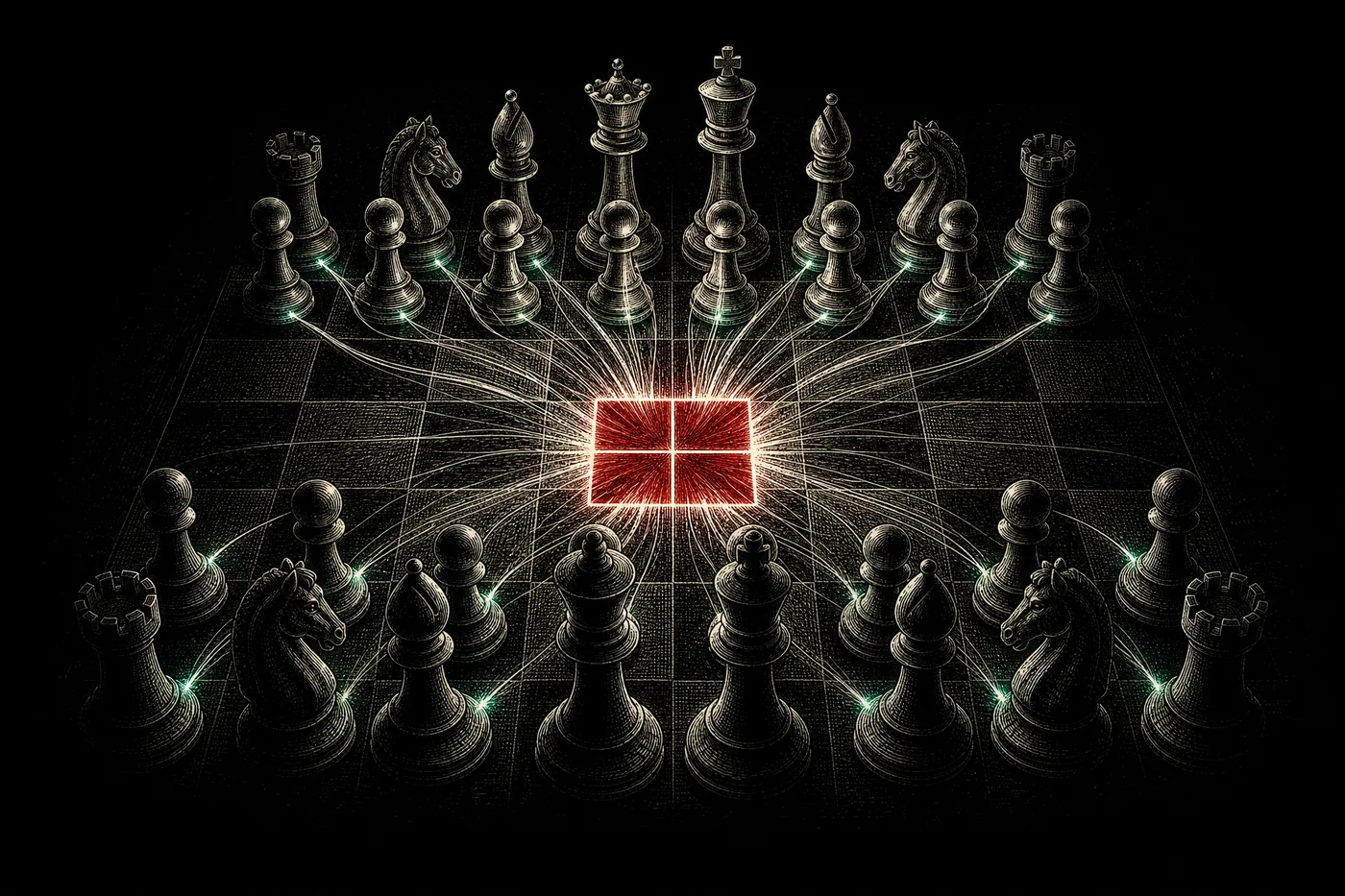
Put positional mastery and prophylaxis together and you get the famous Karpov squeeze. A typical Karpov win looks like this: he gets a small edge out of the opening, trades off the pieces that could give his opponent activity, restricts what’s left, and then slowly improves his position until the opponent is in zugzwang — a situation where any move they make only makes things worse.
His 1974 win over Wolfgang Unzicker is the textbook example, right down to the quiet Ba7 that froze Black’s entire queenside. We break that game down in Karpov’s best games. The scary part is how effortless it looks. There’s no fireworks, no drama — just a champion calmly turning the screws until the game is over.
Low risk, high reward
Karpov was famous for taking minimal risks but reacting mercilessly to the slightest error. He didn’t need to gamble, because his technique was so good that he could beat almost anyone from a tiny advantage. So he played safe, solid chess, avoided unnecessary complications, and simply waited for the opponent to slip — and when they did, he was ruthless.
This is a brilliant lesson for improving players. You don’t need to memorize wild sacrifices to win games. If you play solid moves, keep your position healthy, and pounce on your opponent’s mistakes, you’ll win a lot of chess — the Karpov way.
The hidden attacker
Here’s the twist a lot of people miss: Karpov could attack ferociously when the moment called for it. His brilliant knight sacrifice against Veselin Topalov at Linares 1994 — the game some call “Karpov’s Immortal” — is pure attacking fireworks. He didn’t play like that often, but that’s because he chose not to, not because he couldn’t. When an opponent handed him a target, Karpov could calculate a knockout as sharply as anyone.
That combination — a rock-solid positional foundation plus a hidden attacking gear — is exactly what made him a complete player and a decade-long World Champion.
How he compares
The most fun comparison is with his eternal rival Garry Kasparov. Their contrast is one of the great “opposites” in sports: Karpov the smooth, patient strategist versus Kasparov the explosive, calculating attacker. Their five World Championship matches were a clash of two completely different philosophies of chess, and part of why that rivalry is still so fascinating is that both approaches were world-beating.
It’s also fun to compare Karpov with modern positional greats. When people describe Magnus Carlsen as a “grinder” who wins tiny endgames, they’re describing chess with deep roots in the Karpov style — squeeze the position, deny counterplay, and convert the smallest edge with flawless technique.
Learn from his style
Want to play a little more like Karpov? Start with three habits:
- Ask what your opponent wants. Before every move, spot their plan and consider stopping it. That’s prophylaxis in a nutshell.
- Value small, permanent advantages. A better pawn structure or a more active piece is worth more than a flashy but unclear attack.
- Be patient. You don’t have to win in 20 moves. Improve your worst piece, keep the pressure on, and let your opponent crack.
Study his best games to see these ideas in action, and consider adopting one of his solid, classical openings to reach the kind of positions where technique wins.
FAQ
What kind of player was Anatoly Karpov? A supreme positional player. He specialized in prophylaxis (preventing his opponent’s plans), took minimal risks, and slowly squeezed tiny advantages into wins — earning the nickname the “boa constrictor.”
Was Karpov an attacking or positional player? Mainly positional — but he was a complete player who could attack brilliantly when a position called for it, as his famous Linares 1994 win over Topalov proves.
What is prophylaxis in chess? It’s the technique of preventing your opponent’s plans before they happen. Karpov was perhaps the greatest prophylactic player ever — his opponents often felt they could never generate any counterplay against him.
Keep exploring
More Karpov: his best games · his openings · his rating history · fun facts & records · or the full Anatoly Karpov profile.
Written and fact-checked by the Chess Lab Academy Editorial Team · Facts verified against Wikipedia, his FIDE profile, and Chess.com, as of July 2026 · Last verified 2026-07-10 · How we verify content.
