

The Sveshnikov is sharp and concrete, which is a polite way of saying it’s easy to walk into something nasty if you don’t know the tactical points. The good news: there aren’t many, and once you know them cold, they protect you both ways. Below are the real Sveshnikov traps that actually work — with the exact moves, the honest engine verdict, and (crucially) the defense, because a “trap” you can’t punish or escape is just a story.
The 30-second version
- The Nd6+ intrusion is the big one: if Black forgets 6…d6, White’s knight leaps to d6 with check and wins the bishop pair.
- In the 9.Nd5 line, the g5-bishop’s pin sets a one-move queen trap — the reflex …Nd4?? hangs the queen to Bxd8.
- If White gets greedy on b5, Black can win a piece — but the deliberate Bxb5 sacrifice is a different, sound idea.
Step through the line
Move by move — press Next to advance, Back to rewind.
The Nd6+ intrusion — the tactical reason 6...d6 is basically forced. 6...Be7? 7.Nd6+! leaves White clearly better.
Trap #1: The Nd6+ intrusion (why 6…d6 is not optional)
This is the Sveshnikov trap, and it’s the tactical reason the main line looks the way it does. After 1.e4 c5 2.Nf3 Nc6 3.d4 cxd4 4.Nxd4 Nf6 5.Nc3 e5 6.Ndb5, that knight on b5 is staring at the d6-square.
The whole point of Black’s next move is to stop 7.Nd6+. If Black gets casual and develops naturally with, say, 6…Be7?, White pounces:
6…Be7? 7.Nd6+!
Black must take: 7…Bxd6 8.Qxd6, and White has won the bishop pair and jammed a queen deep into Black’s position. We checked it with the engine: White is clearly better here — around +2. That’s not a forced mate and not “winning” outright, but it’s a big, lasting positional edge that Black would hate to defend.
And trying to keep the bishop with 7…Kf8 doesn’t help (the king can’t step to e7 — the bishop is sitting there): after 7…Kf8 the engine still has White clearly better, around +2, with Black’s king stuck in the centre and castling rights gone — essentially the same story as 7…Bxd6. So there’s no escape: once you allow Nd6+, you’re just worse.
The honest defense: play 6…d6. That’s it. It covers d6 forever, at the cost of accepting the backward d-pawn — which is the deal the whole opening is built on. This “trap” is really a rule: in the Sveshnikov, your move six is 6…d6, no exceptions. (Note: 6…a6? also loses time to 7.Nd6+ Bxd6 8.Qxd6, giving White the bishop pair and about a +1 edge — same lesson, slightly smaller bill.)
Trap #2: The g5-bishop pin (a one-move queen trap)
This one lives in the 9.Nd5 line and catches players who reach for a “natural” knight jump. After 8…b5 9.Nd5, the bishop on g5 is pinning Black’s f6-knight to the queen on d8.
Black can grab the d5-knight with 9…Nxd5 10.exd5 — but now the d5-pawn attacks Black’s c6-knight and, with the f6-square vacated, the g5-bishop is suddenly eyeing the d8-queen. Black faces a double problem. The tempting, thematic reply is to jump the attacked knight to its dream square: 10…Nd4?? — and it loses on the spot to 11.Bxd8!
The knight jump ignored the threat to the queen, and White just takes it. Engine verdict: winning for White, up a clean queen for very little.
The honest defense: if you play 9…Nxd5 10.exd5, the right move is 10…Qxg5! — Black snatches the g5-bishop, resolves the pin, and is actually doing well (the engine even prefers Black by around a pawn after 11.dxc6 Be6). Or, simplest of all, avoid the whole thing: the main move is 9…Be7 first, breaking the pin before doing anything else. The trap only catches players who grab on d5 and then forget why the bishop was on g5.
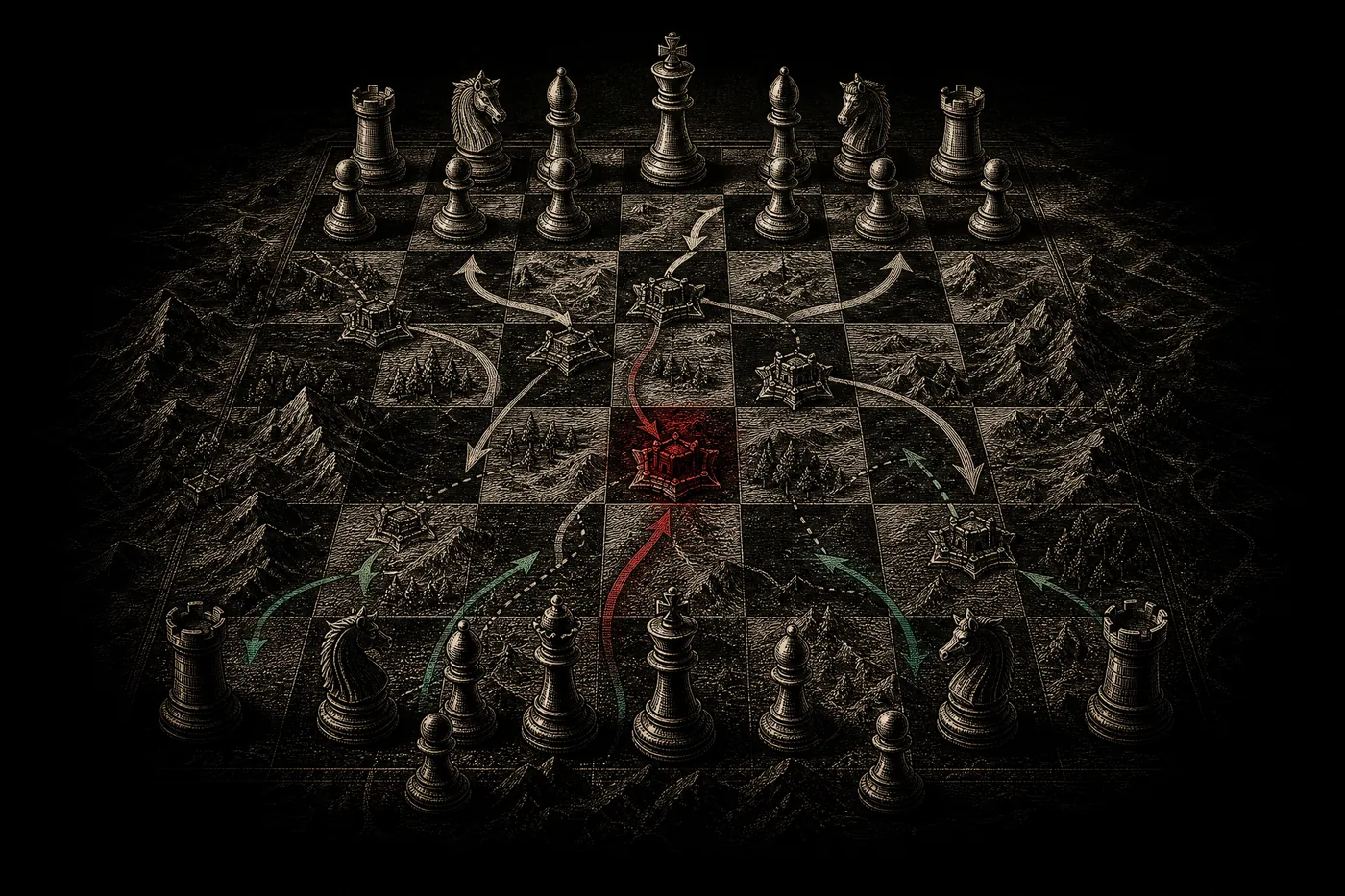
Trap #3: The greedy b5 grab (a trap Black can spring)
The Sveshnikov gives White a lot of tempting-looking pawns to snatch — b5 especially. Most of the time, grabbing them is a mistake, and Black gets to punish it. Take the main line 9.Bxf6 gxf6 10.Nd5 f5 11.c3 Bg7, and now suppose White gets greedy with 12.Nxb5??, trying to bag a free pawn:
12.Nxb5?? axb5 13.Bxb5
White has traded a knight for two pawns at best and left Black with a huge, active position — …Bb7 hits the d5-knight and the long diagonal, and Black is clearly better (around −1.3, a piece for a pawn with the initiative). This is the reward for knowing your structure: when White reaches out to grab material in the Sveshnikov, it’s usually you who ends up ahead.
The honest caveat — don’t confuse it with the real sacrifice. There’s a deliberate piece sac that looks similar: in the 9.Bxf6 line, 11.Bxb5!? (bishop, not knight) axb5 12.Nxb5 is a genuine, well-known sacrifice where White gives a bishop for two pawns plus two monster knights on b5 and d5. The engine calls that one roughly equal — it’s sound compensation, not a blunder. The lesson: a piece sac backed by two strong knights and open lines can be fine; a lazy knight-for-pawn grab that leaves your pieces loose is just losing material.
How to use these traps without becoming the victim
Every trap here cuts both ways, and the same alertness protects you on both sides of the board:
- Always play 6…d6 first. Before anything else on move six, shut down Nd6+. This single habit removes the biggest Sveshnikov danger entirely.
- Respect the g5-bishop. Whenever it’s pinning your f6-knight, ask “if this knight moves, is my queen safe?” before you jump it anywhere — especially to d4.
- Let White be the greedy one. In the Sveshnikov, snatching pawns usually backfires. If White reaches for b5 or e5 with a piece, look hard for the refutation before you assume it’s just a lost pawn.
- Know the difference between a sac and a blunder. Bxb5 (with follow-up Nxb5) is a real idea; Nxb5 grabbing a pawn is not. The pieces left on the board tell you which is which.
Master those four and you’ll spring the traps that are there — and calmly sidestep the ones aimed at you.
Keep sharpening
- The Sveshnikov variations — where these traps live
- The main line move by move (why 6…d6 is forced)
- How to beat the Sveshnikov (White’s side)
- Tactics training — the engine behind every trap
- Back to the Sveshnikov overview
- Up to the full Sicilian Defense
FAQ
What’s the most important Sveshnikov trap to know? The Nd6+ intrusion. After 6.Ndb5, White threatens 7.Nd6+, which wins the bishop pair for a clear edge. That’s the entire reason 6…d6 is essentially forced.
Does the 9…Nxd5 line really lose? Only if Black follows up carelessly. After 10.exd5, the move 10…Nd4?? hangs the queen to 11.Bxd8. But 10…Qxg5! is fine for Black, and 9…Be7 avoids the issue altogether. The pin, not the capture, is the trap.
Can Black trap White in the Sveshnikov? Yes — greedy pawn grabs like 12.Nxb5?? backfire, leaving Black up a piece for a pawn. Just don’t confuse that blunder with the sound sacrifice 11.Bxb5!?, which gives real compensation.
Are Sveshnikov traps reliable at higher levels? The Nd6+ point is universal — every strong player knows to play 6…d6. The others punish specific careless moves. Knowing them mostly keeps you safe, which is the real value.
Written and fact-checked by the Chess Lab Academy Editorial Team (AI-assisted, human-edited) · Lines checked against mainstream opening theory and verified with Stockfish · ECO B33 · Last verified 2026-07-11 · Sources · How we verify content.
