

The best way to understand the Scandinavian Defense is to see how strong players handle each of its three faces — the active 3…Qa5 main line, the reliable 3…Qd6 system, and the piece-driven Modern Variation. Below are three instructive model games (verified legal, engine-checked) showing the typical ideas and the practitioners who made each line respected. Think of them as templates for your Scandinavian, not memory tests.
The three model games
- The classic Qa5 attack — opposite-side castling and a kingside push.
- The Tiviakov Qd6 system — flexible, reliable, hard to crack.
- The Modern Variation — recapture with the knight and play with the pieces.
Game 1: The classic 3…Qa5 attack
This is the Scandinavian’s old-school personality: develop the active setup, castle on opposite wings, and throw pawns at the enemy king. Here Black’s queen sits on a5, the bishops come out to active squares, and the game becomes a race.
Step through the line
Move by move — press Next to advance, Back to rewind.
A model 3...Qa5 game — opposite-side castling and a kingside pawn storm brewing.
What to learn: notice the clean Scandinavian recipe in action. Black develops the light-squared bishop outside the chain (5…Bf5) before locking it with 6…e6, drops the queen safely to c7 via the …c6 escape hatch, and trades off the pinned c3-knight with …Bb4xc3. Once White castles long with 11.0-0-0 and Black short, you get the classic opposite-wings fight — both sides race their pawns (here White starts rolling with 14.f4 and 15.h4). The takeaway: the Scandinavian isn’t always quiet. With opposite castling it can become a sharp attacking battle, and Black’s solid structure is a great base to attack from.
Game 2: The Tiviakov 3…Qd6 system
Sergei Tiviakov is the modern grandmaster most associated with the Scandinavian — he made the 3…Qd6 line a fully respected, rock-solid weapon and scored a remarkable run of games with it. This model game shows why the queen on d6 is so resilient: it dances around White’s piece pressure without ever getting trapped.
Step through the line
Move by move — press Next to advance, Back to rewind.
The Qd6 system — White probes with active knights, but Black's queen calmly sidesteps every threat.
What to learn: watch how flexible the queen is. White tries to harass it with 6.Ne5 and 7.Nc4, but Black simply re-routes — …Qc7, and when pressed again, …Qd8 — keeping the position sound the whole way. This is the heart of the Qd6 philosophy: the queen doesn’t commit to a fight, it just stays safe and lets Black finish development with …c6, …Nbd7, …Bf5/…g6. It’s the most practical Scandinavian — minimal theory, maximum solidity. If you want one reliable system for every game, this is the one to copy.
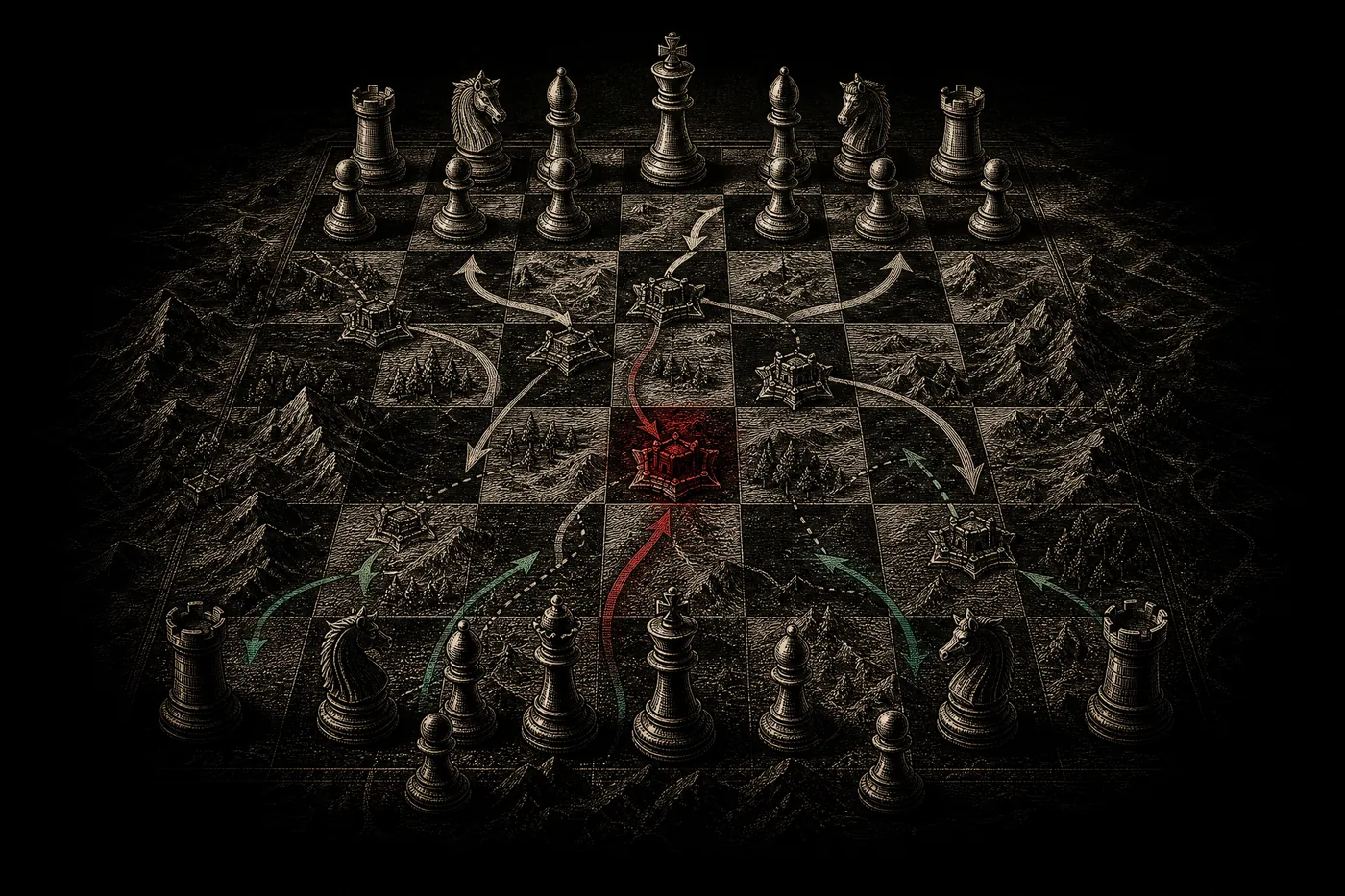
Game 3: The Modern Variation (2…Nf6)
Don’t want to bring the queen out at all? The Modern Variation recaptures on d5 with the knight instead. This model game shows the piece-active, fianchetto style that makes the line feel almost like a King’s Indian or Pirc.
Step through the line
Move by move — press Next to advance, Back to rewind.
The Modern Variation — Black recaptures with the knight and fianchettoes for active piece play.
What to learn: there’s no early queen sortie here, so the tempo issue of the queen lines simply doesn’t exist. Black recaptures with 3…Nxd5, lets White grab space with 4.c4 Nb6, then develops actively with …g6, …Bg7, …Nc6, …Bf5. The trade-off is honest: White keeps a bit more central space, but Black gets free, harmonious development and a flexible, fighting position. Pick this when the early …Qxd5 makes you uneasy and you’d rather play with the pieces.
How to study a master game (without memorizing it)
A common beginner mistake is to memorize a master game move for move. Don’t. Instead, watch for the recurring ideas that show up across all three games above:
- Where does the light-squared bishop go? Notice it almost always gets outside the pawn chain (to f5 or g4) before Black plays …e6. That single habit is worth more than any memorized line.
- Where does the queen find safety? In the Qa5 and Qd6 games, track how the queen calmly re-routes (…Qc7, …Qd8) whenever it’s nudged. Safe, not stuck.
- What does Black do with the …c6 square? It’s the escape hatch and a structural anchor. Watch how often it quietly does both jobs.
Replay each game twice — once just enjoying the flow, once pausing to ask “why this move?” at each turn. That’s how a model game becomes your understanding instead of someone else’s memory.
A note on the Scandinavian’s reputation
It’s worth being honest about why you don’t see the Scandinavian headlining world-championship matches the way you see the Ruy Lopez or the Sicilian. At the very top, elite players as Black usually want openings that fight hard for the full point, and the Scandinavian is content with a sound, comfortable equality. That’s not a flaw — it’s a design choice. The opening’s whole appeal is reliability over ambition.
But “not a main-line workhorse at the top” is very different from “not good.” As a surprise weapon, the Scandinavian is genuinely respected — strong grandmasters reach for it precisely because opponents rarely prepare for it, and a well-played Scandinavian is rock-solid. The three games above show the full picture: a sound opening that can grind, attack, or simplify depending on what the position asks for. That versatility, plus its low theoretical upkeep, is exactly why it has quietly endured for five centuries.
What these three games teach together
- One opening, three moods. The same first moves produce a sharp opposite-castling attack (Qa5), a serene positional system (Qd6), and a piece-active fianchetto game (Modern). That range is exactly why the Scandinavian is such a friendly, durable choice.
- Queen safety is a skill, not a fear. In two of three games the queen comes out early — and in both, careful re-routing (…Qc7, …Qd8) keeps it completely safe.
- Solidity is a launchpad. A sound structure isn’t just for defense — it’s the platform Black attacks from when the chance comes.
Want to play these structures yourself? Start with the move-by-move main line, then explore the full variations.
FAQ
Who is the most famous Scandinavian Defense player? Grandmaster Sergei Tiviakov is the modern specialist — he popularized the 3…Qd6 line and scored an outstanding run with it. The Scandinavian has also been used as a surprise weapon by top players including Magnus Carlsen.
Why is the 3…Qd6 system so admired? Because the queen on d6 is remarkably hard to trap or harass — Black can re-route it (…Qc7, …Qd8) while completing a solid setup with very little theory.
Is the Scandinavian only a drawing weapon? No — with opposite-side castling (as in the Qa5 attacking game above) it can become a sharp race. The solid structure is a strength to attack from, not just to defend with.
Can I play the Scandinavian without bringing my queen out? Yes — the Modern Variation (2…Nf6) recaptures on d5 with the knight, so there’s no early queen move at all.
Keep climbing
Studying model games is one of the fastest ways to improve — but it lands better once you know the opening principles and the main-line plans. Loop back to the Scandinavian overview or browse the whole openings hub for more, and compare it with the solid Caro-Kann.
Written and fact-checked by the Chess Lab Academy Editorial Team (AI-assisted, human-edited) · Lines checked against mainstream opening theory and verified with Stockfish 17 · ECO B01 · Last verified 2026-06-25 · Sources · How we verify content.
