

The best way to understand the Ruy Lopez is to watch the legends play it. The Spanish has produced some of the most instructive games in chess history — from wild attacking gambits to the slowest, most beautiful positional squeezes ever recorded. Here are three you should know, each teaching a different face of the opening.
The three games
- Capablanca vs Marshall, 1918 — the birth of the Marshall Attack (and a defensive masterclass).
- Karpov vs Unzicker, 1974 — the Spanish Torture, perfected.
- Lasker vs Capablanca, 1914 — the Exchange Variation endgame, demystified.
Game 1: Capablanca vs Marshall, New York 1918
The story goes that Frank Marshall had been saving his pawn-sacrifice idea for years, waiting to spring it on the great José Raúl Capablanca. He finally unleashed it here with 8…d5!? — the move that gave the Marshall Attack its name.
Step through the line
Move by move — press Next to advance, Back to rewind.
Capablanca vs Marshall, New York 1918 — the famous debut of the Marshall Attack.
What to learn: Marshall threw everything at Capablanca’s king — sacrifices, checks, a swarming attack. And Capablanca defended. With ice-cold calm he marched his king up the board (18.Kf1, 20.Ke2, 23.Kd3, 24.Kc2), held everything together, and converted the extra material into a winning passed b-pawn that promoted. The lesson is twofold: the Marshall is genuinely dangerous, and accurate defense beats a sound-looking attack when there’s no forced mate. Even today, the Marshall is so respected that many White players dodge it with “Anti-Marshall” moves (see our variations guide).
Game 2: Karpov vs Unzicker, Nice Olympiad 1974
If you ever want to feel what the “Spanish Torture” means, this is the game. Anatoly Karpov takes the Closed Ruy Lopez and squeezes Wolfgang Unzicker so slowly and so completely that Black ends up with every single piece jammed onto the back two ranks, unable to move.
Step through the line
Move by move — press Next to advance, Back to rewind.
Karpov vs Unzicker, Nice 1974 — a textbook Spanish squeeze, considered one of the finest Ruy Lopez games ever.
What to learn: notice how little Karpov rushes. He plays the classic plan — c3, d4, Nbd2–f1–g3 — locks the queenside with b4, and then just keeps improving. The famous bishop maneuver Bc2–b1 parks the bishop behind the queen, building a battery aimed at Black’s king. Unzicker never blundered; he was simply out-maneuvered until he had no moves left. This is the Ruy Lopez’s whole philosophy in one game: patience is a weapon. Study the slow buildup, not flashy tactics.
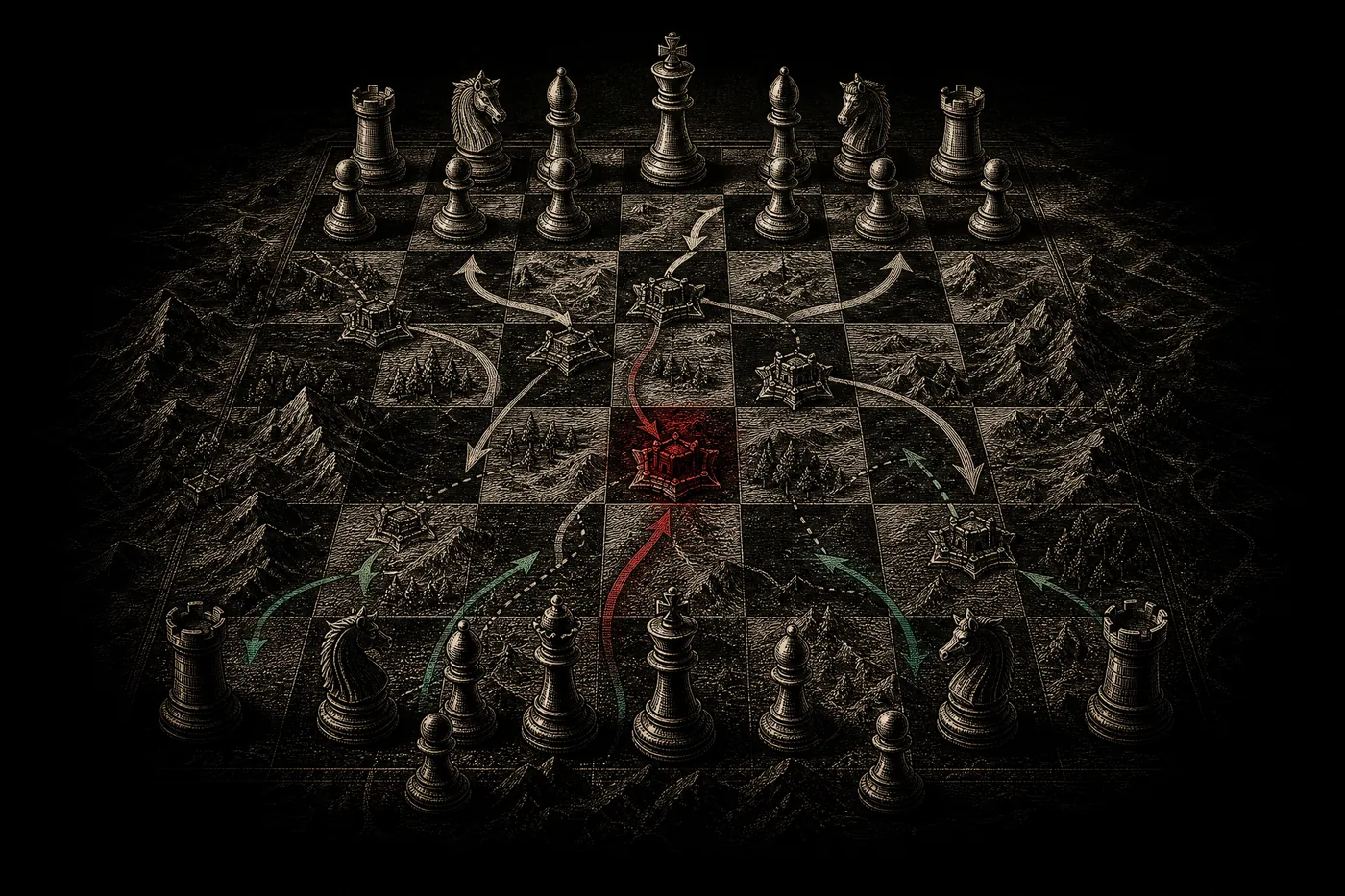
Game 3: Lasker vs Capablanca, St Petersburg 1914
Now the Exchange Variation (4.Bxc6). Emanuel Lasker famously chose this quiet line against Capablanca when he needed a win — the conventional wisdom said the Exchange was drawish, so Capablanca relaxed. Big mistake.
Step through the line
Move by move — press Next to advance, Back to rewind.
Lasker vs Capablanca, St Petersburg 1914 — the Exchange Variation turned into a winning endgame.
What to learn: Lasker traded queens early (6.Qxd4 Qxd4 7.Nxd4) and steered into exactly the kind of endgame the Exchange Variation is built for. With the knight planted on the dominant e6 outpost (16.Ne6!) and a kingside pawn majority rolling, he ground out a win that helped him take the tournament. The takeaway: “drawish” openings still have poison. The Exchange Variation gives White a healthy structure and concrete endgame plans — pick it when you want a clean, low-theory game with real winning chances.
What these three games teach together
- The opening is flexible. One opening produced a wild attacking gambit (Marshall), a glacial positional squeeze (Karpov), and a clean technical endgame (Lasker). That range is exactly why the Ruy Lopez is so beloved.
- Patience and structure win. In two of three games, the winner barely “attacked” at all — they just accumulated tiny advantages.
- Defense is a skill. Capablanca’s defense against the Marshall is as instructive as any attack.
Want to play these structures yourself? Start with the move-by-move main line, then explore the full variations.
FAQ
What is the most famous Ruy Lopez game? Capablanca vs Marshall (1918) is among the most famous — it introduced the Marshall Attack. Karpov vs Unzicker (1974) is the most celebrated example of the positional “Spanish squeeze.”
Why is Karpov vs Unzicker so admired? Because Karpov won without any tactics — pure, patient maneuvering until Black’s pieces were completely paralyzed. It’s a model game for the Closed Ruy Lopez plan.
Did the Marshall Attack work in its debut game? No — Capablanca defended accurately and won. But the idea was so strong that the Marshall Attack became (and remains) a respected weapon for Black.
Is the Exchange Variation really drawish? It has a quiet reputation, but as Lasker vs Capablanca shows, White’s structural edge can produce real winning chances in the endgame.
Keep climbing
Studying master games is one of the fastest ways to improve — but it lands better once you know the opening principles and the main-line plans. Loop back to the Ruy Lopez overview or browse the whole openings hub for more.
Written and fact-checked by the Chess Lab Academy Editorial Team (AI-assisted, human-edited) · Lines checked against mainstream opening theory and verified with Stockfish 17 · ECO C60–C99 · Last verified 2026-06-25 · Sources · How we verify content.
