

The Philidor Defense is what you get after 1.e4 e5 2.Nf3 d6 — one of the oldest, most solid ways to meet 1.e4. When White’s knight jumps to f3 and attacks the e5-pawn, most players defend it with a piece (2…Nc6). The Philidor does something different: it props up e5 with the humble …d6 pawn. The result is a compact, sturdy little fortress that’s hard to break and refreshingly light on theory.
The 30-second version
- Moves: 1.e4 e5 2.Nf3 d6 · ECO: C41 · You play it as: Black.
- The idea: defend e5 with the d6-pawn, keep a solid-if-cramped structure, and untangle with the modern Hanham setup (…Nbd7, …Be7, …c6, …Qc7).
- The trade-off: rock-solid and low-theory, but a little passive — Black often starts slightly cramped and has to free up.
- Best for: players who want a calm, sturdy, surprise-friendly alternative to the usual 1…e5 main lines.
Step through the line
Move by move — press Next to advance, Back to rewind.
The Philidor Defense — Black defends the e5-pawn with a pawn instead of a piece.
What’s the big idea behind the Philidor?
The whole point lives in move two. After 1.e4 e5 2.Nf3, White attacks e5. Black has to defend it, and the choice of how defines the game:
- 2…Nc6 develops a piece and fights for the center — that’s the road to the Italian Game, the Ruy Lopez, and the Scotch.
- 2…d6 — the Philidor — instead defends e5 with a pawn.
Defending with a pawn is solid and stubborn, but it has a cost: the d6-pawn slightly cramps Black’s own position and blocks in the dark-squared bishop for a while. So the Philidor is a deliberate trade — rock-solid structure in exchange for a touch of passivity.
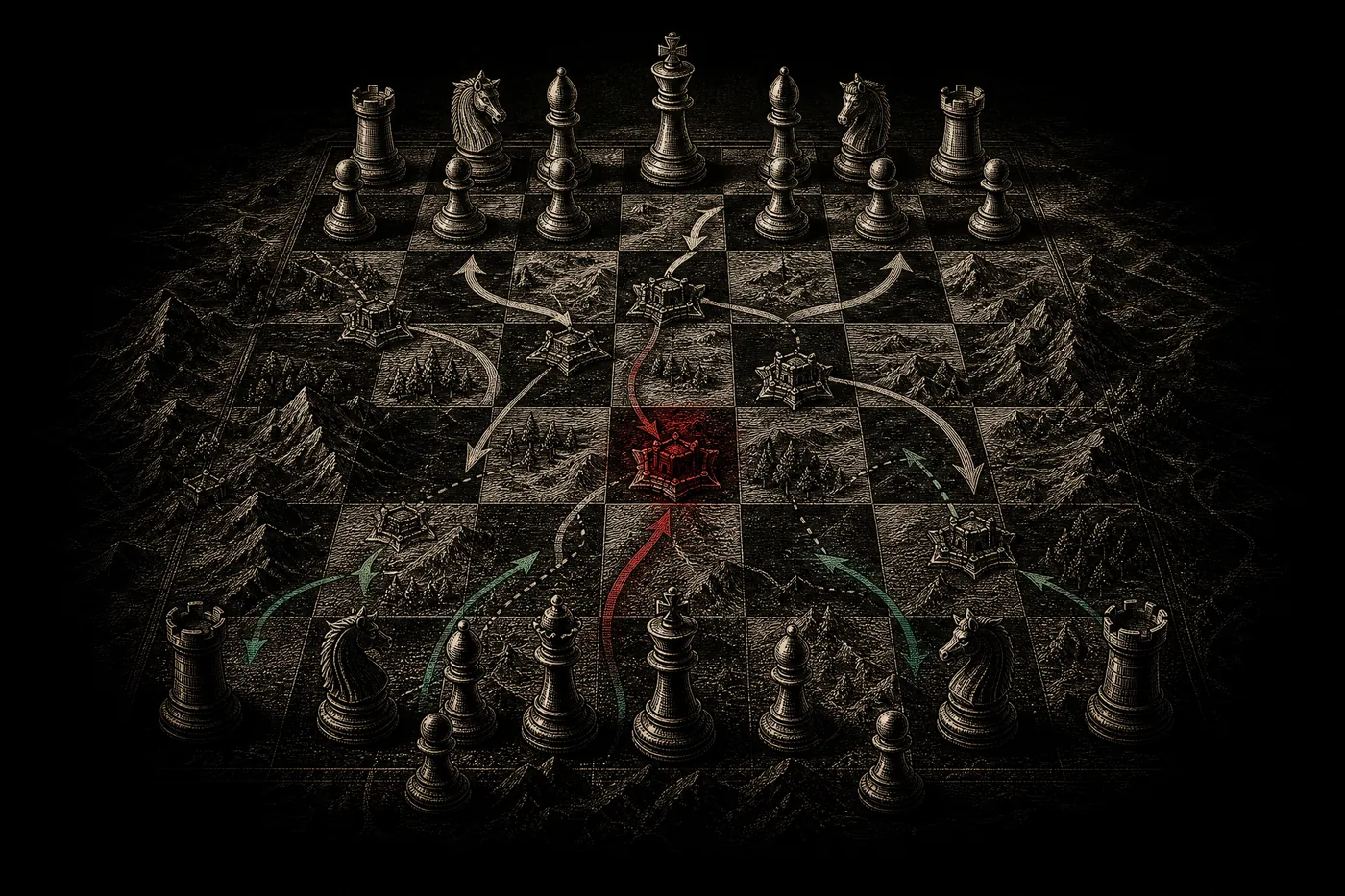
The modern way to handle that passivity is the Hanham setup: Black plays …Nf6, …Nbd7, …Be7, …c6, and often …Qc7, building a compact, hard-to-crack pawn-and-piece formation. Everything is defended, nothing is loose, and Black just sits tight and waits for a good moment to break with …d5 or …exd4. It’s chess as patient defense — and it suits players who like to be the calm one.
What are the main variations?
After 1.e4 e5 2.Nf3 d6, White almost always plays 3.d4, hitting the e5-pawn a second time. How Black meets that defines the whole game. For the full tour, see our variations guide.
The Hanham Variation — the modern main road
The recommended modern treatment. Black keeps the tension and develops behind the pawns: 3…Nf6 4.Nc3 Nbd7, then …Be7, …c6, and …0-0. The knight goes to d7 (not c6) specifically so it supports both e5 and a later …d5 break. It’s the safest, most respected way to play the Philidor.
The Exchange (3…exd4)
Black can release the tension immediately with 3…exd4 4.Nxd4. This is solid and simple — Black gives White a little more central space but gets an easy, structurally clean game (the Antoshin Variation is a well-known way to handle it with …Be7 and quick castling).
The modern move order (and the “Lion”)
Many players reach Philidor structures through a different door — 1.e4 d6 2.d4 Nf6 3.Nc3 e5, transposing into the same setup while dodging some of White’s sharpest tries. The closely related Lion is a modern, flexible system built on the same …d6/…Nf6/…Nbd7 skeleton.
What are the plans for both sides?
For Black:
- Build the Hanham setup: …Nf6, …Nbd7, …Be7, …c6, …0-0, often …Qc7.
- Keep everything compact and defended — don’t let White’s space turn into an attack.
- Free the position at the right moment with …d5 or …exd4.
For White:
- Use the space advantage the big d4/e4 center provides.
- Develop naturally (Nc3, Bc4 or Be2, 0-0) and try to prove Black is cramped.
- Watch for chances to open the center while Black is still untangling.
Strengths and weaknesses
Why you’ll love it:
- Solid and stubborn. The Hanham structure is genuinely tough to break down.
- Low theory. You learn one compact setup and play it against most of White’s tries — great if you don’t want to memorize reams of lines.
- A real surprise weapon. Far fewer opponents have studied it deeply than the Italian or Ruy Lopez.
The catch:
- A bit passive. Black often starts cramped and spends the early game untangling rather than attacking.
- Careless play gets punished fast. The old lines hide some sharp traps (see the traps page) — the Philidor is forgiving if you know the move order.
Who plays the Philidor?
It’s named after François-André Danican Philidor, the strongest player of the 18th century, who championed the idea that pawns are “the soul of chess.” For a long time the Philidor was considered slightly passive and fell out of top-level fashion. But it never disappeared — modern grandmasters use it as a surprise weapon at the highest level precisely because it’s solid and well off the beaten path, and engines confirm the Hanham structure holds up just fine.
A fun bit of history
Philidor wasn’t just a chess player — he was a celebrated opera composer in 18th-century Paris. His 1749 book L’analyze des échecs was one of the most influential chess works ever written, and his famous line “the pawns are the soul of chess” still gets quoted today. The defense that bears his name is the perfect expression of that philosophy: lean on a solid pawn structure, and let it carry you. (One of the most famous games ever played — Morphy’s “Opera Game” — actually came from a Philidor; more on that in our master games guide.)
Is the Philidor right for you?
If you like solid, low-stress, low-theory chess and don’t mind being a touch cramped early, the Philidor is a great pick — especially as a surprise weapon. If you want something sharper and more active as Black, the Italian Game (via 2…Nc6) or the symmetrical Petrov Defense might suit you better, and the Pirc Defense is its close cousin in spirit. For the full honest verdict, see is the Philidor Defense good?
Explore the Philidor Defense
- Philidor Defense: the main line move by move
- Philidor variations (Hanham, Exchange, Lion & more)
- Philidor traps (including the Légal Trap)
- The Philidor Defense for beginners
- Best Philidor master games (including Morphy’s Opera Game)
- How to beat the Philidor Defense (as White)
- Is the Philidor Defense good?
Back to the full openings hub.
FAQ
Is the Philidor Defense a good opening for Black? Yes — it’s a solid, sound, low-theory reply to 1.e4. It’s a touch passive and gives White some space, but the modern Hanham setup is genuinely hard to crack and makes a great surprise weapon.
Why does Black play 2…d6 instead of 2…Nc6? Both defend the e5-pawn. 2…Nc6 uses a piece and fights actively for the center; 2…d6 (the Philidor) uses a pawn for a more solid but slightly cramped structure. It’s a trade of activity for stubborn solidity.
Is the Philidor for White or Black? It’s a Black defense — Black chooses it by answering 2.Nf3 with 2…d6. White then usually plays 3.d4 and tries to use the extra space.
What is the Hanham Variation? It’s the modern main line of the Philidor: Black sets up with …Nf6, …Nbd7, …Be7, …c6, and …0-0 (often …Qc7), building a compact, well-defended formation. It’s the safest way to play the opening.
Is the Philidor good for beginners? Yes — it’s principled and low-theory, and you use a similar setup against most of White’s tries. The one thing to learn is the move order, so you sidestep the classic traps (see our for beginners guide).
Keep climbing
New to openings in general? Ground yourself in the opening principles first — the Philidor is those ideas applied to a super-solid, slightly cramped setup. Then compare it with its cousin the Pirc Defense on the openings hub.
Written and fact-checked by the Chess Lab Academy Editorial Team (AI-assisted, human-edited) · Lines checked against mainstream opening theory and verified with Stockfish 17 · ECO C41 · Last verified 2026-06-25 · Sources · How we verify content.
