

You already know the French Advance grabs space and locks the center. Now let’s actually play it, one move at a time. The Advance is a plan opening, not a memorization opening — so instead of drilling twenty forcing moves, we’ll walk the main line and explain the purpose of each move. Do that once and the whole thing clicks. (Every position below has been engine-checked.)
The line we’re learning 1.e4 e6 2.d4 d5 3.e5 c5 4.c3 Nc6 5.Nf3 Qb6 6.Be2 Nge7 7.Na3 cxd4 8.cxd4 Nf5 Black sieges d4, then regroups the knight to f5 to hit it again.
Step through the line
Move by move — press Next to advance, Back to rewind.
The French Advance main line all the way to the ...Nge7–f5 regrouping — Black's knight lands on f5 to hit d4 a fourth time.
Move by move
1.e4 e6 2.d4 d5 — the French handshake
White grabs the center; Black answers 1…e6 and then strikes with 2…d5, hitting e4 head-on. White now has to decide what to do with the e4-pawn — and in the Advance, White commits it forward.
3.e5 — the point of no return
3.e5 is the move that names the variation. White pushes past instead of trading (3.exd5) or defending (3.Nc3/3.Nd2), and the center locks. Two things happen at once:
- White gains a big space advantage and a cramping pawn on e5.
- The pawns form a chain — d4 supports e5 — and that chain has a base on d4 that will be under fire for the rest of the game.
3…c5 — strike the base
Textbook. The chain’s base is d4, so Black hits it immediately with 3…c5. This is the heartbeat of the whole opening — it’s why the French Advance is such a clean lesson in pawn-chain strategy.
4.c3 — White props up d4
White refuses to give up the center and supports d4 with 4.c3. Now d4 is defended, so Black needs more attackers. (White can also gambit the pawn with 4.Nf3 and later Bd3 — that’s the Milner-Barry family on the variations page — but 4.c3 is the backbone.)
4…Nc6 — a second attacker, for free
4…Nc6 develops a piece and piles a second attacker onto d4. One move, two jobs. This is the efficiency the French rewards.
5.Nf3 — defend and prepare to castle
White brings the knight to f3, adding a second defender to d4 and getting ready to castle. The tension on d4 is now real: two attackers (c5-pawn, c6-knight) versus two defenders (c3-pawn, f3-knight).
5…Qb6 — the heavy artillery
The signature French Advance move. 5…Qb6 does two big jobs:
- It adds a third attacker to d4.
- It leans on the b2-pawn behind White’s lines.
This is a genuine tabiya — a crossroads reached in thousands of games. The engine calls it roughly equal (a small, normal White space edge). One warning: the b2-pawn is not a free lunch. It’s guarded by the c1-bishop, so grabbing it too early can cost you your queen — more on that on the traps page.
6.Be2 — the calm main line
White has choices here (the gambit 6.Bd3, the space-grabbing 6.a3), but the solid, classical developing move is 6.Be2. White simply defends, gets ready to castle, and holds the center the sturdy way.
6…Nge7 — the knight takes the scenic route
Why not 6…Nf6? Because e5 covers f6 — the pawn White pushed on move three takes that square away. So Black’s king’s knight goes the other way: 6…Nge7, heading for the beautiful f5-square.
7.Na3 — White reroutes too
7.Na3 looks odd, but it’s a standard idea: the knight is heading for c2, where it will defend d4 a third time and support a later b4 or Ne3. White is stacking up defenders of d4 to match Black’s attackers.
7…cxd4 8.cxd4 — clarifying the base
Black trades on d4, and after 8.cxd4 White has an isolated-ish d-pawn that’s now the sole survivor of the chain’s base — a permanent target. The tension resolves, but the pressure doesn’t.
8…Nf5 — the knight lands on its dream square
8…Nf5 completes the plan. From f5 the knight hits d4 a fourth time and also eyes the fine e3-square. Black has maximum pressure on d4 with fully coordinated pieces, and the position is balanced.
The tabiya’s two futures: the …f6 break and the bad bishop
The d4 siege is only half of Black’s game. Two more ideas define the middlegame:
The …f6 break. The second thematic break attacks the head of the chain, e5. Played at the right moment — once developed and castled — …f6 chips at White’s space and frees Black’s pieces. But timing is everything: play …f6 too early, before you’re ready, and White’s pieces come pouring through the opened lines for a comfortable pull (the engine will happily hand White a real edge if you break prematurely). Prepare it, then play it.
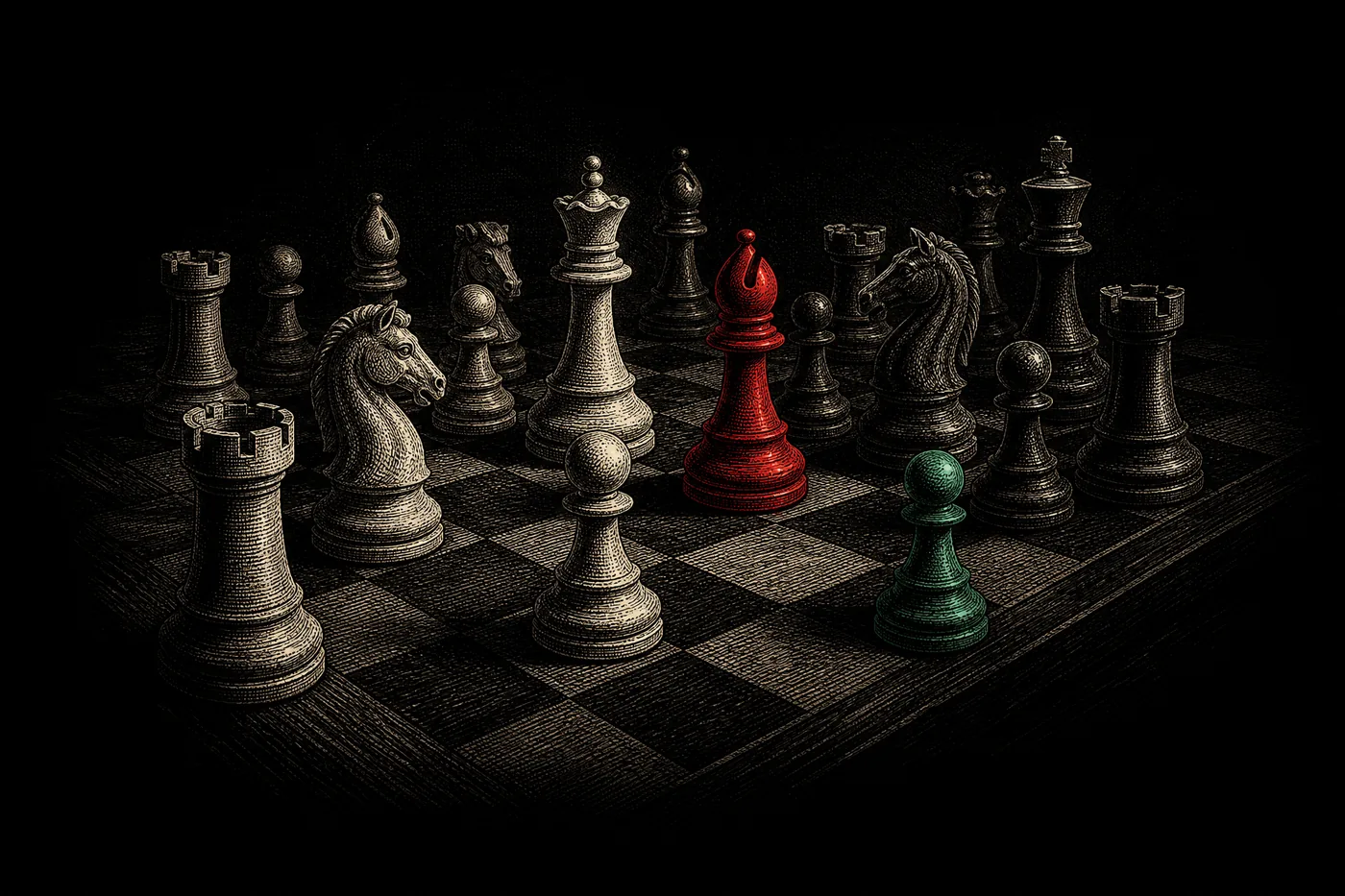
The bad bishop. The whole time this d4 fight rages, keep half an eye on your light-squared bishop on c8. In the Advance it’s extra bad because the center is locked solid. The plan: develop it to d7, then reroute with …Bd7–a4 to trade it, or angle for …b6 and …Ba6. A freed French bishop often tips a balanced Advance in Black’s favor.
The whole opening in one sentence
If you remember nothing else: White pushes e5 to grab space, then spends the game defending d4; Black attacks d4 with everything, then breaks with …f6 and frees the bad bishop. That single sentence covers 90% of French Advance games.
For the branches off this main line — the Milner-Barry Gambit, the 6.a3 space grab, the Euwe and Wade move orders — head to the variations guide. Brand new? Start with the gentle French Advance for beginners.
FAQ
What is the main line of the French Advance? 1.e4 e6 2.d4 d5 3.e5 c5 4.c3 Nc6 5.Nf3 Qb6, and after a developing move like 6.Be2, Black regroups with …Nge7–f5 to keep hammering d4. It’s the cleanest illustration of the opening’s core plan.
Why does Black play …Nge7 instead of …Nf6? Because White’s e5-pawn covers f6. The knight goes …Nge7 and then …Nf5, where it attacks the d4-pawn and eyes e3 — a far more useful square in this structure.
Do I have to memorize these moves? No. Understand the ideas — lock happens on 3.e5, siege d4 with …c5/…Nc6/…Qb6/…Nf5, break with …f6, free the bad bishop — and the moves feel automatic.
What if White gambits the d4-pawn? That’s the Milner-Barry Gambit (6.Bd3). You can take the pawn, but only with the right move order — see the traps page so you don’t lose your queen doing it.
Keep climbing
Want the reasoning behind “attack a chain at its base” and “develop with a purpose”? The opening principles are a perfect companion — the Advance is those principles in action. Then loop back to the French Advance overview, branch into the variations, or compare with the Caro-Kann Advance, where the same 3.e5 push plays out with Black’s bishop already outside the chain.
Written and fact-checked by the Chess Lab Academy Editorial Team (AI-assisted, human-edited) · Lines checked against mainstream opening theory and verified with Stockfish 17 · ECO C02 · Last verified 2026-07-11 · Sources · How we verify content.
