

The Caro-Kann spans ECO codes B10 to B19, which gives you a hint: there’s real variety here. White picks how to treat the center on move three, and each choice gives the game its own flavor — from rock-solid maneuvering to sharp, Queen’s-Gambit-style attacks. Here’s the map.
The variations at a glance
Variation Key moves Personality Who it favors Classical 3.Nc3 dxe4 4.Nxe4 Bf5 Solid main line Balanced, slight pull White Advance 3.e5 (often …Bf5) Space vs. structure Double-edged Exchange 3.exd5 cxd5 Clean, simple Roughly equal Panov-Botvinnik 3.exd5 cxd5 4.c4 Sharp, IQP play Initiative, White Fantasy 3.f3 Aggressive gambit-ish Double-edged Two Knights 2.Nc3 d5 3.Nf3 Tricky move-order Balanced
The Classical (3.Nc3 dxe4 4.Nxe4 Bf5) — the main road
This is the main line. After 3.Nc3 dxe4 4.Nxe4, Black plays the defining 4…Bf5, developing the light-squared bishop outside the pawn chain before locking the center. That’s the soul of the whole opening.
Step through the line
Move by move — press Next to advance, Back to rewind.
The Classical main line to the move-10 tabiya — Black trades off White's good bishop and stays rock-solid.
The core idea: Black gets a healthy structure with no bad pieces, trades off White’s light-squared bishop, and castles (often queenside) into a tough, balanced middlegame. White has a small space edge to press. It’s the gold standard and an absolute schooling in solid play. (See the move-by-move guide for the step-by-step.)
There’s also a modern wrinkle: instead of 4…Bf5, Black can play 4…Nd7 (the Smyslov / Modern Variation), keeping things flexible and re-routing knights to f6.
Step through the line
Move by move — press Next to advance, Back to rewind.
The Smyslov/Modern setup with 4...Nd7 — Black develops the knights first and stays super-solid.
The Advance Variation (3.e5)
White grabs space and locks the center with 3.e5. Just like the French Advance — but Black gets the bishop out first with 3…Bf5.
From there a typical plan runs …e6, …c5, …Nc6/Nd7, hitting White’s d4-pawn and the e5 spearhead:
Step through the line
Move by move — press Next to advance, Back to rewind.
A typical Advance setup — Black develops the bishop, then strikes at the center with ...c5.
White enjoys a space advantage; Black has a solid structure and counterplay against d4. It’s genuinely double-edged and one of the most-played lines today.
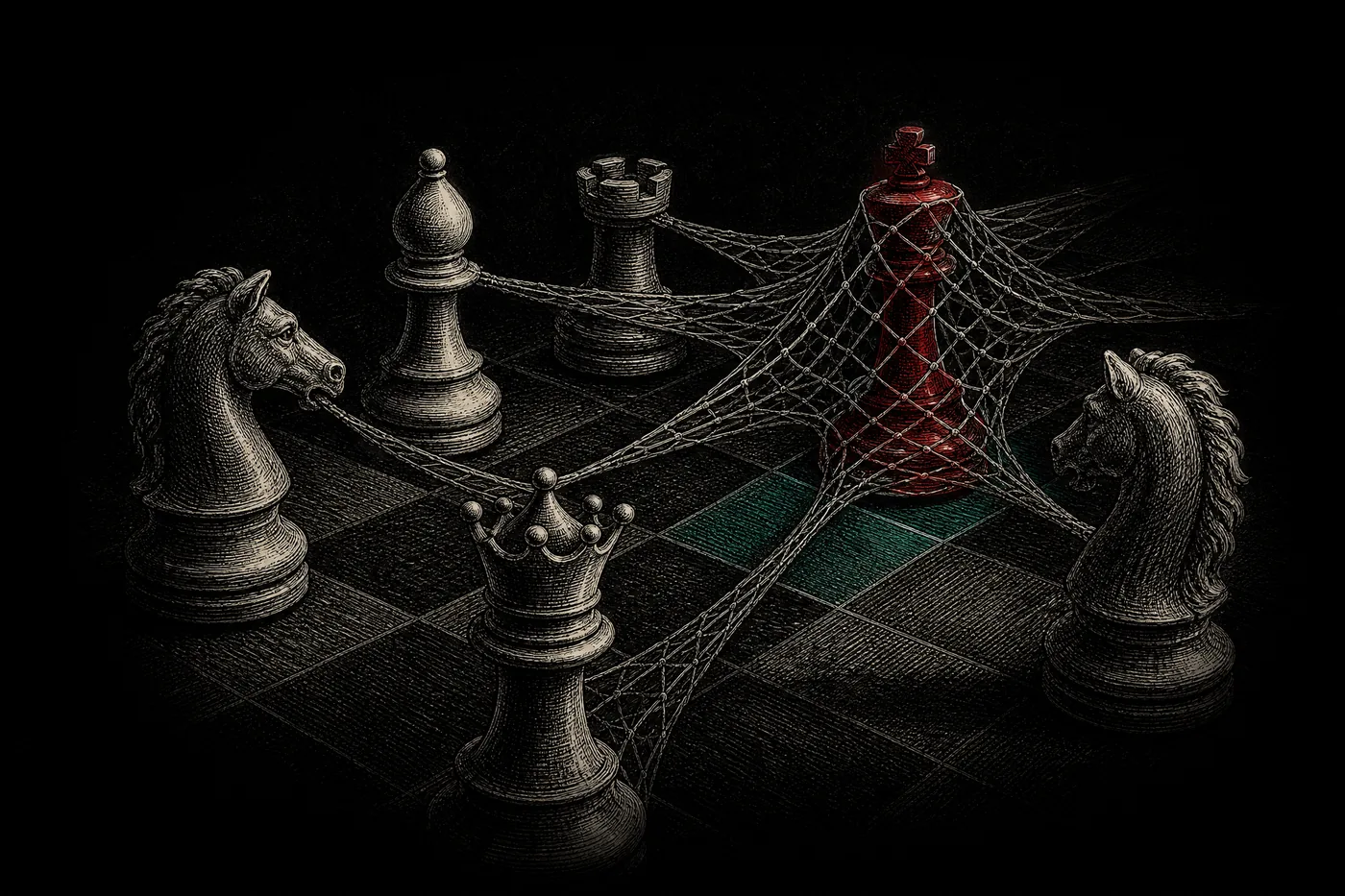
The Exchange Variation (3.exd5 cxd5)
White simplifies the center immediately: 3.exd5 cxd5. The result is a clean, easy-to-understand structure.
White usually continues 4.Bd3, c3, Bf4, Nf3 and plays a quiet, slightly more spacious game; Black mirrors with …Nc6, …Nf6, …Bg4/Bf5 and equalizes comfortably. It’s the line White chooses for a low-theory, no-nonsense game. Roughly equal, but very playable for both.
The Panov-Botvinnik Attack (3.exd5 cxd5 4.c4)
The sharpest, most ambitious White try. After 3.exd5 cxd5 4.c4, White hits the d5-pawn and the game takes on a Queen’s Gambit character — often with an isolated queen’s pawn (IQP) and active piece play.
Step through the line
Move by move — press Next to advance, Back to rewind.
The Panov-Botvinnik Attack — White accepts an IQP-style structure for active, attacking piece play.
White trades the Caro-Kann’s usual quiet for initiative and piece activity, betting that dynamic play outweighs the structural concessions. Black has solid, well-known antidotes (…Be7 setups, …Bb4 pins, the …g6 fianchetto), and theory holds it roughly balanced — but it’s a fighting line where both sides have to know what they’re doing.
The Fantasy Variation (3.f3) and the Two Knights (2.Nc3)
Two notable sidelines:
- Fantasy Variation (3.f3): White props up e4 with the f-pawn, planning a big center. It’s aggressive but commits the f-pawn early — Black can hit back hard with 3…dxe4 4.fxe4 e5! (more on that in the traps page).
- Two Knights (2.Nc3 d5 3.Nf3): White develops both knights and keeps the move order flexible, sometimes dodging Black’s mainline preparation.
So which variation should you study?
- Playing Black and want the full experience? Learn the Classical — it’s the heart of the opening.
- Want fewer headaches? Know your antidote to the Advance and the Exchange; they’re the most common.
- Facing the Panov? Get a clear, solid setup ready — it’s the one line where White can really come at you.
- Surprised by 3.f3 or 2.Nc3? Know the simple, principled replies and you’ll be fine.
Curious how White tries to crack the Caro-Kann? See how to beat the Caro-Kann. And don’t miss the traps page — some of these lines hide nasty tricks.
FAQ
What is the most popular Caro-Kann variation? The Classical (3.Nc3 dxe4 4.Nxe4 Bf5) is the most respected main line, and the Advance (3.e5) is hugely popular at every level today.
What is the Panov-Botvinnik Attack? It’s White’s most aggressive anti-Caro try: 3.exd5 cxd5 4.c4, giving the game a Queen’s-Gambit feel with an isolated queen’s pawn and active piece play.
What’s the difference between the Caro-Kann Advance and the French Advance? Both lock the center with e5, but in the Caro-Kann Black develops the light-squared bishop outside the pawn chain (…Bf5) before …e6 — so it never becomes the dreaded “bad bishop.”
Is the Exchange Variation drawish? It has a quiet reputation, but it’s far from a forced draw — White keeps a touch more space and there are real winning chances for both sides.
Keep climbing
If the names are blurring together, anchor yourself with the Caro-Kann overview and the broader opening principles. Then return to the openings hub to compare the Caro-Kann with its cousin the French Defense.
Written and fact-checked by the Chess Lab Academy Editorial Team (AI-assisted, human-edited) · Lines checked against mainstream opening theory and verified with Stockfish 17 · ECO B10–B19 · Last verified 2026-06-25 · Sources · How we verify content.
