
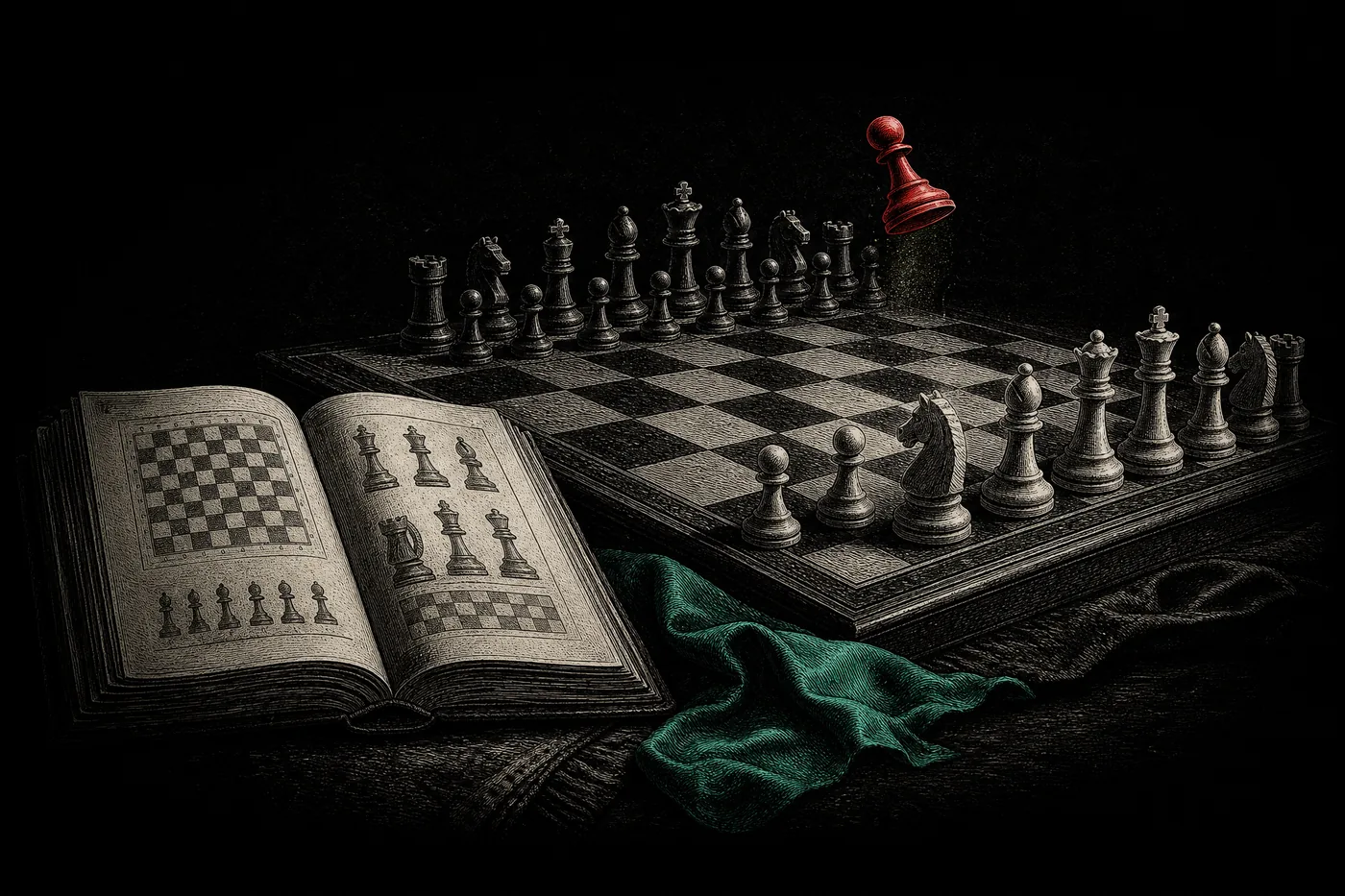
The chess mistakes beginners make are wonderfully predictable — and that’s great news, because predictable means fixable. The big ones: hanging pieces for free, yanking the queen out too early, skipping castling, ignoring the opponent’s threats, and moving too fast. Patch these ten leaks and your rating climbs on its own.
We’ll go through each mistake, why it loses games, and the one-line fix. No shame here — every grandmaster made all of these.
The 10 leaks, at a glance
- Hanging pieces (giving material away free)
- Bringing the queen out too early
- Forgetting to castle
- Moving the same piece over and over
- Grabbing pawns while undeveloped
- Ignoring the opponent’s threats
- Pushing edge pawns in the opening
- Trading badly (queen for a bishop, etc.)
- Playing too fast / not double-checking
- Memorizing openings instead of understanding them
Mistake 1: Hanging your pieces
This is the big one — the cause of most beginner losses, full stop. A hanging piece is one sitting on a square the opponent can simply capture for free, with nothing in return. You move your knight somewhere, don’t notice it’s attacked, and poof — it’s gone next turn.
The fix: before every move, run a one-second safety check. “Is the square I’m moving to attacked? Did I just leave anything else undefended?” That single habit will win you more games than any opening trick. It feels slow at first; soon it’s automatic.
Mistake 2: Bringing your queen out too early
Beginners love the queen — she’s the most powerful piece, so why not unleash her on move two? Because she becomes a punching bag. Every time an enemy knight or bishop attacks her, you have to run, and while you’re running, your opponent is developing pieces for free (gaining tempo).
The fix: develop knights and bishops first; bring the queen out a little later, to a safe, useful square. Let the small pieces do the early work.
Mistake 3: Forgetting to castle
You get absorbed in attacking, your king stays parked in the center, the position cracks open — and suddenly your king is getting mugged on the busiest square in chess. Classic.
The fix: castle within your first 8–10 moves, almost every game. It hides your king and activates a rook in one move. More on this in king safety.
Mistake 4: Moving the same piece over and over
In the opening, every move should ideally bring a new piece into the game. Shuffling your one developed knight back and forth means your other pieces are still asleep on the back rank — you’re effectively playing with half an army.
The fix: “develop a new piece each move” until everyone’s out. Don’t move a piece twice in the opening unless you genuinely have to (like dodging a real threat).
Mistake 5: Grabbing pawns while you’re undeveloped
That lonely pawn on the edge looks like a free snack. But chasing it often costs you two or three moves and drags your queen or knight far from the action — sometimes into a trap.
The fix: in the opening, prioritize development over pawn-grabbing. A pawn isn’t worth falling behind in piece activity. Material matters more once you’re developed and safe.
Mistake 6: Ignoring what your opponent is doing
Chess is a conversation, not a monologue. Beginners get tunnel vision on their own plan and miss that their opponent just set up a fork or threatened a capture. Then they walk right into it.
The fix: after your opponent moves, always ask: “What does that move threaten? Why did they play it?” Half of defense is just noticing the attack coming.
Mistake 7: Pushing edge pawns in the opening
Those h-pawn and a-pawn pushes feel aggressive — like you’re poking at the enemy. Usually they just waste moves and poke holes around your own king instead.
The fix: keep your opening moves in the center and develop. Wing-pawn pushes have their place later, with a real plan behind them — not on move three for fun. See controlling the center.
Mistake 8: Making bad trades
Every piece has a rough value: pawn 1, knight 3, bishop 3, rook 5, queen 9. Beginners often trade their queen for a single minor piece, or give up a rook for a knight, without realizing they just lost points.
The fix: before any trade, count. Am I getting equal or more value? Swapping a knight for a bishop is fine (3 for 3). Swapping a queen for a bishop (9 for 3) is a small disaster unless there’s a checkmate at the end of it.
Mistake 9: Playing too fast
So many “blunders” are just rushed moves. You see a decent idea, slam it down, and miss that it hangs your rook. Speed without a check is how good positions evaporate.
The fix: take the extra two seconds. Especially in tense positions, slow down and run your safety check. There’s no prize for moving fast and losing.
Mistake 10: Memorizing openings you don’t understand
Beginners often try to cram opening lines like vocabulary. Then the opponent plays a move “not in the book” and they’re instantly lost, because they never understood why the moves were good.
The fix: learn the principles — center, development, king safety — not memorized sequences. Once you understand the goals, you’ll find good moves even in positions you’ve never seen. Start with basic strategy.
What does fixing them look like?
Here’s a position where White did everything right: developed a knight and bishop, didn’t rush the queen, and castled to safety. Compare it to the cramped, queen-blocked mess in Mistake 2 — same few moves, totally different health.
That’s the whole secret. None of these fixes are hard. They’re just habits, and habits stack.
A fun bit of history
Even legends blunder. In 2010, then-World-Champion Viswanathan Anand and Vladimir Kramnik — two of the strongest players alive — reached a position in a top event where both missed a stunning idea that an amateur with an engine spotted at home. The lesson isn’t that they’re bad; it’s that mistakes are baked into chess at every level. The difference between a beginner and a master isn’t never erring — it’s making fewer, smaller errors. So go easy on yourself.
Key takeaways
- The most common chess mistake beginners make is hanging pieces — fix it with a one-second safety check every move.
- Don’t rush the queen out; develop knights and bishops first.
- Castle early, develop a new piece each move, and keep openings in the center.
- Watch your opponent’s threats and count before you trade.
- Slow down two seconds, and learn ideas, not memorized lines.
Frequently asked questions
Why do I keep losing at chess? Almost always one reason: hanging pieces. You’re giving away material for free without noticing. Before each move, ask “is this square safe, and what is my opponent threatening?” Fixing that habit alone turns a lot of losses into wins.
What does “hanging a piece” mean? It means leaving a piece on a square where your opponent can capture it for free, with no compensation. It’s the most common — and most fixable — beginner blunder. The cure is a quick safety check before every move.
Is bringing the queen out early always bad? Not always, but usually for beginners. An early queen gets chased by your opponent’s developing pieces, costing you time. Develop your knights and bishops first, then bring the queen to a safe, active square.
How do I stop blundering in chess? Slow down and build a pre-move routine: check threats against you, check that your destination square is safe, and check you didn’t leave anything undefended. Most blunders are rushed moves, not knowledge gaps.
Should beginners memorize openings? No. Understand opening principles — control the center, develop pieces, castle — instead of memorizing lines. Principles work in every position; memorized moves fall apart the moment your opponent goes “off book.” See opening principles.
How many pieces is it okay to trade? Trade freely when it’s even (knight for bishop) or when you’re ahead and want to simplify. Avoid trades where you give up more value than you get. Use the point values (P1 N3 B3 R5 Q9) as your guide.
Keep climbing
Now that you know the leaks, plug them with a real game plan — the positive version of all these fixes.
Next up: How to win at chess · Also great: basic strategy, developing your pieces, and king safety. Back to the hub: Learn chess.
Written and fact-checked by the Chess Lab Academy Editorial Team (AI-assisted, human-edited) · Positions verified with Stockfish 17 and rules checked against the FIDE Laws of Chess · Last verified 2026-06-25 · Sources · How we verify content.
